
Police Facial Recognition System Named a Living Man Dead
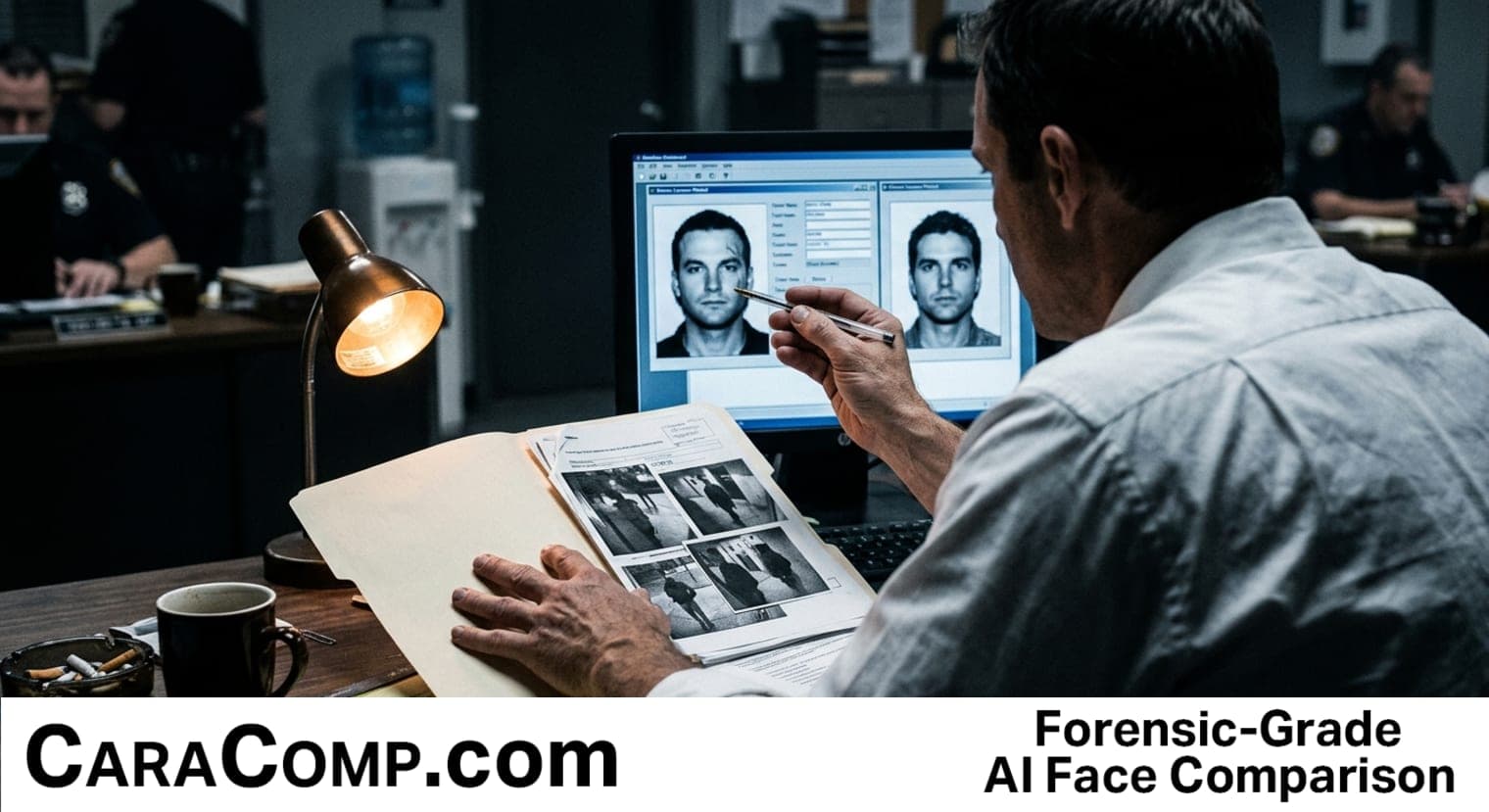
An 18-year-old named Gurpreet Singh was killed in a police encounter in Ludhiana. Punjab's facial recognition system looked at his photo and told investigators he was someone else, a man named Sandeep with a criminal record out of Amritsar. There was one small problem. Sandeep was alive. He was out on bail. He was, in fact, not dead at all.
Police facial recognition in Ludhiana correctly identified one suspect in a deadly encounter and completely misidentified the other, a mistake caught only because the wrongly named man turned out to be alive and out on bail.
Police facial recognition in Ludhiana got one suspect right and one suspect completely wrong in the same case, at the same time, using the same recognition technology, proving that a "match" is a lead, not a verdict.
Here's what actually happened, as best we know it. Punjab Police uploaded photos of two men killed in an encounter into the Punjab Artificial Intelligence System, known as PAIS, which is the state's facial recognition technology (a program that compares a photo of a face against a database of known faces and spits out how alike they are). The system got the first suspect right. On the second suspect, it matched Gurpreet Singh's face to a criminal named Sandeep from Amritsar. Officers ran with it. Word went out. And then someone realized the actual Sandeep was walking around free, out on bail, very much not deceased in an encounter he had nothing to do with, according to The Tribune.
Let that sit for a second. This wasn't a random photo pulled off social media. This was law enforcement, using an official state system, in an active criminal investigation, and the machine still got it wrong. Not because the recognition technology is garbage across the board. Because facial resemblance is a real thing that trips up software the same way it trips up your grandmother at a family reunion when she calls you by your cousin's name.
Police Facial Recognition and the Law: One Suspect Right, One Wrong
The uncomfortable part of the Ludhiana case is that it's not a story about a broken system. It's a story about facial recognition technology working exactly the way it actually works, which is imperfectly, some of the time, in ways you can't predict in advance. One match was solid. One was a strong resemblance that the algorithm read as a certainty. Same recognition software. Same day. Two very different outcomes, and both raise real questions about what the law should require before police act on either one.
This is the part that should worry you more than a total malfunction would. A system that fails constantly gets shut down. A system that's right most of the time and wrong occasionally is the one that gets trusted right up until the moment it shouldn't be, and by then someone's already been named, arrested, or worse. That is exactly the gap that has police facial recognition oversight and identification standards under fresh scrutiny.
Why Police Facial Recognition Still Fails on Faces That Look Alike
Facial recognition tools work by turning a face into a set of measurements (the distance between your eyes, the shape of your jaw, that sort of thing) and comparing those measurements against a database, sometimes called a watch list of known faces. When two people genuinely look alike, the measurements can land close enough that the system reports a high match score (a number representing how similar two faces are) even though it's the wrong person entirely. Add a lower quality photo, bad lighting, or an angle that isn't a straight-on shot, and the odds of a false match go up fast. This article is part of a series, start with Deepfake Impersonation One Fake Call Cost 25 Million Podcast.
35%
error rate for dark-skinned women in a 2018 MIT study, versus under 1% for lighter-skinned men
Source: MIT research cited by Lexipol
That gap isn't a footnote. It's the whole story of why facial recognition technology keeps landing innocent people in jail cells, and why so many people worry about their rights when a face surveillance system is running in the background of an ordinary police stop. A Tennessee grandmother spent nearly six months locked up after a facial recognition mistake, and reporting from Tom's Hardware notes she's at least the ninth documented American this has happened to. In Detroit, a man named Robert Williams was arrested in 2020 based on a facial recognition lineup alone. He hadn't done anything. He later got a $300,000 settlement, according to TechSpot. In Louisiana, a man named Randall Reid got arrested on a purse theft warrant, over a thousand miles from where the theft happened, because a face match said he was the guy, per NBC News. In each of these cases, law enforcement agencies leaned on a single facial images comparison instead of building out a full investigation first.
Ludhiana just adds a name to a list that keeps getting longer.
Facial Recognition Identification: Does It Count as Proof?
No. Not on its own, and not according to the people who actually build and study these systems. Facial recognition is supposed to generate a lead, meaning a starting point for detective work, not a finish line. Researchers have noted that facial recognition software can help law enforcement generate leads efficiently, but a lead is not a confirmed identification, and the moment a department treats a match score as a confession, it has skipped every safeguard the technology was designed to have around it.
There's real nuance here worth sitting with. Researchers cited in an arXiv study on facial recognition in law enforcement found that officers frequently treat outputs as definitive rather than as one clue among many, calling matches "100% match" when the recognition system was never built to make that claim. That's not a software bug. That's a human habit, and it's the habit that actually gets people hurt. In practice, an investigator might identify a suspect using points of similarity from a photo lineup rather than waiting for corroborating evidence, which is exactly backward from how the tool is supposed to be used.
On high-quality images, facial recognition outperforms traditional forensic disciplines like fingerprint comparison and firearm analysis in terms of false positive and false negative rates. Previously in this series: Ai Voice Cloning Scam 3 Seconds Of Audio 893m Lost Podcast.
research findings cited by Brookings Institution
So the defenders of the recognition technology aren't wrong that it can be genuinely good under good conditions. The Ludhiana case just wasn't one of those conditions, and nobody caught it until an outside fact (Sandeep being alive) forced the issue. That's not a system with checks built in. That's a system that got lucky it was checked at all.
What a Verified Match Looks Like Versus a Guess
A verified identification involves more than a single face comparison. It means cross-checking location data, alibi witnesses, physical records, and a human reviewer who actually looks hard at both photos side by side before anyone acts. A guess is a match score treated as an answer with nothing else behind it. The Ludhiana case shows both extremes happening inside the same investigation, and it is exactly why so many investigations still lean on old-fashioned legwork even after live facial matching software returns a result.
| Treated as a lead | Treated as proof |
|---|---|
| Match score checked against outside facts before naming anyone | Name released the moment police facial recognition returns a hit |
| Human investigator reviews photo quality, angle, lighting | Algorithm output accepted as a "100% match" with no second look |
| Error caught by cross-referencing bail records, like in Ludhiana | Error surfaces only after arrest, charges, or worse |
| Facial recognition glitch flagged and corrected internally | Facial recognition glitch becomes a wrongful arrest or a lawsuit |
Why This Facial Misidentification and Recognition System Failure Should Bother You
Here's where the psychology comes in, and it's worth naming honestly. You probably feel like this is a "someone else's problem" story. It happened far away, to people you don't know, in a case that had nothing to do with you. That feeling is exactly why these stories don't stick the way they should. We remember dramatic, rare events (a plane crash, a shark attack, a viral deepfake scam) far more vividly than the boring, common failure that's actually more likely to touch our lives: a database mix-up, a resemblance error, a name attached to the wrong face.
This is the availability heuristic doing its job on your brain right now. It's a mental shortcut where you judge how likely something is based on how easily you can picture it happening, not on the actual odds. A facial recognition mix-up sounds procedural and dull compared to a scam call from a cloned voice. But dull and procedural is exactly how it happens to regular people, and it is exactly why investigations into these cases matter even when nobody outside the affected family is paying attention. Nobody in Detroit, Louisiana, or Tennessee expected to be the one wrongly matched either.
Why Police Facial Recognition Errors Keep Happening
- ⚡ Image quality varies wildlyfalse negative rates climb above 20% for side angle photos, low quality images, and ID-style shots never meant for face matching
- 📊 Bias isn't evenly spreadNIST testing found false positive rates up to 100 times higher for Black and Asian faces compared to white male faces
- 🔮 Officers skip the review steptraining says treat a match as a lead, but reporting shows many officers act like they're treating it as proof
- 🕵️ Nobody double checks until forced tothe Ludhiana error was caught by outside information, not by the system flagging its own uncertainty
Facial Recognition Glitch or Human Error, Who's Actually Responsible
Both, honestly, and pretending otherwise lets everyone off the hook. The facial recognition glitch produced a wrong match because two faces genuinely looked alike. The human error was releasing that match as a confirmed identity without checking it first. Blaming the recognition software alone ignores that a trained investigator was supposed to be the last line of defense, and in this case, almost wasn't.
If you've ever wondered whether a photo or a profile claiming to be someone really is that person, this is exactly the question that kind of checking exists to answer, and the Ludhiana case shows why one automated result should never be the whole answer. The one useful thing you can actually do, before any of this gets close to your own life: if you're ever told a photo, a face, or an identity has been "confirmed" by any AI system, ask specifically what human step checked it afterward. Not whether a system was used. What a person actually did with the result. If the answer is "nothing," that's your red flag, not the match itself, and it is the same red flag that should worry anyone concerned about their rights under an expanding police facial recognition program.
Police facial recognition is a tool for generating leads, not a verdict machine, and the Ludhiana facial misidentification proves that even a well-run state system can call an innocent, living man dead unless a human checks the work before anyone acts on it. Up next: Deepfake Scams Singapore Acts As Fraud Attempts Jump 1 300.
Punjab's system got one identification right and one badly wrong, in the same case, on the same day, using the same recognition technology. That's not a story about broken software. That's a story about how easily "probably" gets mistaken for "definitely" the moment there's a screen involved. Sandeep is alive. Gurpreet Singh is not. The gap between those two facts is exactly where a human being was supposed to be standing, and almost wasn't.
police facial recognition: Frequently Asked Questions
What went wrong with police facial recognition in the Ludhiana case?
Punjab's facial recognition system, called PAIS, correctly identified one man killed in a police encounter but misidentified the second, a young man named Gurpreet Singh, as a different person named Sandeep. Sandeep turned out to be alive and out on bail, which is how the mistake was caught. The error happened because the two faces genuinely resembled each other closely enough to fool the recognition software checking them against a stored watch list.
Can a facial recognition glitch really cause a wrongful arrest?
Yes, and it has happened multiple times in the United States. A Detroit man named Robert Williams was arrested in 2020 based only on a facial recognition match and was later awarded a $300,000 settlement after being cleared. A Tennessee grandmother spent nearly six months in jail over a similar mistake, and reporting counts her as at least the ninth documented American case of this kind. Each case shows how easily rights can be violated when law enforcement skips manual verification.
Why do police facial recognition systems have higher error rates for some people than others?
Testing has repeatedly found uneven accuracy across skin tones. A 2018 MIT study found error rates near 35% for dark-skinned women compared to less than 1% for lighter-skinned men, and NIST testing found false positive rates up to 100 times higher for Black and Asian faces than for white male faces. Photo quality, lighting, and camera angle make these gaps worse, and they are a big reason ongoing investigations into face recognition technology keep surfacing new cases.
How do investigators detect if a facial recognition match is actually correct?
A responsible process treats the software's answer as a starting lead, then checks it against outside evidence, alibi witnesses, location records, and a trained human reviewer comparing both images directly. In the Ludhiana case, the mistake surfaced only because officers learned Sandeep was alive on bail, which is an outside fact that caught what the algorithm itself did not flag as uncertain. Good investigations never skip this step, no matter how confident the software sounds.
What should happen before police act on a facial recognition match score?
Experts and researchers studying law enforcement use of this technology argue a match score should never be treated as probable cause on its own. Traditional investigative steps such as witness statements, alibi checks, and physical evidence need to follow, since face recognition has been used to generate leads but was never meant to replace them. The documented pattern across cases in Detroit, Louisiana, and Tennessee shows what happens when that extra verification step gets skipped.
Is police facial recognition more accurate than fingerprint matching?
On high-quality images, research cited by the Brookings Institution found facial recognition can actually outperform traditional forensic disciplines like fingerprint comparison and firearm analysis in terms of false positive and false negative rates. The catch is "high-quality images." Real-world police photos are often poor quality, off angle, or pulled from ID databases never designed for face matching, which is where accuracy drops fast and where a system risks failing the very people it is meant to protect.
Ready for forensic-grade facial comparison?
Full forensic reports with detailed similarity scoring. Results in seconds.
Run My First SearchMore News
UK Age Verification: Pubs Now Legal to Take Phone ID
UK pubs can now legally accept digital ID instead of your driver's license. The tech can hide your name and address and just say "over 18." Whether it actually will depends on the bartender.
privacyAge Verification Roblox: 31 Lawsuits Test Section 230
A California judge is deciding if Roblox can hide behind an old internet law when its age checks fail. Here's why your family should be paying attention.
privacySocial media age verification laws: Malaysia now IDs children
Malaysia's social media age verification rules went live today, requiring government ID to open an account. Here's what parents and everyday users actually need to know before they hand over their information.