
Hong Kong Police Force: Facial Recognition Live, No AI Law
Quick answer
Can facial recognition on police cameras make a wrong match?
Yes. Facial recognition produces a similarity score between two faces, which is an estimate and not a confirmed identity. Poor, dark or grainy images raise error rates, and the risk is uneven across groups. A match works best as a lead that needs a human check and other evidence.
Picture getting arrested for a crime in a state you have never visited. That happened to a Tennessee woman named Angela Lipps, and the Hong Kong police have just switched on the same kind of technology across a huge camera network. Her case is the warning label.
Hong Kong police now use facial recognition (software that compares a face on camera to faces on file) across AI-enabled CCTV, and a Fargo wrongful arrest shows why a face match is a lead to check, never proof.
What the Hong Kong Police Just Turned On, and Why It Matters to Regular People
Here is the short version. According to Hong Kong Free Press, the Hong Kong Police Force has activated facial recognition across its AI-enabled CCTV (the security cameras you see on streets and in buildings, now wired to software that can look for faces). The police chief says the tools won't be abused. That is a promise. It is not a rule.
This is part of a HK$4 billion expansion. The plan is to fold about 60,000 cameras into a system called SmartView by 2028. That is a lot of eyes.
Now the part that should make you sit up. Hong Kong does not have a law that regulates how police can use AI. So the Hong Kong police cameras are growing fast, and the guardrails (the rules about when a match counts, who checks it, and how you can challenge it) have not been made public.
If you live far from Hong Kong, you might be thinking this has nothing to do with you. Hold that thought. The same software, the same kind of mistake, and the same missing rules have already hurt someone in the American Midwest.
How Face Matching Works, and Why a Match Is Not a Fact
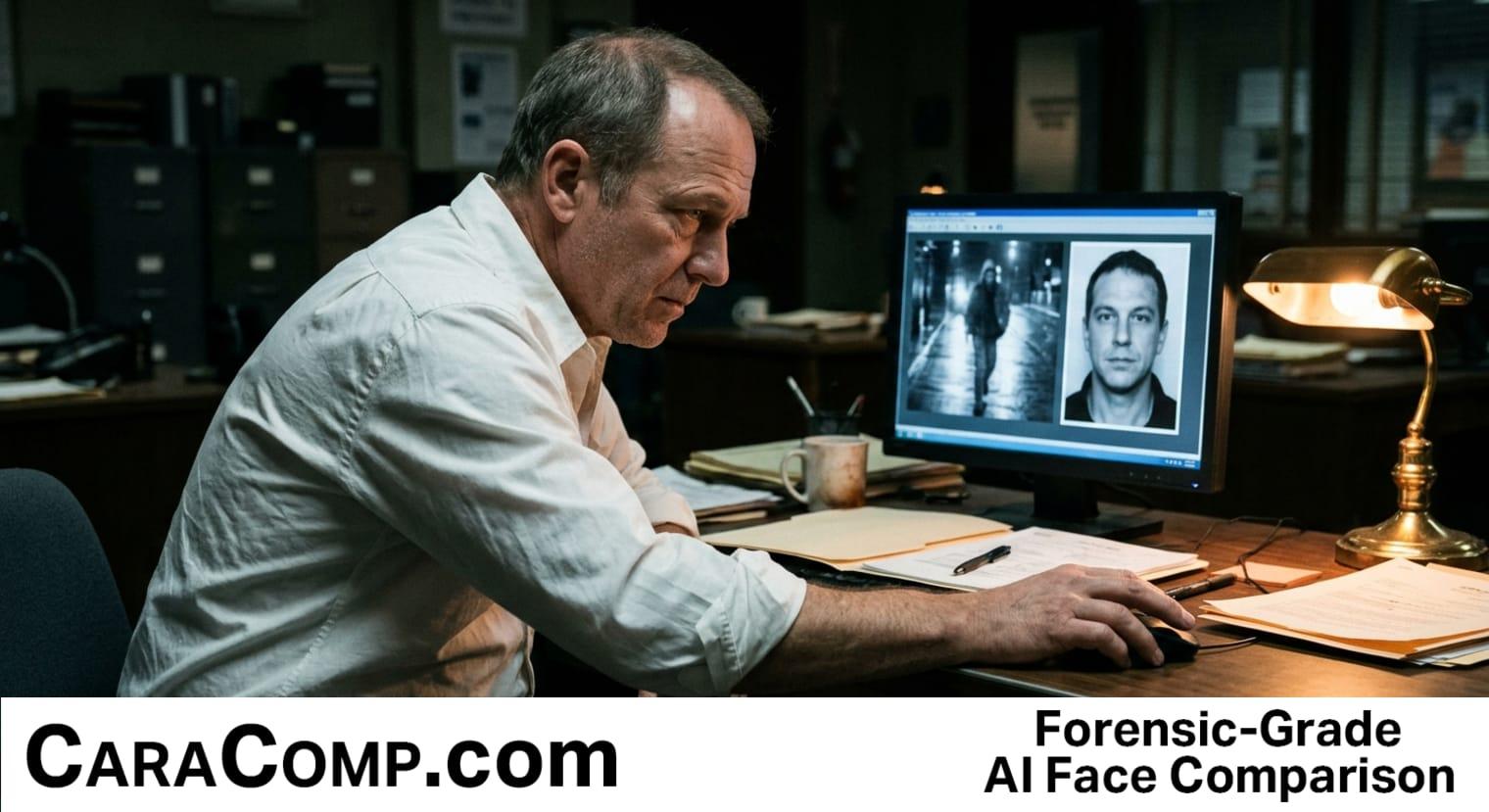
Facial recognition does not "see" a person. It turns a face into a set of measurements, then produces a match score (a number for how alike two faces are). A high score means "these look similar." It does not mean "this is the same human being."
Think of it like a friend saying, "That guy looks just like your cousin." Useful? Sure. Would you send the guy to jail on that alone? Of course not.
Angela Lipps and the Fargo Case: When a Hong Kong Police Style Camera Match Goes Wrong
Angela Lipps is a Tennessee woman. A facial recognition match tied her to a bank fraud case in Fargo, North Dakota. She was arrested. She is now suing a former Fargo detective for $10 million, as reported by Valley News Live. This article is part of a series, start with Tinder Photo Verification Only 1 Of 9 Photos Must Match.
The charges were later dismissed. But by then, the research notes, she had lost her home, her car, and her dog. Her attorney eventually showed she had been in a different state. Read that again. The proof that cleared her was not a smarter algorithm. It was an old-fashioned alibi (evidence of where you really were).
The reporting also says Fargo had no policy, no training, and no oversight for this tool at the time. Nobody was asked to double-check the match before a life got flipped over.
35%
error rate for dark-skinned women in a 2018 MIT study, versus under 1% for lighter-skinned men
Source: Lexipol, summarizing the MIT research
That gap matters. It means the odds of a bad match are not shared equally. The Federation of American Scientists counts at least nine documented U.S. wrongful arrests tied to face recognition mistakes as of March 2026. Nine that we know about.
Why Cameras Make Mistakes: Bad Images and Overconfident Humans
Two things go wrong, and they feed each other. First, the pictures police work with are often poor: grainy, dark, taken at an angle. Research on accuracy and fairness, posted on arXiv, finds higher error rates for women and Black people. Software tends to stumble more on low-quality images.
Second, people trust the screen. The same research documents officers treating these outputs as definitive. Some call an unverified result a "100% match."
"100% match" Previously in this series: Hong Kong Police Facial Recognition Goes Live No Ai Law.
The phrase some officers use for unverified results, as documented in research posted on arXiv
No facial recognition result is a 100% anything. A machine's guess plus a person's confidence is how a wrongful arrest gets built.
Same Suspect, Two Policies: What Separates a Lead From an Arrest
Here is the detail I find most telling. Fargo and its neighbor, West Fargo, both dealt with the same case and similar tools. West Fargo police decided the results were not strong enough to bring charges on their own. They limited the tool to specially trained police officers and banned arrests based only on a face match. Fargo had no such rule.
Same technology. Opposite choices. That is not a computer problem. That is a rules problem.
| Place | Rules around a face match | Status |
|---|---|---|
| Fargo police (at the time) | No policy, training, or oversight for facial recognition | Missing |
| West Fargo police | Trained officers only, and no arrests on a match alone | Enacted |
| NYPD | Recommended matches reviewed by multiple human reviewers | Stated policy |
| Hong Kong police | No law regulating police AI use, and no oversight rules disclosed | Not disclosed |
Is a Human Review Enough? The Fair Counterpoint
Defenders have a real argument. Facial recognition is meant to be an investigative lead (a tip to chase, like an anonymous call), not proof. In ideal conditions, with a clear photo, the tech can be quite accurate. The NYPD says matches get looked at by several people.
But that defense depends on everyone following the policy every single time. Nothing in the technology forces it. Fargo had no policy, and Hong Kong has not shared one. A promise that tools won't be abused is only as good as the person holding the tool on a tired Tuesday.
Why Hong Kong Police Cameras Matter Beyond Hong Kong
- Scale: about 60,000 cameras by 2028 means far more chances for a wrong face to be flagged.
- No public rulebook: Hong Kong has no law on police AI use, so a person flagged by mistake has no clear path to appeal.
- Uneven errors: the 35% versus under 1% gap means some groups carry far more risk.
Could Your Face Be Matched Wrongly, and What Can You Do About It?
Short answer: yes, it can happen anywhere that cameras and face matching meet. The mistake does not announce itself. You find out when someone knocks on your door, or when a job, a flight, or a bank account goes sideways.
Your risk is not zero, and the system is not built to warn you. That is the real lesson of the week. Whether it is police in Hong Kong, other police forces around the world, a detective in North Dakota, or a company checking your age, people deserve to know when their face is being used and how to challenge a mistake.
If you have ever wondered whether a photo or a person is really who they claim to be, that is exactly the question this kind of technology exists to answer. Here is the one thing worth watching for: ask whether a human compared the faces side by side, and whether the match was backed up by something else, like a location record, a witness, or video of the actual event. A good facial comparison process shows its work, so a person can see why two faces were called alike. A bare "the computer said so" is a red flag. Up next: Hong Kong Police Facial Recognition Goes Live No Ai Law.
And keep your own receipts. Photos with timestamps, location history, and receipts are the kind of everyday proof that cleared Angela Lipps. Boring paperwork beats a bad guess.
When Hong Kong police or any law enforcement agency use facial recognition, a match should start an investigation, never end one, and a wrongful arrest like the Fargo case is what happens when nobody checks the machine.
Recap: Hong Kong police now run facial recognition on their AI cameras. A face match is a clue that needs a human check, not proof.
So here is the question to carry out of this story. West Fargo and Fargo had the same tool and the same suspect, and only one of them wrote down the rule that a match is not enough. When the Hong Kong police point their cameras at a crowd, which of those two are they?
hong kong police: Frequently Asked Questions
What did the Hong Kong police actually activate?
According to Hong Kong Free Press, the Hong Kong police turned on facial recognition across their AI-enabled CCTV network. That means security cameras connected to software that tries to match faces to faces on file. It is part of a HK$4 billion expansion, with a goal of linking about 60,000 cameras into a system called SmartView by 2028. The police chief says the tools won't be abused, but the research says Hong Kong has no law regulating police use of AI.
Can a facial recognition match be wrong?
Yes. A match is a guess about how alike two faces are, not a confirmed identity. Errors rise with poor, dark, or grainy images. A 2018 MIT study found an error rate near 35% for dark-skinned women versus under 1% for lighter-skinned men. The Federation of American Scientists counts at least nine documented U.S. wrongful arrests tied to face recognition mistakes as of March 2026, so treat a match as a lead to verify.
What happened to Angela Lipps in the Fargo case?
Angela Lipps, a Tennessee woman, was arrested after a flawed facial recognition match linked her to a bank fraud case in Fargo. The charges were later dismissed. According to the reporting, she lost her home, her car, and her dog before her attorney showed she was in a different state. She is now suing a former Fargo detective for $10 million. Fargo had no policy, training, or oversight for the tool at the time.
Do Hong Kong police cameras have rules to prevent mistakes?
Not that the public has seen. The research says Hong Kong does not regulate how law enforcement uses AI technology, and no oversight policy has been disclosed. Compare that with West Fargo, which limited the tool to trained officers and banned arrests based on a match alone. The NYPD says recommended matches need review by multiple humans. Without published rules, a person wrongly flagged by Hong Kong police cameras has no clear way to appeal.
Ready for forensic-grade facial comparison?
Full forensic reports with detailed similarity scoring. Results in seconds.
Run My First SearchMore News
Deepfake: TV Star Felt Stupid, but Scammers Own the Shame
An Antiques Road Trip star says she "felt stupid" after a deepfake porn scam. Feeling embarrassed is human. The blame belongs to the scammer, not the person fooled.
digital-forensicsWoodson High School: Band Director Accused of Deepfake Nudes
A band director at Woodson High School is accused of soliciting a student and possessing deepfake nudes. These are allegations, but the question for parents is real: would your child tell you?
privacyIdentity Verification: Malaysia May Demand ID for WhatsApp
Malaysia is studying whether to make people prove who they are before using a messaging app. It might block some fake accounts. It won't make every message trustworthy.