
Broward Judge Deepfake: $10,000 Fine Over a Fake Call
Quick answer
How can you tell if a deepfake call is real or fake?
Usually you cannot tell by listening or watching, because cloned voices and faces can hold up through a whole call. Pause on any urgent request and confirm through a number or app you already had saved. Never use contact details given during the call, and treat pressure to act fast as a warning sign.
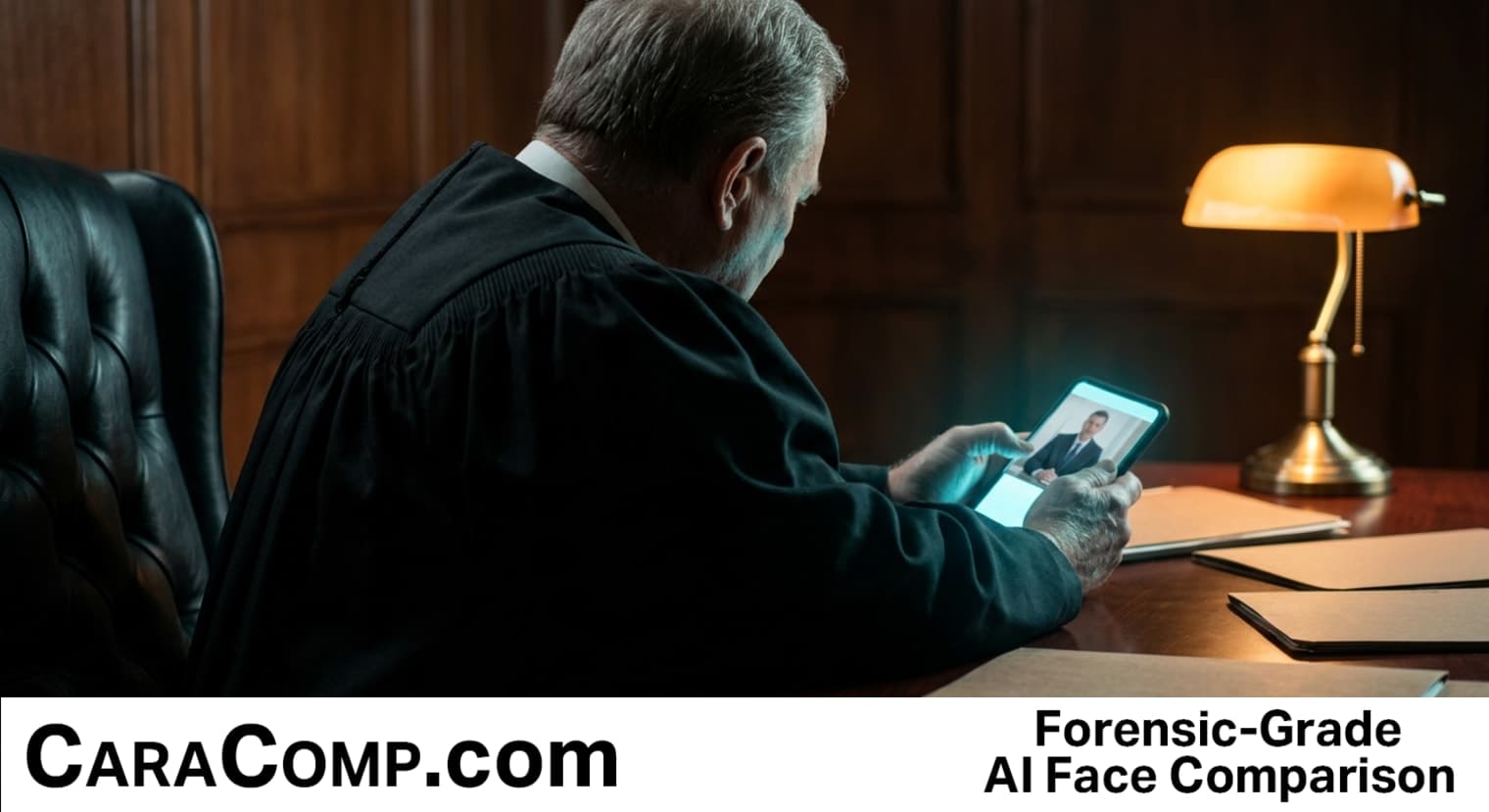
A judge in Broward County, Florida, shared a phone call recording during her 2024 campaign. The call was fake, and it was likely built with AI. Now the Broward judge deepfake case has ended with a recommended 30-day suspension, a public reprimand and a $10,000 fine.
The Broward judge deepfake case shows that a familiar voice or face is no longer proof of who you are dealing with, so any urgent request needs a second check through a contact method you already trust.
Here is the honest detail up front. The records describe a fabricated recording of a call, not a live video chat. But the lesson is the same one your family needs tonight. If a person whose whole job is weighing evidence can be fooled by a fake voice, nobody should rely on their ears alone.
What the Broward Judge Deepfake Case Actually Says
According to the Broward County Government announcement, the recommended penalty is a 30-day suspension, a public reprimand and a $10,000 fine. The judge cited a call during her campaign. The call turned out to be fake, and it was likely made with generative AI (software that creates realistic fake voices, faces and text from scratch).
The key failure is simple. She never checked whether the recording was real before she shared it with a newspaper. Charges described by Florida Politics point to judicial conduct code violations. No fancy hacking was needed. The fake only had to sound believable, and then a person had to skip one step.
Why a Broward judge deepfake story should worry non-lawyers
Judges are trained skeptics. They spend careers asking, "Who says so, and how do we know?" If that habit did not kick in here, think about a normal Tuesday for the rest of us. You are tired. The phone rings. It sounds exactly like your son, your boss or your bank rep. Your brain does not stop to ask for proof, because hearing a familiar voice has always been the proof.
That is the availability heuristic (your brain's habit of trusting whatever example comes to mind fastest) doing its quiet damage. A voice you know feels like a fact. The fakes are now good enough to hijack that feeling.
Is This Just a Broward Judge Deepfake Problem, or Is Everyone Exposed?
Everyone is exposed, and the numbers from the research say so plainly. Fake video calls are not a rare stunt anymore. They are a growing business for scammers. This article is part of a series, start with Age Verification Windows 11 Sorts Kids Into 5 Age Boxes.
43 to 1,200+
live-video deepfake scam cases in Singapore, January 2025 versus January 2026
Source: CorSound, summarizing Singapore data
That is roughly a 28 times jump in one year. Closer to the workplace, Gartner's 2026 survey of security chiefs, as reported by Keepnet Labs, found that 62% of organizations had a deepfake incident. About 35% were hit on video calls.
Then there is the famous money story. A finance manager approved $25 million in wire transfers after a video call where the "executives" were all AI creations. Not one real human was on that call, as laid out by Security Boulevard. Think about how that felt from the manager's chair. Faces, voices, a normal meeting. Nothing seemed off.
How does a deepfake call get past ordinary checks?
Short answer: the fake simply looks and sounds like the person you expect. Criminals can clone a face and a voice well enough to sit through a whole meeting. Some even feed fake video straight into identity checks. Entrust's 2026 Identity Fraud Report, as cited by RealEyes, says these so-called injection attacks rose 40% in a year. It also says deepfakes now make up one in five biometric fraud attempts (tries to fool systems that check your face or voice).
Why "Call Them Back" Is No Longer Enough After the Broward Judge Deepfake
You have probably heard the classic advice: if something feels off, call the person and make sure. It was good advice. It is now incomplete.
Why? Because the thing that feels "off" has been engineered away. And if you call the number the caller gave you, you may be talking to the same crook. A cloned voice can answer a callback just as easily as the first call.
The "call them and verify" defense has evaporated. Generative models can now clone a face and voice convincingly enough to sit through an entire meeting undetected.
Research summary drawing on Pindrop's analysis of continuous verification
Look at the difference between the old habit and the one that holds up now.
| Old habit | Safer habit |
|---|---|
| Trust a familiar face on a video call as proof | Treat a familiar face as a claim that still needs a second check |
| Call back the number the caller gives you | Contact the person through a number or app you already had saved |
| Check identity once, when the call starts | Keep checking during the call, because a fake can be swapped in mid-call |
| Act fast because the request sounds urgent | Treat urgency as a warning sign and pause before sending money or personal information |
Experts describe the last idea as continuous identity verification (checking throughout a call that each person is still who they claimed to be). One-time detection only asks whether the face looks fake at the moment someone joins. A mid-call swap slips right past it.
The operational gap behind the Broward judge deepfake
Here is the part I find most useful, and a little maddening. Most teams approve big actions over a video call with no identity check beyond "I recognize their face." That is not a technology failure. It is a workflow failure. The judge had no routine for checking a recording before sharing it. The finance manager had no routine for confirming a huge transfer another way. The tools to catch fakes exist. The habit of using them mostly does not.
Why the Broward Judge Deepfake Matters to You
- Your ears are not a lie detector: a cloned voice can sound exactly like someone you love.
- Urgency is the tell: scams push you to act before you think, so the rush itself is the red flag.
- A second channel beats a better eye: confirming through a separate, known contact method works even when the fake is flawless.
What Can You Do Tonight to Verify Someone Is Real?
Do one thing: set up a two-step habit before you need it. When a voice or video asks for money, a password, a code or personal details, stop. Then reach that person through a separate way you already trust. Use a number saved in your phone for years, a message thread you started, or a face-to-face chat later. Never use contact details supplied during the suspicious call.
For families, add a private code word that only real relatives know. It sounds a bit silly, like a spy movie. It also costs nothing and beats a very expensive piece of fake audio.
When pictures matter: facial comparison after a fraud attempt
If you have ever wondered whether a photo or profile is really who it claims to be, that is the exact question facial comparison tech exists to answer. It lines up faces and produces a match score (a number for how alike two faces are). Real-time detection is still outpaced by the fakes. So comparison is most valuable afterward, when investigators need to establish what is real once a scam surfaces. It builds a record that can hold up when someone has to prove what happened.
The Broward judge deepfake case proves that a familiar face or voice is no longer enough. Before you act on anything urgent, run a second check through a separate, known contact method.
So here is the question I cannot shake. The judge was fooled by a recording she wanted to be true. How many of your own urgent calls this year arrived at exactly the moment you wanted to believe them?
Broward Judge Deepfake: Frequently Asked Questions
What happened in the Broward judge deepfake case?
A Broward County judge cited a fabricated recording of a phone call during her 2024 campaign and shared it with a newspaper. The call was fake and likely made with generative AI. She did not verify it first. The recommended penalty is a 30-day suspension, a public reprimand and a $10,000 fine. It was a recorded call, not a live video chat, but the lesson about trusting voices applies to both.
Can a deepfake call really fool someone on a live video call?
Yes. In one widely reported case, a finance manager approved $25 million in wire transfers after a video call where every executive was AI-generated. Gartner's 2026 survey, as reported by Keepnet Labs, found about 35% of organizations with a deepfake incident were hit on video calls. A fake face and voice can hold up through an entire meeting.
How can I tell if a caller is a fake voice or face?
You often cannot tell by listening or looking, and that is the point. Do not rely on your senses. Instead, pause on any urgent request and confirm through a separate way you already trust, such as a saved phone number. Be extra careful when someone pushes you to send money or share personal information quickly.
Why is calling the person back not always safe?
If you dial a number the caller gave you, you may reach the same scammer. A cloned voice can answer a callback as easily as the first call. Use contact details you already had before the call, or a message thread you started yourself. Treat the second check as a fresh, independent step.
What is continuous identity verification?
It means checking throughout a call, not just at the start, that each participant is still who they claimed to be. One-time detection only asks whether a face looks synthetic when someone joins. According to Pindrop's analysis, only continuous checks can catch a mid-call swap. It is one reason the Broward judge deepfake lesson goes beyond courts and into everyday work calls.
What are injection attacks and why do they matter?
Injection attacks are when fraudsters feed fabricated video directly into a verification system instead of showing it to a real camera. Entrust's 2026 Identity Fraud Report, as cited by RealEyes, says they rose 40% year over year. It also says deepfakes make up one in five biometric fraud attempts. Anyone studying the Broward judge deepfake story should know the fakes now target the checks themselves.
Ready for forensic-grade facial comparison?
Full forensic reports with detailed similarity scoring. Results in seconds.
Run My First SearchMore News
Age Verification: Windows 11 Sorts Kids Into 5 Age Boxes
Microsoft is reportedly bringing age checks to Windows 11, so proving your age may soon happen on the computer itself. Here is what families should ask before they click approve.
privacyMicrosoft Windows 11 Age Verification: 3 ID Checks, 1 System
Age checks are moving from apps onto the computer your family already uses. Here is what Microsoft collects, who holds it, and what happens if it gets an age wrong.
privacyAge Verification: Apple Backs EU Plan It Fought in Texas
The next age check for your child may happen before the download. Here is what the EU KIDS Act discussion could mean for your family's phone account and your data.