
Biometric age verification: 90,000 tills use age estimation
Quick answer
Is biometric age verification at checkout safe for my privacy?
It can be, if the shop receives only a yes or no on whether you are old enough. Privacy depends on design. Checking your face on your own phone, sharing no name, birthday or photo, and deleting the result straight away all lower the risk. It is not risk-free, because the phone still reads your face.
You're at the self-checkout with a bottle of wine, and the screen freezes: "Wait for assistance." Biometric age verification is about to turn that awkward pause into a quick tap of your phone. That sounds convenient. It also raises a fair question: what exactly does the shop learn about you when you tap?
Biometric age verification at checkout is fine when the shop only gets a yes or no on "old enough," so before you tap, ask what is shared, whether it is kept, and whether another way to prove your age is accepted.
Biometric Age Verification at the Checkout: What Is Actually Happening
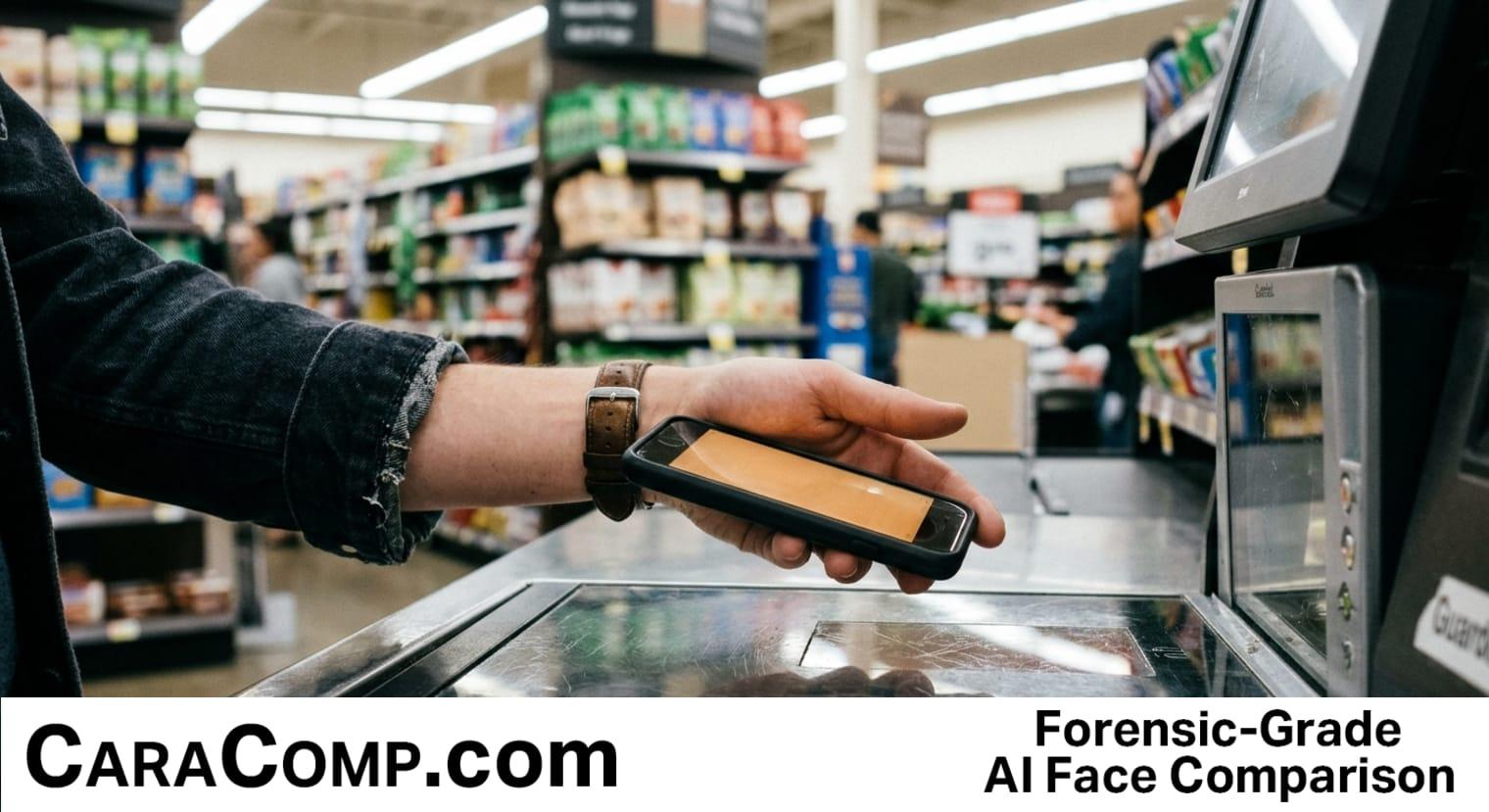
Here's the news. RNZ reports that a phone-based age check is heading to roughly 90,000 checkout terminals in New Zealand. It uses face-based checks tied to government digital wallets. The idea: you prove you're old enough to buy alcohol or similar items using your phone, instead of fishing out a driver's licence or waiting for a worker to wander over.
That's not a pilot in one corner shop. That's a big chunk of the country's checkouts. When something spreads that fast, the rules of the road get set early, and shoppers who ask good questions now shape what "normal" looks like later.
What smartphone age verification means in plain English
Smartphone age verification just means your phone does the proving. Instead of handing over an identity card with your name, address and birthday printed on it, your phone answers one question for the checkout: "Is this person old enough?" Done right, that's the only thing the shop ever hears. Your birthday, your name and your home address stay put.
Why Biometric Age Verification Raises a Privacy Question (Even When It Works)
Biometric data means the body stuff that's uniquely you: your face, your voice, your fingerprints. You can change a password. You can't change your face. That's why people get twitchy when a checkout wants a look at it.
The good news is in how this system is described. The research behind this story says the setup from payments company Verifone limits the exchange at the till to a single yes-or-no answer. In effect, the terminal asks:
"Are they over the legal age? Yes or no?" The single question the checkout asks, as described in coverage of Verifone's design, via RNZ
That's the whole conversation. No name. No photo. No date of birth. The shop gets a pass-or-fail result (a simple yes or no, nothing attached) and moves on. This article is part of a series, start with Fake Age Verification Steam Users Face Credit Card Scams.
On-device processing: why where the face check happens matters
Here's the detail that matters most. With on-device processing (the face check happens inside your own phone, not on a company's far-off computers), your face never has to travel anywhere. Only the answer does. Compare that with a cloud-based check, where an image or a face scan gets sent to the servers of a cloud services provider. Same goal, very different risk if something goes wrong.
| What to compare | On-device check | Cloud-based check |
|---|---|---|
| Where the face is looked at | Inside your phone | On a company's servers |
| What the shop receives | A yes or no result | Depends on the system, so ask |
| Identity details shared | None beyond the yes or no, in the design described | Depends on the system, so ask |
| Biometric data leaving your phone | None, in the design described | Possibly an image or face scan |
| Who runs the check | Your phone's own software | A company's cloud services |
| Main security worry | Whether the phone app is trustworthy | Whether the data is kept, and for how long |
Notice what that table doesn't say. It doesn't say on-device is magic. It says the risk moves somewhere else, and you should know where.
Is Biometric Age Verification Safe? What Privacy Advocates Still Worry About
Short answer: safer than handing over a full ID card, if the system is built the way it's described. But safe isn't the same as risk-free, and the critics have a point worth hearing.
Privacy advocates argue that even a brief face scan can count as biometric information under UK and US regulator guidance if it could in theory be used to confirm your identity. On-device processing cuts that risk a lot. It doesn't erase it, because the phone still builds some kind of face-based reading, however short-lived. So transparency matters. A shop that says "your face stays on your phone, we only get a yes" is making a promise any user can hold it to.
Age estimation vs. age assurance: two things that sound alike
Two terms get tossed around, and they're not the same. Age estimation (software guessing roughly how old you look, like a bouncer eyeballing you) is one. Age assurance (a stronger way of confirming your age, often tied to an official record) is the other. The first is quick and light on personal details. The second is more certain but can involve more about you. The research notes that New Zealand's checkout system leans on the quick, face-based approach for speed.
Why the legal fights should make you pay attention
Look at Illinois. According to a legal breakdown from Promise Legal, that state's biometric privacy law has spawned over 100 class actions a year, with settlements topping $51 million. Class actions are lawsuits where lots of people band together against one company. The lesson isn't "panic." It's that companies who mishandle face data get sued, and the ones who never collect it have much less to worry about. That's why a design that never moves your face off your phone is the one to cheer for.
Why Biometric Age Verification Design Matters
- Data minimization (collecting only what's truly needed): a yes or no is plenty to sell someone a bottle of wine.
- Where it's processed: your phone is better than a faraway server for keeping your face to yourself.
- Whether it's kept: a result that's deleted instantly is very different from one stored for later.
How to Handle Smartphone Age Verification at the Till: Three Questions to Ask
You don't need a tech degree to protect yourself here. You need three questions, and you can ask them at the counter or verify the answers on the shop's sign or website. Previously in this series: Facial Recognition 291 341 Uk Police Searches Thin Checks.
1. What gets shared? The right answer is "just whether you're old enough." If the answer includes details of your identity, such as your name, birthday or a photo, that's more than the job requires.
2. Is it kept? A good system doesn't hold on to your result or your face. If the shop shrugs, or says "maybe for a while," treat that as a yellow flag.
3. Is there another way? If you'd rather not use the phone check, can you show a physical ID to a person? If the only option is the phone, you've lost a choice, and choice is the point of consent.
One more thing, and it's the only place I'll bring up what we do at CaraComp. If you've ever wondered whether a face on a screen is really who it claims to be, that's the exact question face-matching technology exists to answer, and it's why the same care should apply to your own face. Before you hand yours to any system, look for one useful result in advance: a plain statement of what the system receives and what it throws away. If a company can't tell you, that's your answer.
What does a good yes-or-no check look like?
A good one is boring. You tap, the screen says approved, and the shop learns nothing else. No account to create, no photo saved, no extra form. If the experience feels like a sign-up, a survey or a data grab, it's doing more than checking your age.
Biometric age verification and smartphone age verification are only as private as their design, so look for on-device processing and a plain pass-or-fail result before you tap.
Recap: A phone-based age check is fine when the shop learns only that you're old enough. Ask what is shared, whether it is kept, and whether you can prove your age another way. Up next: Biometric Age Verification 90 000 Tills Ask One Question.
Here's the thing I keep coming back to. The shop has always needed one fact from you: old enough, or not. For decades we handed over a whole card to prove it. Now we can finally hand over just the fact. So why would any system you're asked to trust ask for more than that?
Biometric Age Verification: Frequently Asked Questions
What is biometric age verification?
Biometric age verification is a way of confirming you're old enough using something about your body, usually your face. Software looks at your face, either for age estimation, judging how old you appear, or to match you to an official record. In the checkout system described by RNZ, the point is speed: you skip the paper ID and the wait for a worker. The privacy question is what leaves your phone, and how much of it.
Does smartphone age verification send my face to the shop?
In the design described in the research, no. The face check happens on your phone, and the checkout receives only a yes or no on whether you're over the legal age. That's the promise to look for. Because designs differ between systems, it's still reasonable to ask the shop what its terminal actually receives, and what security protects anything stored afterward.
What is the difference between age estimation and age assurance?
Age estimation is software judging roughly how old you look, a bit like a bouncer eyeballing a crowd. Age assurance is a broader term for ways of being more certain of your age, often by checking against an official record. Estimation is quick and asks for less. Assurance can be more certain but may involve more personal details, so it's worth knowing which one a shop is using.
How does an age check checkout flow protect my privacy?
Age verification protects you when it follows data minimization, meaning it collects only what's needed, here a yes or no. Processing the face on your own phone helps, because your face doesn't travel to a company's computers. Deleting the result right away helps too. Protection weakens if the system collects names, birthdays or photos, or keeps them. Asking what is shared and whether it's kept tells you which kind you're dealing with.
Can I refuse a phone age check and show ID instead?
You can certainly ask. Whether a shop accepts another form of age verification depends on that shop and local rules, so don't assume. It's a fair question to put to the person at the counter or check on the store's website. A system that offers a physical ID alternative respects your choice, and that's a good sign about how seriously the shop takes your privacy.
Ready for forensic-grade facial comparison?
Full forensic reports with detailed similarity scoring. Results in seconds.
Run My First SearchMore News
Facial recognition: 291,341 UK police searches, thin checks
A computer saying two faces look alike is not proof they are the same person. UK inspectors say police need much better checks on face searches.
facial-recognitionFacial Recognition: Wrong Match Jails Grandmother 6 Months
A grandmother says a computer's face match put her in jail for six months. Here is why a match should only be a starting point, and what should happen before anyone is arrested.
privacyWhatsApp Identity Verification: 4 Ways Scammers Slip Past
A WhatsApp account can pass an identity check and still send you a dangerous request. Here's why, and the one habit that protects you.