
AI Voice Cloning Scam: How to Report Scams and Fake Voice Calls
Quick answer
How do I report an AI voice cloning scam call?
Report it to the FTC or your state attorney general, even if you lost no money, because reports help track repeat scams. Before that, hang up and call the person back on a number you already have saved. Reports on a recruiter or contractor can also go to the platform involved.
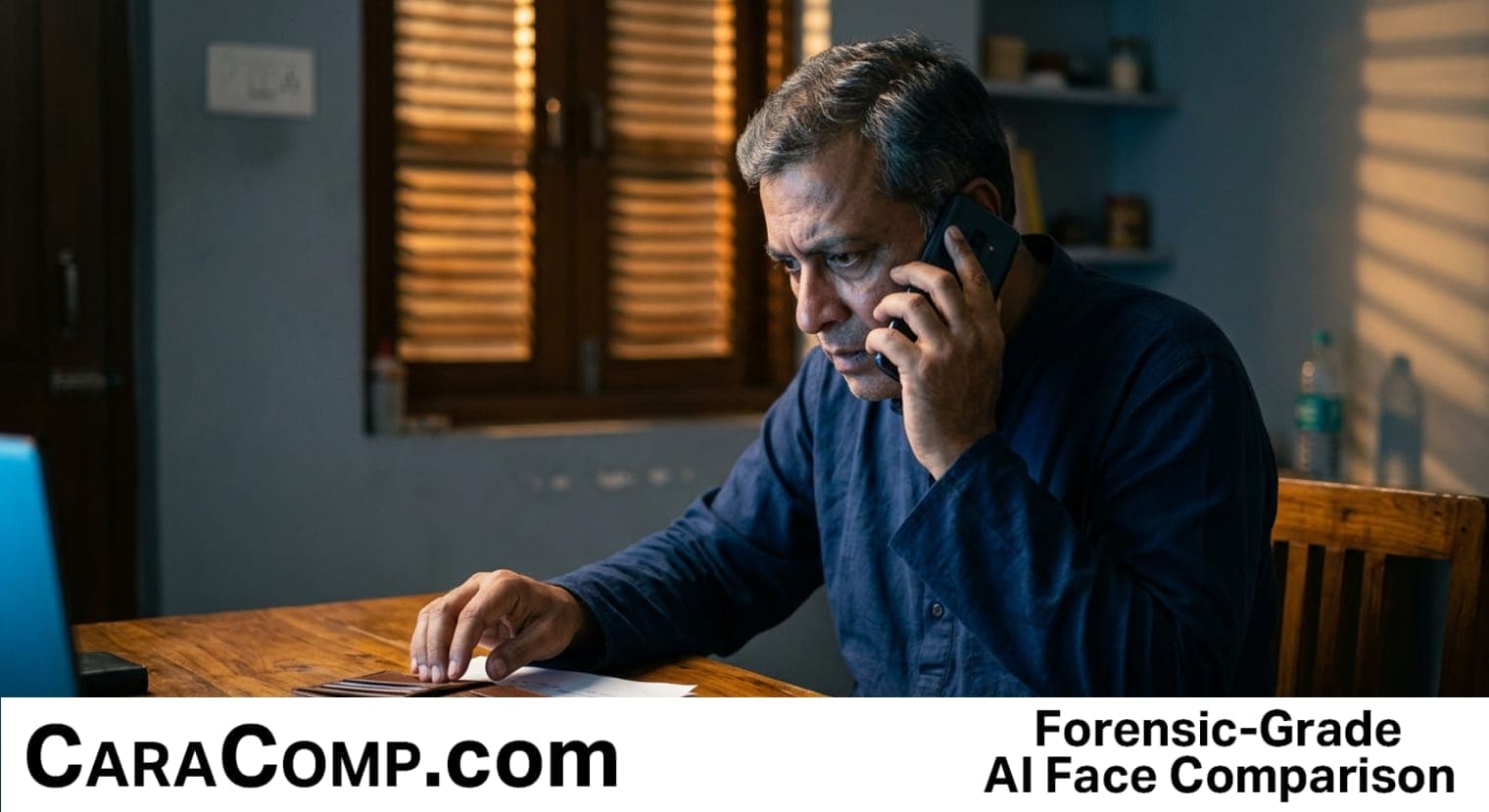
Your phone rings at 9:47 p.m. It's your daughter's number. Her voice. She's crying, she says she's in trouble, she needs money right now. Except she's actually asleep upstairs, phone dead on her nightstand, because the voice on the line was never her at all. It was built from a 12-second video she posted three weeks ago.
An ai voice cloning scam no longer needs a long phone call or a skilled con artist. It needs about a second of your voice from somewhere online, and a moment when you're too scared, hopeful, or rushed to stop and check. Scams like this one are exactly why report scams campaigns keep growing.
An ai voice cloning scam can now start from a tiny scrap of audio and land inside your most stressed moment, whether that's a family emergency, a job hunt, or a storm-damaged roof.
Here's the part that should actually worry you, and it's not the technology itself. It's the timing. A recent roundup from WUSA9, the Washington D.C. NBC station, laid out three scams running at once right now: AI-cloned voices impersonating loved ones, fake job recruiters using AI-written outreach, and storm-repair pitches pressuring homeowners into fast decisions. Three different doors, same house. And the house is your judgment under pressure.
What voice cloning scams, voice phishing, and fake voice calls actually need to work
Forget the movie version where a hacker spends weeks studying someone's speech patterns. Voice cloning tools now need shockingly little raw material, and voice detection tools are still playing catch-up. Industry researchers have started calling it the "1.2-second sample" threshold, meaning a clip that short, pulled from a voicemail greeting, a TikTok, a wedding video, is enough to build a voice model that can say anything the scammer types, in your loved one's tone, cadence, even their nervous laugh. That's according to AI Insights News, which has been tracking what it calls the industrialization of trust, basically, scamming turned into an assembly line using artificial intelligence at scale.
Starts at 01:02 — this story3:06
Watch this story, in under a minute
A new briefing every weekday — three stories, three minutes.
Subscribe on YouTubeAn ai voice cloning scam works because it skips the part where you'd normally get suspicious. You're not reading a weird email full of typos. You're hearing a familiar voice say something urgent. Your brain doesn't run it through a spam filter. It runs it through panic. Voice cloning awareness is the only real defense most people have right now, because the cloned voice itself will not give you any warning.
How a deepfake voice scam and fake recruiter scammers turn a job search into a trap
This is where it gets sneaky in a different way. A deepfake voice scam aimed at job seekers doesn't need to sound like your family. It just needs to sound like a normal recruiter with a normal opening. According to Robert Half, fake recruiting is exploding because artificial intelligence can now write outreach that reads (and sounds) exactly like something a real hiring manager would send, right down to the company jargon and the follow-up email three days later. Deepfake hiring fraud attempts reportedly jumped around 1,300% between 2023 and 2024, based on industry estimates cited by researchers covering this space, and this report keeps circulating for good reason. These voice scammers rarely need to be clever; they just need you distracted.
Think about who's most vulnerable here. Not careless people. Busy people. Someone who just got laid off, who's checking LinkedIn between errands, who gets a call that sounds professional and promising. They're not being dumb. They're being human at exactly the moment a scammer wants them to be.
Scammers harvest personal data including Social Security numbers, driver's license images, bank accounts, and copies of voided checks, then use that information to commit identity theft, file fraudulent tax returns, or open accounts in the victim's name.
reporting summarized from Defend ID
Why voice cloning scams and cloning scams pair so well with storm repair pressure and fraud
Notice the pattern yet? Voice cloning, fake recruiters, and storm-repair scams aren't three unrelated headlines. They're the same playbook wearing three costumes, and every version relies on artificial intelligence doing the heavy lifting in the background. A storm just wrecked your neighborhood. Your roof is leaking. Someone shows up, or calls, sounding exactly like the kind of contractor you'd trust, urgent, knowledgeable, ready to start today if you just pay a deposit right now. No time to check references. No time to think.
That's not an accident. It's a psychology trick researchers call the availability heuristic, meaning we judge how risky something is based on how easily we can recall an example of it going wrong. Most people have never personally watched a storm-repair scam unfold, so it doesn't feel dangerous in the moment. It just feels like help arriving fast when you need it most. Scammers count on that gap, and fraud built around a cloned voice exploits the same blind spot family emergencies do. This kind of report on cloned voice fraud keeps repeating because the trick works every time stress is high. Previously in this series: Online Dating Identity Verification One 30 Second Face Check.
Why an ai voice cloning scam matters right now
- ⚡ Speed beats suspicionthe shorter the sample needed to clone a voice, the less warning you get before it's used against you
- 📊 Fraud losses are climbing fastnearly $16 billion reported lost in 2025 alone, per FTC figures cited by Panstag, and every fresh report adds to that scams tally
- 🔮 Verification is becoming routineexpect "call them back on a number you already know" to become as normal as checking caller ID
- 🎯 Stress is the real targetscammers aren't exploiting your intelligence, they're exploiting the moment you're in
What's the difference between a deepfake voice scam, an old-fashioned phone scam, and everyday fraud
An old-fashioned phone scam relies on a stranger's voice and a good script. A deepfake voice scam removes the stranger part entirely, it uses a voice you already trust, cloned from something you or your family posted publicly. The script barely matters anymore. The voice does all the convincing, and that is precisely why this flavor of fraud is spreading faster than older scams ever did, and it is why every new report on these scams sounds a little more urgent than the last one.
How to spot voice cloning, report scams fast, and protect your money
Here's the one useful thing worth doing tonight, before you close this tab: pick a code word or a specific question with your family that only a real person would know the answer to, something that never gets posted online. Not "what's grandma's maiden name" (that's on a hundred forms already). Something weird and specific, like an inside joke or a made-up nickname for the dog. If you've ever wondered whether a call, a message, or a job offer is really who it claims to be, that's exactly the question this kind of verification exists to answer. Agree on it as a family now, while nobody's panicking, because you will not think clearly enough to invent a good test question in the middle of a crisis call.
For job offers, the move is simpler: hang up, and call the company back using the number on their actual website, not the one the recruiter gave you. For storm repair, the same logic applies. Real contractors don't melt down if you say "let me verify you with my insurance company first." And whenever you catch one of these attempts, report scams to the FTC or your state attorney general so the pattern gets tracked, even if you never lost a dollar. Every report filed helps flag repeat scams before they reach the next family.
| Old-style phone scam | AI voice cloning scam | Report status |
|---|---|---|
| Uses a stranger's voice and a generic script | Uses a cloned, familiar voice built from a short audio sample | Widely reported to the FTC |
| Relies on volume, calling many people hoping a few fall for it | Targets a specific person during a specific moment of stress or urgency | Underreported by victims |
| Easier to catch, accent slips, odd phrasing, robotic tone | Harder to catch, mimics tone, pacing, even emotional cues | Report volume rising |
| Warning sign: unknown number, weird request | Warning sign: urgency plus a request to skip normal verification | Report to attorney general |
An ai voice cloning scam succeeds by pairing a convincing voice with a stressful moment, so the strongest defense isn't spotting fake audio, it's building a verification habit, a code word, a callback number, a pause before you act, that works even when the voice on the phone sounds completely real.
So here's the question worth sitting with tonight: if your phone rang right now with your kid's voice, crying, asking for money, would you pause long enough to call them back on the number you already have saved, or would you already be reaching for your wallet? That half-second pause is the whole ballgame now, and it's the one thing no voice clone can fake for you. Up next: Ai Voice Cloning Scam 1 2 Seconds Fakes A Childs Voice Podca.
ai voice cloning scam: Frequently Asked Questions
Can AI clone a voice from just a few seconds of audio?
Yes. Researchers tracking this technology point to what's being called the "1.2-second sample" threshold, meaning a clip that short, pulled from a social media video or voicemail, can be enough for cloning software to build a working fake voice, complete with tone and speech pattern. That's a sharp drop from just a couple of years ago, when cloning tools needed minutes of clean audio to sound convincing. Voice detection systems exist, but they lag well behind how fast the cloning side is improving, and every new report on cloning tools confirms that gap is widening rather than closing.
How do I know if a job recruiter calling me is real or an AI-generated scam?
Hang up and call the company directly using the phone number listed on their official website, not any number the recruiter gave you. Real recruiters won't rush you into providing your Social Security number, bank details, or a voided check before you've even had a formal interview. If the outreach feels oddly polished but the process feels unusually fast, slow down, verify independently, and report scams to the platform where the contact reached you.
What should my family's verification plan be for emergency calls?
Agree on a code word or an obscure question in advance, something never posted online, that only a real family member would know. If you get an urgent call asking for money, don't provide anything until you've heard that code word or reached the person on a number you already have saved. Set this up now, calmly, because panic during a real crisis call makes it nearly impossible to think clearly, and building this habit is basically free cloning awareness training for your whole household.
Why do storm repair scams often use AI impersonation too?
Storm damage creates urgency, and urgency is exactly what scammers exploit using the availability heuristic, our tendency to judge risk based on how easily we can recall it happening before. Because most people haven't personally experienced a repair scam, it doesn't feel dangerous when someone shows up sounding professional and ready to start immediately. Always verify contractors through your insurance company before paying any deposit, and report scams to local consumer protection offices if a contractor pressures you.
Is a deepfake voice scam covered by any consumer protection laws?
Protections vary and are still catching up to the technology. The FTC tracks fraud losses nationally, reporting close to $16 billion lost in 2025 alone, but enforcement against AI-specific impersonation, including voice phishing calls that use a cloned voice, is still developing case by case. Your best protection right now isn't legal, it's behavioral: independent verification before sending money or personal information, regardless of how convincing the voice sounds. That report gap is exactly why so many scams go unpunished today.
Ready for forensic-grade facial comparison?
Full forensic reports with detailed similarity scoring. Results in seconds.
Run My First SearchMore News
Deepfake: Brother-in-Law's Fake Photos Spark New UK Crime
The scariest number in deepfake abuse isn't 17,000. It's 1: one person close enough to already have your photos. Sophie Parrish's case shows why, and what changed.
ai-regulationKorean Deepfake: 17,378 Sexual Violence Cases in 8 Months
South Korea's regulator logged 17,378 sexual deepfake reports in eight months. This is not a celebrity problem, and one ordinary photo is all it takes.
privacyAge Verification: Adults Flagged as Kids Get Pushed for ID
Australia is taking five big platforms to court over its under-16 ban. The real story is what a broken age check does to everyone else, and where your ID or face scan ends up.