
AI Generated Deepfake: Fake Ronaldo Video Fails a Spanish Test
Quick answer
How can you tell if a video call is an AI generated deepfake?
Do not trust your eyes alone, because modern fakes can look convincing on a phone screen. Ask the caller for something unscripted, such as speaking another language, then hang up and call back on a number you found yourself. Be suspicious of any request for money, secrecy, or a deadline.
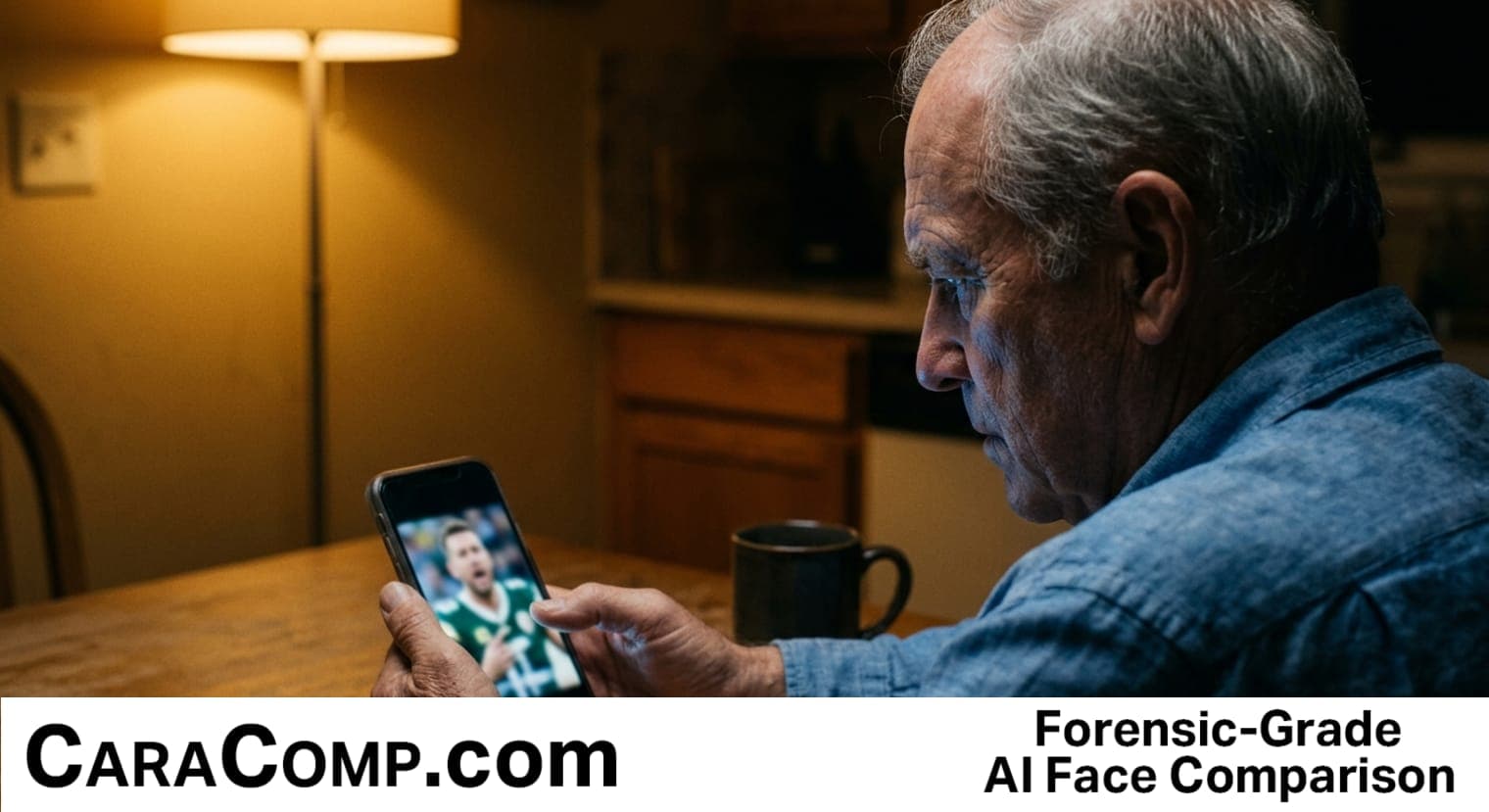
A 70-year-old man in Los Teques, Venezuela, answered a video call and saw Cristiano Ronaldo smiling at him. The soccer star said the man had won $100,000. It was an AI generated deepfake, and it nearly worked.
An AI generated deepfake of Cristiano Ronaldo was used to try to scam an older man in Venezuela, and this trick is about to show up in far more families, so a famous face on video is no longer proof of anything.
Here is the good news first. He did not lose his money. He caught the fake. But how he caught it is the part that should keep you up tonight, because most of us would never think to try it.
Why an AI Generated Deepfake of a Famous Face Works So Well on Parents and Grandparents
According to the El Universal report, the scam started on Telegram (a messaging app). The criminals told the man he had won a prize. Then they set up a video call, and a computer-made Ronaldo appeared on screen, speaking English.
The man grew suspicious and asked the "athlete" to speak Spanish. The call dropped. That was the tell. The software could not handle the request, so the scammers pulled the plug.
Parallel coverage from AlbertoNews adds a warning from Venezuelan police about how exposed older adults are to this kind of fraud (crime that works by tricking you, not breaking in).
"Adulto mayor en Los Teques evita estafa de 20.000 bolívares tras detectar un deepfake de Cristiano"
From the headline of the original report in El Universal, Venezuela (in English: an older adult in Los Teques avoids a 20,000 bolivar scam after spotting a deepfake of Cristiano)
Cristiano Ronaldo deepfake: the familiar-face shortcut
Think about the last time a famous person popped up in your feed. Your brain said, "I know that guy." That split second of recognition is the whole trick. Psychologists call it the availability heuristic (your mind treats whatever comes to it fastest as the most trustworthy). A face you have seen a thousand times comes to mind instantly, so it feels true.
A scammer does not need to win an argument. They only need you to relax for ten seconds before the ask arrives. A Cristiano Ronaldo deepfake buys those ten seconds. Then come the money, the personal details, or the "limited-time" offer. This article is part of a series, start with Playstation Age Verification Skip It Kids Lose Voice Chat. This article is part of a series, start with Playstation Age Verification Skip It Kids Lose Voice Chat.
Is This One Fake Video Call Really a Trend? The Numbers Say Yes
One man in one town is a story. A pattern is a warning. And the numbers here are ugly.
That figure, from a 2026 senior scam guide, comes from more than 3,100 victims over 60 who reported their losses to the FBI. Those are only the people who filed a report. Plenty of embarrassed families never do.
Zoom out and the climb is steep. SQ Magazine puts the rise in deepfake fraud (money crimes built on fake faces and voices) at 2,137% over three years. Surfshark's tracking counted a 257% jump in deepfake incidents from 2023 to 2024, reaching 150. In the first three months of 2025 alone, it logged 179.
Another set of research numbers explains why famous faces keep showing up. Roughly 48% of deepfake incidents in the US used celebrity impersonation to look believable, according to the research summary we reviewed. And only 29% of people say they feel confident spotting a fake. Do the math. Scammers have a trusted face, and most of us have no test.
What a real video looks like versus a deepfake
Here is the contrast that matters. The old advice was "look for glitches." That advice is aging badly.
| What you see | Deepfake video | Real video |
|---|---|---|
| Contact method | Unknown Telegram message, a "prize," fraud pressure | Official, verified channel you can confirm yourself |
| On-call request | Breaks or hangs up when asked to change language or do something unplanned | Responds live to any request |
| The ask | Money, personal details, or a deadline | No payment needed to receive a gift |
| Detection by eye | Often looks fine, so detection by eye alone fails | Looks fine, which is the problem |
What Is Coming Next: Celebrity Deepfake Videos Reach Your Family
I will make a bold prediction. Within a year, a lot of families will get a "famous person" video that was never made by that person. Not as a prank. As a sales pitch.
Why so sure? Because it works and it is cheap. The researcher's report notes that Ronaldo, along with Ryan Reynolds and other stars, has already been faked in videos pushing mobile gaming apps. The Venezuela case adds the next step. Move the video off a public feed and into a private call, so nobody around the victim sees it and a relative cannot say, "Wait, that looks odd."
The scam also has layers. First the familiar face. Then a prize, which is greed's cousin. Then urgency. Then a built-in shield: speak English only, so the victim cannot easily test it. That is not a rookie move. That is a script.
And scammers adapt. As more seniors learn to distrust video calls, expect a shift to cloned voices (audio deepfakes, a computer copy of someone's speech) and follow-up texts. The face is just the front door. Previously in this series: Ai Generated Deepfake Fake Ronaldo Fails One Spanish Test.
Can artificial intelligence videos be spotted by looking harder?
Not reliably. Artificial intelligence now makes faces that hold up on a small phone screen late at night. Staring harder is not a plan. A habit is. Spotting a fake is less about your eyes and more about what you do before you reply.
How Does Deepfake Detection Work, and Can Families Rely on It?
Deepfake detection is software and research aimed at flagging fake media, whether in still images or in whole videos. It helps, but it is not something your 70-year-old dad runs mid-call. Right now the practical defense is a short list of human checks.
Why an AI Generated Deepfake Check Matters Before Any Payment
- Ask for something unplanned - the Venezuelan man asked for Spanish. Ask the caller to switch languages, hold up today's newspaper, or turn their head. Real people can. Many fake videos cannot.
- Hang up and call back - use a number or official page you find yourself, never one the caller gave you.
- Treat any prize that costs money as fraud - real winners do not pay fees or share personal details.
- Tell one other person - scammers want secrecy. A second set of eyes breaks their spell.
If you have ever wondered whether a photo or a profile is really who it claims to be, that is the exact question facial comparison technology exists to answer. It lines up an image against known real ones and gives a reasoned answer instead of a gut feeling. The one thing you can do tonight, though, costs nothing: agree on a family rule. No money moves and no personal details are shared after any video, famous face or not, until someone calls back on a number they already trust.
Where policy and the EU AI Act come in
Lawmakers are paying attention. A Senate committee investigation into AI-enabled fraud against older adults was covered by Spectrum Local News, with one recommendation focused on training bankers to notice when an older customer seems coached or secretive. That is smart, and it is policy at the human level.
But I will be honest. Rules take years. The scam took one phone call. No privacy setting or policy memo will have your mom's back at 9 p.m. on a Tuesday.
The EU AI Act and why one law will not stop this
You may hear about the EU AI Act, Europe's big set of rules for artificial intelligence, which includes ideas like labeling synthetic media. Even with such rules, a Telegram scammer in a different country is not reading the fine print. The AI Act can raise the cost of doing business for honest companies. It cannot call your grandfather back.
The Fake Question That Matters: Would Your Family Know What to Check?
The researcher's counterpoint is the one I keep thinking about. Skeptics say seniors have been warned already. But warnings without a simple, rehearsed test are just anxiety. People know "deepfakes exist." They do not know what to do with a famous person on a screen offering them something nice.
That is why the Los Teques story is so useful. The man did not use special tools. He did not spot warped teeth or odd blinking. He made one small, human request, and the machine could not keep up. Teach that. Practice it like a fire drill. Up next: Ai Generated Deepfake Fake Ronaldo Fails One Spanish Test.
An AI generated deepfake turns a famous face into a trust shortcut, so a celebrity video is never proof that an offer is real. Whenever a video asks for money, urgency, or personal details, test it with an unplanned request and verify through a channel you found yourself.
So here is my question. If a scammer can borrow Ronaldo's face for the price of a Telegram account, which face does your family trust most, and what would it take for them to hang up on it? Settle on that answer before the next AI generated deepfake call comes in.
AI Generated Deepfake: Frequently Asked Questions
What is a deep fake, and how is it different from an edited video?
A deep fake is a video, image, or audio clip made by a computer to show someone doing or saying something they never did. Regular editing changes real footage by cutting or adding pieces. A deep fake builds new footage from scratch using deepfake technology trained on a person's face and voice. That is why a deepfake can speak new sentences, answer a live call, and still look like the real person to a tired viewer.
How can people tell if a video call is a deepfake?
Do not rely on spotting visual glitches. Instead, ask for something the scammer cannot script, such as speaking a different language, as the man in Venezuela did. Then hang up and call back using a number you found yourself. If the caller pushes money, secrecy, or a deadline, treat it as fraud. Most people feel unsure about spotting a fake, so a repeatable habit works better than guesswork.
Does deepfake detection technology protect older adults?
Detection technology helps platforms and investigators flag a fake image or video, and research in this area keeps improving. But it rarely sits on a grandparent's phone during a live call. Until it does, the best protection is a family plan: verify through a trusted channel, never pay to claim a prize, and tell another person before acting. Technology supports that plan but does not replace it.
Why do scammers use celebrity deepfakes instead of random faces?
Familiarity lowers guard. Roughly 48% of deepfake incidents in the US used celebrity impersonation, according to the research summary we reviewed. A recognized face feels trustworthy before the scammer says a word. That gives the criminal a head start on privacy-invading questions, payment requests, and fake urgency. A stranger would have to earn trust. A celebrity arrives with it already built in.
Will the EU AI Act stop deepfake scams?
Not by itself. The EU AI Act is a set of European rules for artificial intelligence, and policy like it can push honest companies toward labeling synthetic media. But criminals running a scam over a messaging app usually sit outside any country's reach. Laws help over time. Families still need quick, practical habits for the call that arrives today.
What was the Cristiano Ronaldo deepfake scam in Venezuela?
A 70-year-old man in Los Teques was contacted on Telegram and told he had won a $100,000 prize. Scammers then staged a video call with a fake Ronaldo speaking English. When the man asked the footballer to speak Spanish, the call cut off. He avoided the loss. Venezuelan outlets, including El Universal, reported the case within days.
Ready for forensic-grade facial comparison?
Full forensic reports with detailed similarity scoring. Results in seconds.
Run My First SearchMore News
PlayStation Age Verification: Skip It, Kids Lose Voice Chat
PlayStation reportedly plans to switch off voice chat and messages for accounts that skip an age check. Here's why that matters for every family with a console.
privacyVPN Age Verification Law Utah: Blocked, but ID Checks Spread
A federal judge blocked Utah's rule aimed at VPN users, but age checks are not going away. They are about to get more common and more confusing, depending on where you live.
facial-recognitionFacials Fargo: Wrong Facial Match Jails Grandma 108 Days
A Tennessee grandmother spent 108 days in jail after a facial recognition match, and now she wants $10 million. A face match is a lead, not proof.