
Age Verification Law States: 29 Now Ask Adults for ID or Selfie
Quick answer
Which states have age verification laws for websites and apps?
Twenty-nine U.S. states have age verification laws in force, according to a map tracked by Gadget Review. Each state wrote its own rules, so requirements differ by location. Florida, New York and Virginia, for example, target minors in different ways. Check your own state's status, since bills keep moving and some laws face court challenges.
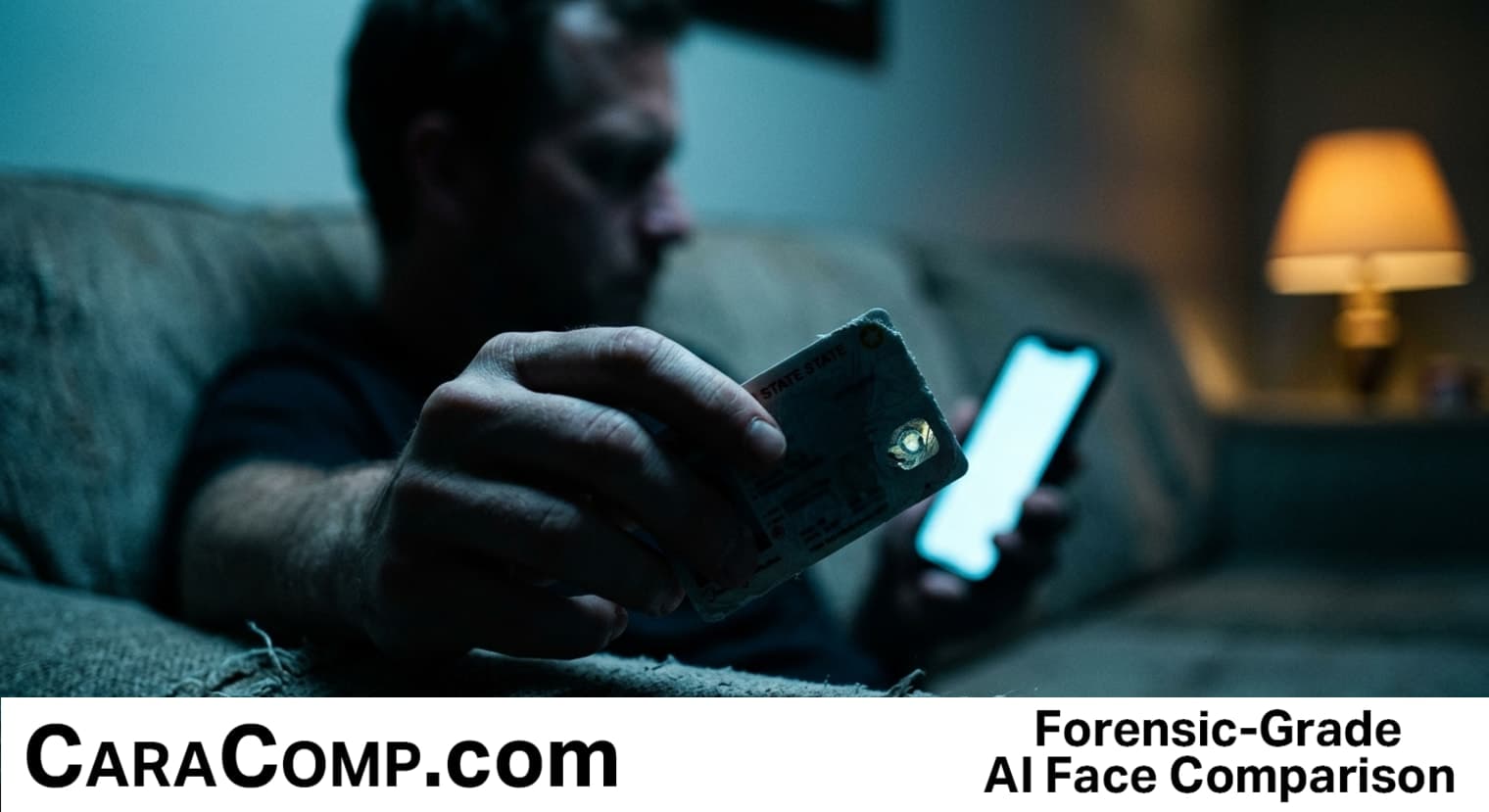
Picture this. You open a website you have used for years, and today it wants a photo of your driver's license before it will let you in. Nothing is broken, and it is probably not a scam. You are just living in one of the age verification law states, and there are now 29 of them.
Age verification law states now cover 29 places in America, which means more sites will ask adults for an ID or a selfie, so know who gets that data and how long they keep it before you upload anything.
Age verification law states now cover 29 places in America, so expect more ID and selfie requests, and ask who holds your data before you say yes.
Age verification law states: what 29 of them mean for a normal family
So, are you safe? Mostly yes, as long as you slow down. A real age check on a site you know is not the same thing as a scam. But the request is new, it is awkward, and it asks for some of the most sensitive things you own. That deserves a pause.
That number comes from a map tracked by Gadget Review. Here is the part that trips people up. These are not one law. Each state wrote its own, so the rules for kids and adults change depending on where you are sitting.
Which states have an age verification law in force?
Twenty-nine states do, according to Gadget Review's map. The details differ a lot. Florida bans children under 14 from making social media accounts at all. New York goes after addictive, endless content feeds for anyone under 18. Virginia limits minors to one hour of social media a day by default.
Same goal, three very different rules. Now imagine you run an app used in all 50 states. You need to figure out where each visitor is, use an outside vendor to check ages, and follow different rules about how long to keep the data. That is what the industry calls compliance (the work of following every rule that applies to you). It is a headache for companies. It becomes your headache when the company decides the easy fix is to ask everybody for an ID.
What does an online age check ask for, and who holds the data?
It depends on the site. Many age checks collect a government ID, such as a driver's license or birth certificate, because that proves age with high certainty. Others ask for a selfie, where software guesses your age from your face or compares your face to your ID. The key question is simple: once you upload it, who holds that data, and for how long? This article is part of a series, start with Deepfake 97 Of School Victims Are Girls Most Under 15.
Here is the catch. To find out who is a child, a site has to check everyone. Every adult becomes a person who must prove they are an adult. The Center for Democracy and Technology has laid out the privacy risks of these tools, including how much information they collect and where outside vendors leave gaps.
Why age verification data worries privacy experts
Think about what you used to do online. You read, you browsed, you wandered, and nobody asked for your name. Once you must show proof of age first, that quiet anonymity shrinks. Your visit gets tied to a real identity. Privacy experts say that is the deeper change hiding inside a child safety law.
And the companies doing the checking are often not the sites you know. They are third-party vendors, businesses hired to run the check. Experts call these vendors the weakest link, because a pile of IDs in one place is a tempting target for thieves.
The Discord breach: proof this is not hypothetical
This is not just a worry on paper. CNBC reported that Discord disclosed a breach exposing ID images belonging to about 70,000 users. It happened through a compromised third-party service. Not Discord's front door, but a vendor's side door.
Look at that again. A law meant to protect people created a stash of IDs, and the stash got out. Nobody is saying the intent was bad. But it is a design problem, and it will keep happening wherever sensitive IDs pile up in too many hands.
Why age verification laws matter to you
- More requests are coming. With 29 states covered, ID and selfie screens will show up on sites you already use.
- Unclear storage is common. Many screens never say who receives your ID or how long they keep it.
- Vendor risk is real. The Discord breach hit about 70,000 users through an outside service.
- Lost anonymity is the quiet cost. Proof of age before you browse links you to the content you read.
Age verification law states in court: why this fight is not settled
Does the child safety side have a point? Absolutely. In February 2026 the FTC issued a new policy statement under COPPA (the federal rule that protects children's privacy online) that pushes companies toward using age checks. Keeping a child away from harmful content is a real goal, and the Supreme Court has ruled that a state may require age verification for sites where more than one-third of the content is sexual material harmful to minors. Put plainly, that means pornography sites.
Look, nobody serious thinks kids should wander anywhere online. The better way to see this is as two privacy needs bumping into each other: a child's right to be protected and an adult's right to browse without handing over an ID. Each state age-verification law has to pick a spot between them, and the legal fights over free speech and kids usually live in that gap. Previously in this series: Age Verification Pakistan Says No Law Makes Apps Check Kids.
US Age Verification Laws Map: 29 States Now Have Age-Verification Laws in Force
Headline of the map, Gadget Review
How the old way compares to the new way
| Before these laws | In states with an age verification law |
|---|---|
| You clicked "I am over 18" and moved on, with no age verification at all | A site may ask for a driver's license, a birth certificate, or a selfie |
| Your data stayed with you | Your data may go to a third-party vendor you never heard of |
| Browsing online content was mostly anonymous | Proof of age ties a real identity to your visit |
| One set of platforms rules for the whole country | Each state sets its own rules, so platforms must track where you are |
US age verification laws: a checklist before any ID or selfie goes up
Here is the one habit that helps most. Before you upload anything, find the answer to three questions on the screen or in the privacy page it links to. Who receives my ID or selfie? How long do they keep it? Is it deleted afterward? If the site cannot tell you in plain words, that is your answer for now.
If you have ever wondered whether a photo or a profile is really who it claims to be, that is the exact question this kind of technology exists to answer. The same rule works in reverse. Before you trust a site with your face, make it prove it deserves that trust.
Two more tips. First, make sure you reached the site yourself rather than through a link in a text or email. Scammers love to copy an age check screen because people expect to be asked. Second, if the check is only for one feature, such as voice chat or messages, ask yourself whether the feature is worth an ID.
Checking Ohio or any state's age verification law
Want to know where your own state stands, whether that is Ohio or somewhere else? The Recording Law site keeps a state by state table showing enforcement status, effective dates, scope, and any court challenges. Look up your state, then check whether a bill is still moving through your legislature. Laws change, and some face litigation.
The Center for Democracy and Technology also published guardrails for age verification that cover secondary use, retention, and sharing with third parties. Those are good questions to hold in your head when a site asks for your face.
In the 29 age verification law states, protecting children is a fair goal, but adults should not have to guess who holds their ID. Ask who gets your data, how long they keep it, and whether it is deleted before you upload. Up next: Age Verification Law States 29 Ask Adults For Id Or Selfie.
Here is the sharp little irony to leave you with. Every age-verification law passed assumes that someone, somewhere, will guard a mountain of driver's licenses and face scans better than a website guarded a simple checkbox. After the 70,000 IDs at Discord, who exactly is that someone?
age verification law states: Frequently Asked Questions
Is an age check on a familiar website a scam?
Usually not. Many sites now have to run an online age check because of a state law, so a request can be real. Still, reach the site yourself instead of clicking a link from a text or email, since scammers copy these screens. Look for a clear privacy page that says who receives your ID or selfie, how long they keep that data, and whether it is deleted after the check is done.
Do kids and adults both have to pass an online age check?
Yes, in practice. A site cannot tell who is a child without checking everyone, so adults get asked too. That is why many privacy experts worry about the new rules. The check meant to shield a child can pull every adult into handing over a license or selfie, and this can reduce anonymity on the internet.
Does a bill in my state legislature change what sites ask for?
It can. Each state writes its own rules, so a new bill that becomes law may change who must verify age, what counts as proof, and how long a company keeps your data. Because the details differ, a rule in Texas is not automatically the rule in Virginia. Check your own state's status before assuming anything.
Why do pornography sites get most of the court attention?
The Supreme Court has ruled that a state may require age verification for sites where more than one-third of the content is sexual material harmful to minors. That ruling gives states a firm legal footing for pornography sites. Rules for social media content are less settled, and fights over speech and child safety continue to shape what a court will allow.
What is compliance, and why does it affect my privacy?
Compliance means following every rule that applies to a company. When 29 states have different rules, a platform must track where each visitor is and which age check applies. Many companies hire a third-party vendor to handle it. That adds another place where your data can sit, and the Discord breach shows why that matters for digital privacy.
What does the federal act behind the FTC statement do?
The federal act is COPPA, the Children's Online Privacy Protection Act, which protects the privacy of a child online. In February 2026 the FTC issued a policy statement that encourages companies to use age verification technologies to protect kids. That gives platforms more reason to add checks, so adults may see more digital ID and selfie requests across the internet.
Ready for forensic-grade facial comparison?
Full forensic reports with detailed similarity scoring. Results in seconds.
Run My First SearchMore News
Age verification: Pakistan Says No Law Makes Apps Check Kids
A parent may assume apps are checking their child's age. Pakistan's regulator just told a court it has no legal power to make anyone do it.
digital-forensicsDeepfake: 97% of School Victims Are Girls, Most Under 15
A new analysis found that 97% of school deepfake victims were female. Here is what that number means for your child, and the first thing to do if a fake image ever shows up.
digital-forensicsDeepfake Fraud: One Cloned Voice Fooled a Grandfather
One fake voice was enough to fool a grandfather. Here is why a familiar voice is no longer proof, and the one family habit that beats a cloned call.