
How to Catch a Catfish: Bait, Gear & Techniques
How to catch a catfish: the best catfish bait, gear, rigs, and fishing techniques for channel, blue, and flathead catfish in rivers, lakes, and ponds.
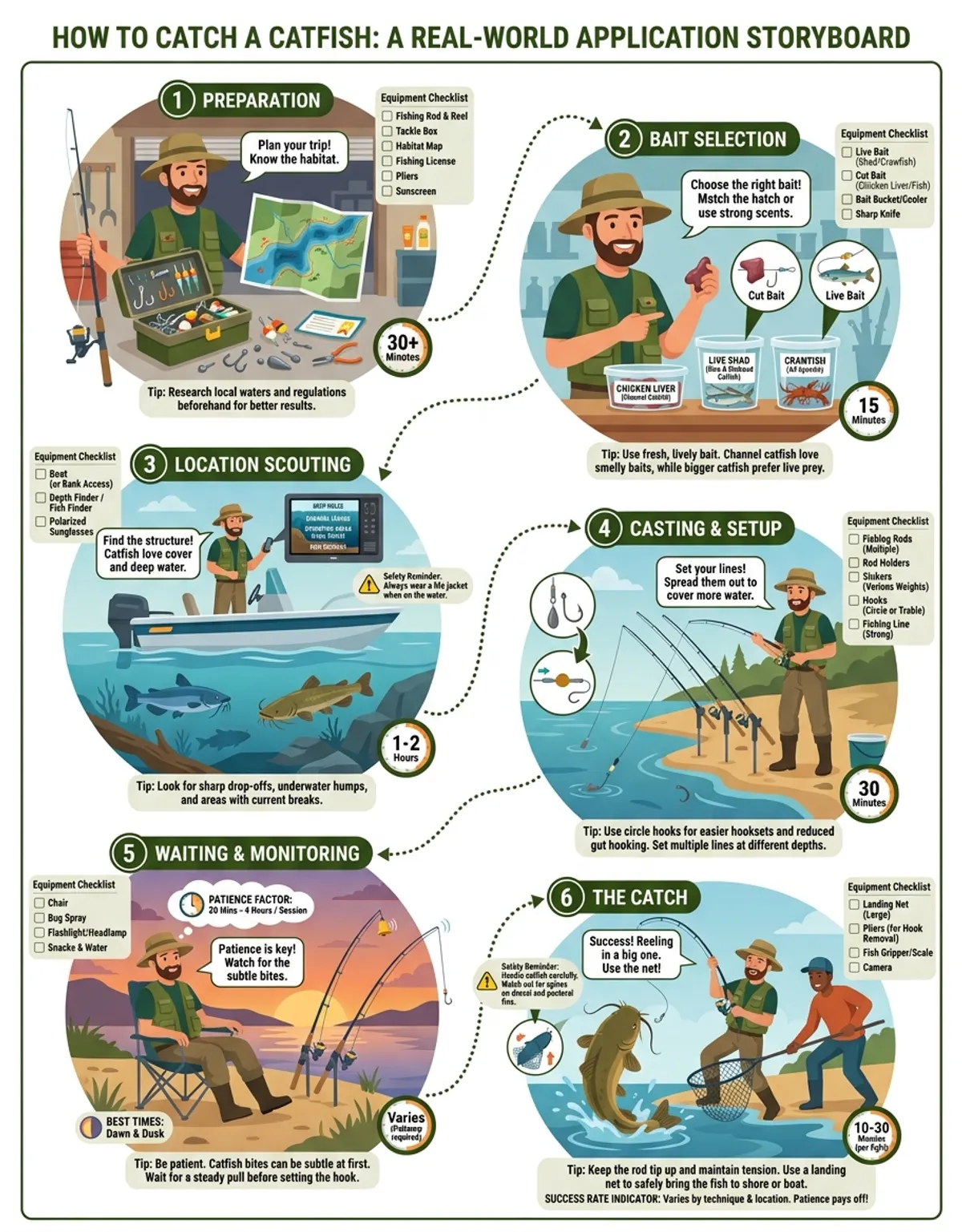
Selecting the right bait is the most important factor in catching catfish consistently. Catfish are opportunistic feeders with a powerful sense of smell, so aromatic bait that pushes a strong scent trail through the water produces more bites. The best catfish bait for catching numbers of fish depends on the species you target and the water you fish.
Best Catfish Bait Options for Success
For channel catfish, prepared dough baits, chicken liver, cut bait, nightcrawlers, and shrimp all catch fish reliably. Stink bait and punch bait work especially well in lakes and ponds where channel catfish hunt by scent. Hot dogs soaked in garlic powder are a cheap, effective bait that stays on the hook during long casts.
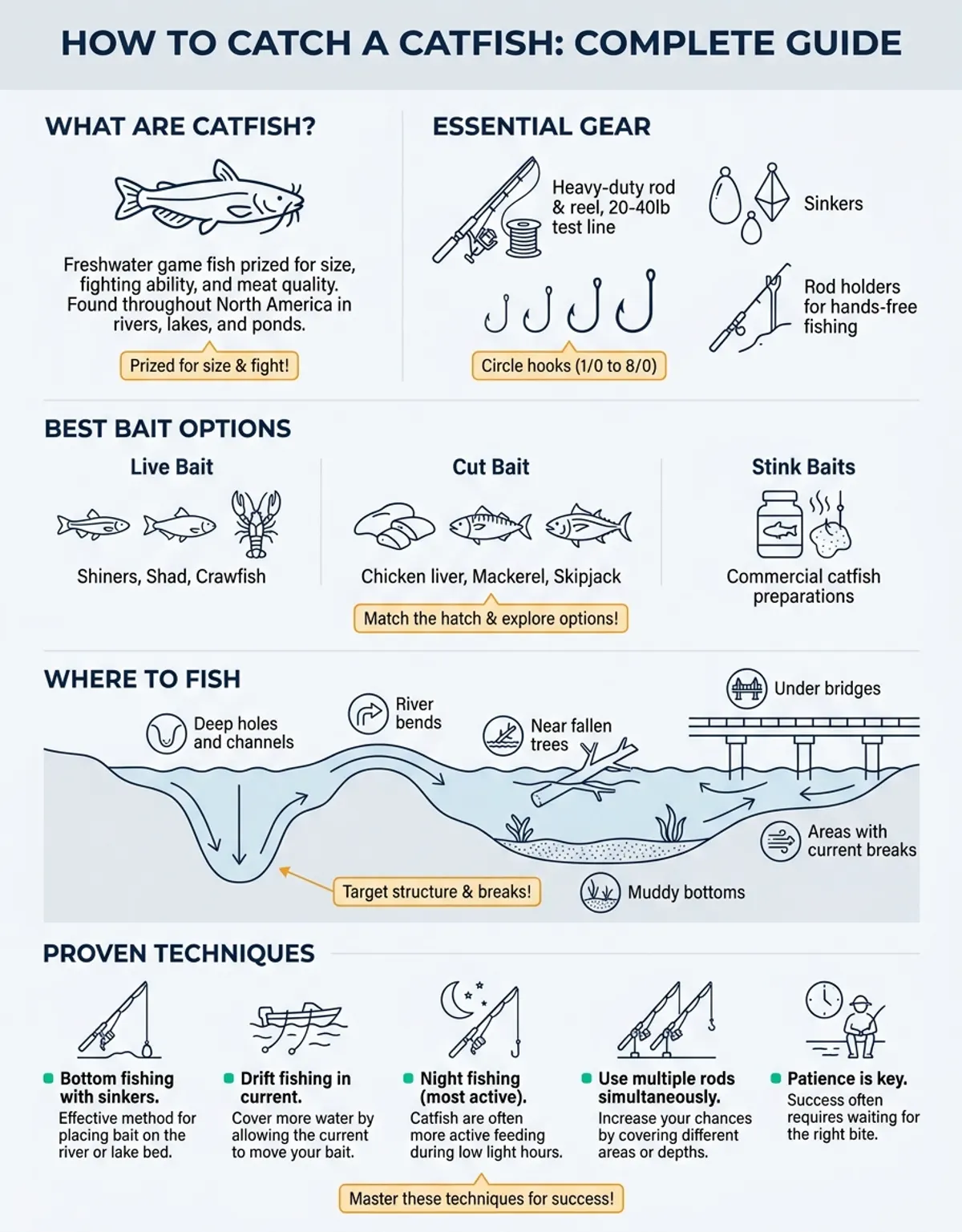
For blue catfish and flathead catfish, fresh cut bait and live bait outperform almost everything else. Cut shad, skipjack, and bluegill release blood and oils that big catfish track from a distance. Flatheads in particular prefer live bait such as a lively bluegill or sunfish fished near cover.
Match your bait to the conditions. In current, use tougher cut bait that stays on the hook; in calm water, softer dough bait and chicken liver work well. Keeping a couple of bait choices ready lets you adjust until you find what the catfish want that day.
Essential Catfish Gear and Tackle Setup
Catfish fishing gear must balance strength with sensitivity, because catfish range from one-pound channel catfish to 100-pound blues. A medium-heavy to heavy action rod in the 7-to-9-foot range gives you the backbone to fight big fish and the reach to cast bait into deep water.
Pair your rod with a sturdy baitcasting or spinning reel that holds plenty of line. Spool with 15-to-30-pound monofilament for most catfish, or braided line when you fish heavy cover for flatheads. A reliable reel with a smooth drag is essential gear for stopping a hard run.
Round out your tackle with an assortment of circle hooks, egg sinkers, barrel swivels, and beads to build dependable rigs. Circle hooks in sizes 3/0 to 8/0 cover most catfish, and egg sinkers from half an ounce to three ounces let you hold bottom in different current speeds.
Don't overlook the support gear: a long-handled net, needle-nose pliers, a headlamp for night fishing, and rod holders to keep multiple lines in the strike zone. The right gear and tackle setup turns a tough day on the water into a productive catfish trip.
Finding the Best Catfish Fishing Locations
Location is everything in catfish fishing. Catfish follow predictable patterns based on food, water temperature, oxygen, and protection from current and predators. Learning to read the water helps you find catfish faster.
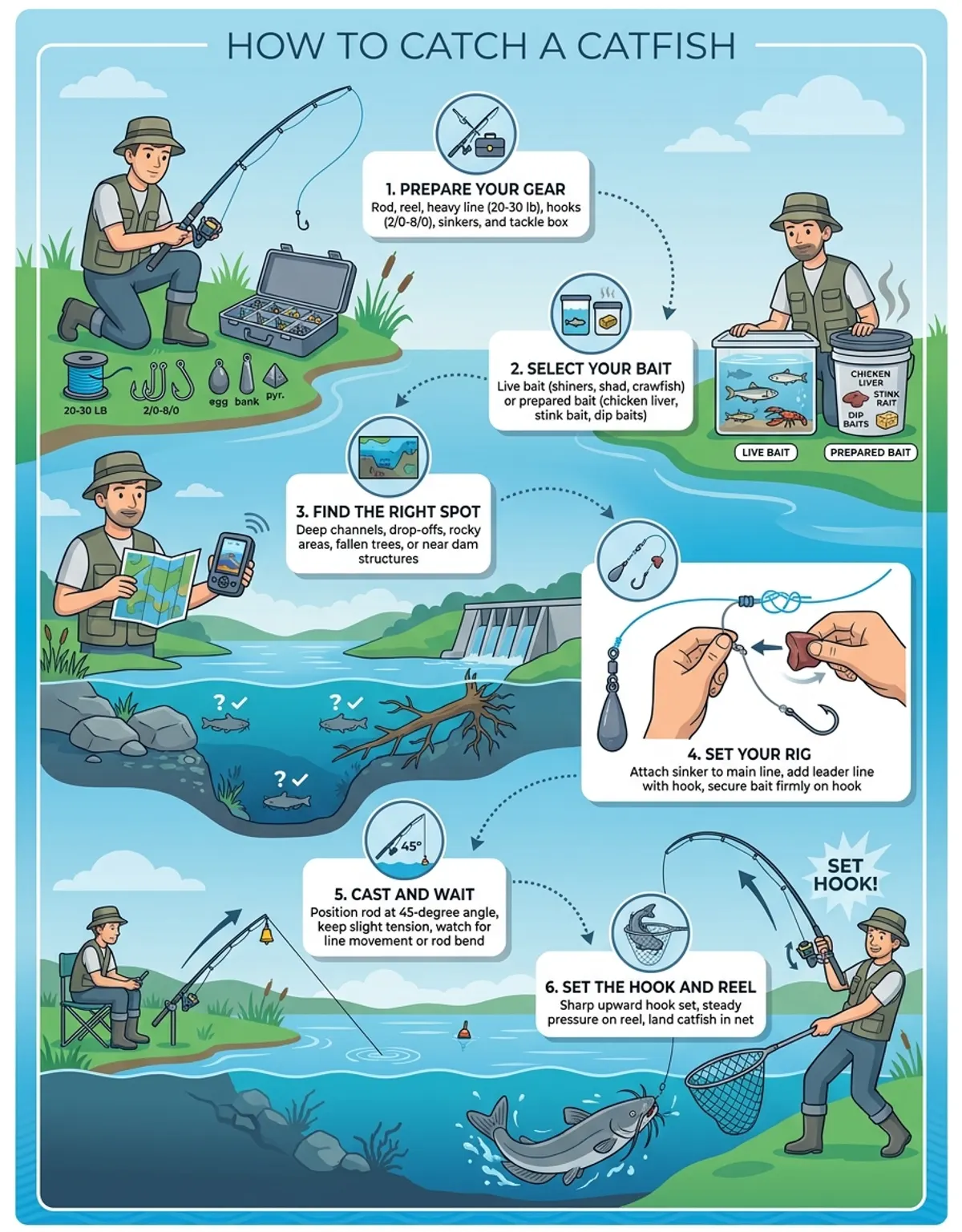
In rivers, target deep holes, outside bends, the seams where fast current meets slow water, and any structure that breaks the flow. Catfish hold below dams, around log jams, and near submerged rock piles where bait collects. Fish the edges of the current and let your bait settle into the deeper water where catfish wait.
In lakes and ponds, focus on channel edges, points, creek mouths, flats next to deep water, and any cover such as brush piles and standing timber. Channel catfish roam shallow flats to feed at night, then slide back to deeper water during the day.
Use a fish finder to locate bait, structure, and depth changes. When you find a spot holding catfish, fish it thoroughly before moving. The best catfish fishing locations almost always combine food, cover, and access to deep water within a short distance.
Good catfish fishing also changes with the seasons. In spring, catfish move shallow to feed and spawn, so fishing the warming flats and creek arms of a lake pays off. In summer, fish deeper water during the day and the shallows at night. In fall, catfish feed aggressively before winter, making it one of the best times for catching numbers of fish on cut bait. Reading the water this way keeps you on active catfish all year.
River Catfish Fishing Techniques and Strategies
River catfishing presents different challenges and opportunities than stillwater fishing. Current influences every part of your presentation, from rig selection to where your bait settles and how a catfish finds it.
Anchor upstream of a deep hole and let your bait drift naturally into the strike zone, or position your boat to cast bait to the downstream edge of structure. Use enough weight to hold bottom in the current without anchoring your bait so firmly that the scent trail can't spread.
The three-way rig and the slip sinker rig both excel in rivers. The three-way rig keeps your bait just off bottom in heavy current, while a slip sinker rig lets a catfish take line without feeling resistance. Circle hooks shine here because the moving current sets the hook in the corner of the mouth as the fish turns.
Drift fishing covers water quickly when catfish are scattered across a river flat. Control your speed with a drift sock, keep your bait near bottom, and watch your rod tip for the steady pull of a feeding catfish.
Channel Catfish vs Blue Catfish vs Flathead Catfish
Understanding the differences between catfish species helps you target your preferred fish and adjust your tactics. North America's three primary catfish are the channel catfish, the blue catfish, and the flathead catfish, and each behaves differently.
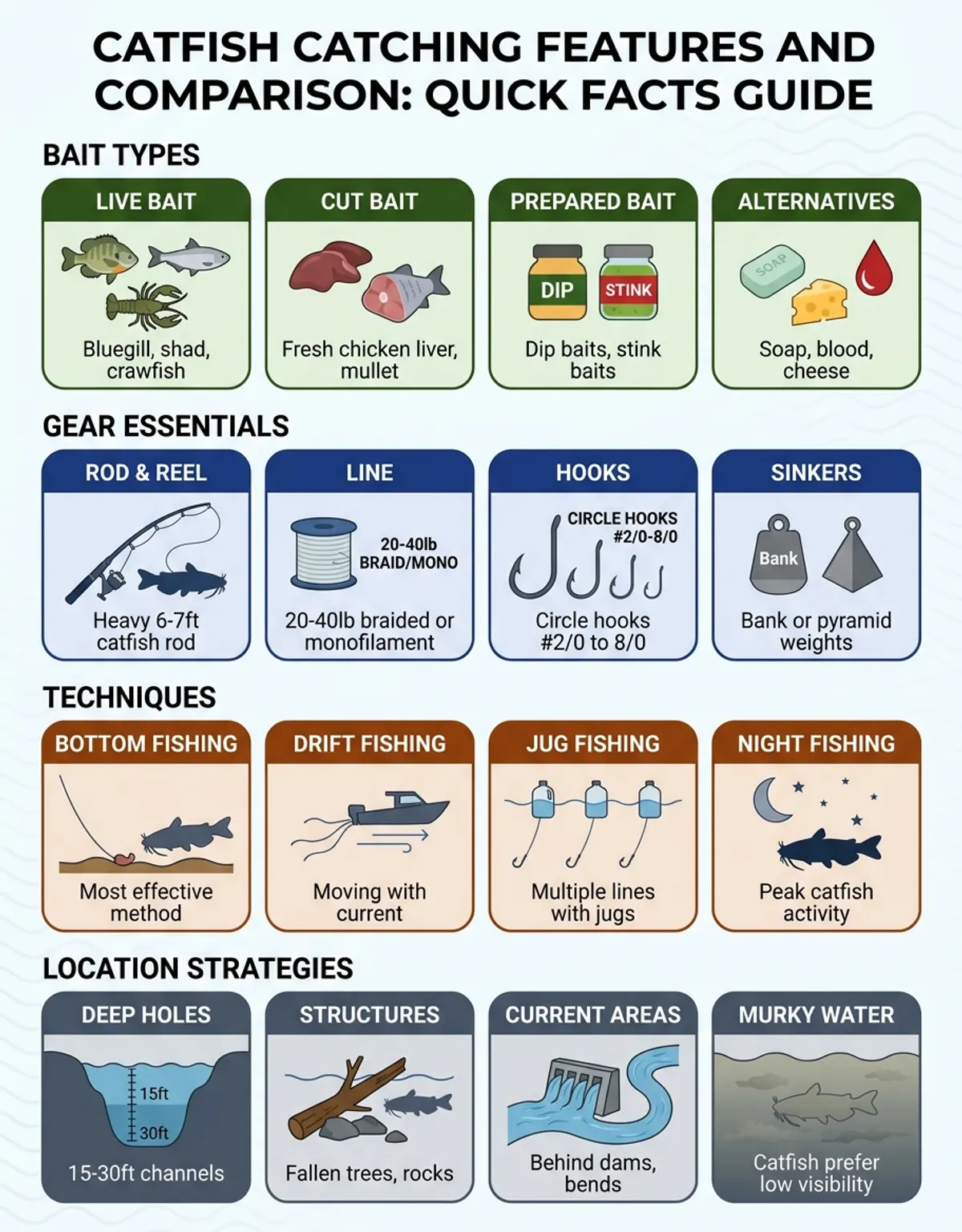
Channel catfish are the most widespread and the easiest to catch. They feed aggressively on scent and take prepared bait, cut bait, and worms in rivers, lakes, and ponds. Most channel catfish run one to ten pounds, making them ideal for beginners.
Blue catfish grow the largest and prefer fresh cut bait fished in deep water near current. Trophy blue catfish over 50 pounds are caught from big rivers and reservoirs, and they respond to a well-presented chunk of shad on a strong rig.
Flathead catfish are ambush predators that prefer live bait such as bluegill fished tight to cover. Flatheads hold near log jams, undercut banks, and deep structure, and a trophy flathead is one of the strongest fish in freshwater. Knowing which species you're after tells you what bait, gear, and location to choose.
Lake and Pond Catfish Fishing: Bait and Rig Tips
Stillwater catfishing in lakes and ponds requires a different approach than river fishing, since you can't rely on current to position fish or carry your scent trail. Instead, you build your own scent and let the catfish come to your bait.
Fish prepared dough bait, stink bait, chicken liver, and cut bait on the bottom near structure. A slip sinker rig with an egg sinker and a circle hook lets a catfish pick up the bait and swim off without feeling weight. Set several rods in holders across different depths to find where the catfish are feeding.
Night fishing is highly productive in lakes and ponds. As the sun drops, channel catfish move shallow to feed along points, flats, and dam riprap. A bobber rig suspends bait just off bottom over soft mud where a sinker would sink out of sight.
In small ponds, a simple setup catches plenty of catfish: a baited circle hook under a bobber, or a light sinker rig fished on the bottom near the deepest water. Keep your bait fresh, stay quiet, and give the catfish time to find the scent.
A productive lake or pond pattern is to fan-cast several rods with different baits and rigs, then concentrate on whatever the catfish prefer that day. Try one rod with cut bait on a slip sinker rig, another with chicken liver under a bobber, and a third with a fresh nightcrawler near structure. This covers more water and quickly tells you where the catfish are holding and what bait triggers a bite.
Setting Up Your Catfish Fishing Rig
The right rig presents your bait naturally while providing enough weight to reach and hold the strike zone. Several proven catfish rigs work in different situations, and each one has a clear purpose.
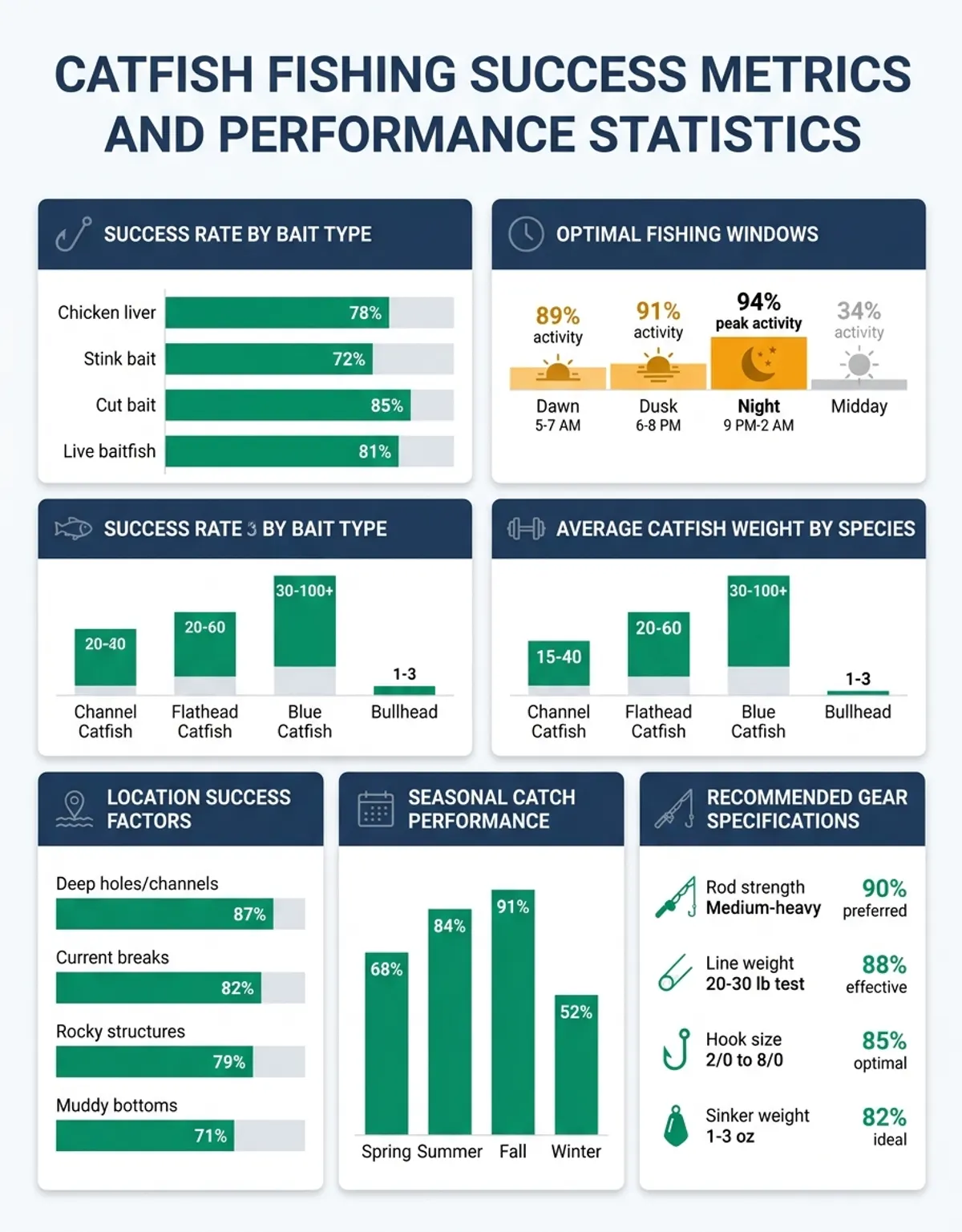
The slip sinker rig is the everyday catfish rig. Slide an egg sinker onto your main line, add a bead, then tie on a barrel swivel. Below the swivel, attach 12 to 24 inches of leader and a circle hook. The bead protects your knot, and the sliding sinker lets a catfish take the bait without feeling resistance.
The three-way rig keeps bait just off bottom in current. Tie a three-way swivel to your main line, add a dropper line with a sinker, and run a separate leader to your hook. This rig is ideal for river catfishing where you want the bait suspended above snags.
For shallow water and ponds, a slip bobber rig suspends bait at a set depth above the bottom. Whatever rig you choose, use a sharp circle hook, match the sinker weight to the current and depth, and check your line often for nicks from a catfish's abrasive mouth.
Advanced Catfish Fishing Techniques and Tips
Once you've mastered the basics, several advanced catfish fishing techniques can dramatically increase your success and let you target trophy fish. These methods reward anglers who pay attention to water, weather, and the seasonal movements of catfish.
During the spawn in late spring and early summer, big catfish move shallow to nest in cavities along banks, riprap, and log jams. Fishing live bait and cut bait tight to this cover can produce the largest catfish of the year. After the spawn, catfish scatter into deeper water and feed heavily to recover.
Drift fishing and controlled trolling cover water when catfish are spread across lake flats or river channels. Spread several lines at different depths, keep bait near bottom, and let the boat present your bait to fish you would never reach from one anchored spot.
Noodling, also called hand fishing, is a hands-on technique where anglers reach into underwater holes to catch flathead catfish by hand. It is legal only in certain states, so check your local fishing regulations before trying it. For a lighter challenge, fly fishing for channel catfish with large streamers in shallow water near cover is surprisingly effective. Finally, tune your bait and scent to the conditions: warmer water speeds a catfish's metabolism, so a strong scent trail and fresh bait will out-fish stale offerings every time.
Little details separate good catfish anglers from great ones. Keep your hooks sharp, re-bait often so the scent stays fresh, and use rod holders so a hard-running catfish can't pull your rod into the lake. Track water temperature, current, and recent weather, and adjust your bait, rig, and depth until the bites come. Consistent catfish fishing success is simply matching the right bait and rig to the conditions on each trip.
The Other Kind of Catfish: Spotting Online Impersonators
"Catfish" has a second meaning that has nothing to do with rivers or rods. Online, a catfish is someone using stolen or borrowed photos to pose as a person they're not — on dating apps, social media, and messaging platforms. If that's the catfish you're trying to catch, the tackle is different: instead of bait and gear, you verify images.
The fastest way to unmask a fake profile is to find out whether its photos belong to someone else. Run the suspicious picture through a reverse image search to see everywhere it appears online — one photo surfacing under a dozen different names is a dead giveaway. On a phone, our step-by-step guide to reverse image search on iPhone shows exactly how. And when two profiles look suspiciously alike, CaraComp's face-comparison tool scores how likely it is that two images show the same person — turning a hunch into evidence.
Protecting your own face matters too: the same photos scammers scrape to build fake profiles often come from public accounts. If that worries you, learn how to turn off facial recognition on iPhone to limit how your images are scanned and indexed. The related guides below show exactly how to verify images and protect your own.
Catfish Species & Setup Comparison
| Catfish Species | Typical Size | Best Bait | Where to Fish | Preferred Rig |
|---|---|---|---|---|
| Channel Catfish | 1-15 lbs | Stink bait, chicken liver, cut bait | Lakes, ponds, rivers | Slip sinker rig |
| Blue Catfish | 5-80+ lbs | Fresh cut shad or skipjack | Big rivers, reservoirs (deep water) | Three-way rig |
| Flathead Catfish | 10-70+ lbs | Live bait (bluegill, sunfish) | Log jams, deep cover | Live-bait slip rig |
| Beginner Setup | Any catfish | Nightcrawlers, dough bait | Pond or lake bank | Bobber rig |
| Night Fishing | Channel & blue | Cut bait, hot dogs in garlic | Shallow flats, dam riprap | Slip sinker rig |
| River Drifting | Channel & blue | Cut bait, nightcrawlers | River flats and channels | Drift rig with bottom bouncer |
Frequently Asked Questions About How to Catch a Catfish
What is the best bait to catch a catfish?
The best catfish bait depends on the species. For channel catfish, prepared dough bait, chicken liver, cut bait, nightcrawlers, and stink bait all work well because channel catfish hunt by scent. For blue catfish, fresh cut shad or skipjack is hard to beat. For flathead catfish, live bait such as a bluegill fished near cover produces the biggest fish. Match aromatic bait to the water and the catfish will find it.
What gear and tackle do I need to catch catfish?
A medium-heavy to heavy rod in the 7-to-9-foot range, a sturdy reel spooled with 15-to-30-pound line, and a tackle box of circle hooks, egg sinkers, barrel swivels, and beads cover most catfish fishing. Add a long-handled net, pliers, rod holders, and a headlamp for night fishing. This gear setup handles everything from a one-pound channel catfish to a trophy blue catfish.
Why is a circle hook suggested for catfish fishing?
Circle hooks catch in the corner of a catfish's mouth when you apply steady pressure instead of setting the hook with a sharp jerk. This makes fish easy to release and reduces gut-hooked fish. When you feel a bite, let the catfish run with the bait until the line comes tight, then reel steadily to drive the hook home. Circle hooks improve hookup percentages and keep released catfish healthy.
How do you set up a slip sinker rig for catfish?
Slide an egg sinker onto your main line with the narrow hole toward the rod tip, add a bead, then tie on a barrel swivel. The bead protects the knot from the sliding sinker. Below the swivel, tie 12 to 24 inches of leader and attach a circle hook. The egg sinker holds bottom while letting the line slide freely when a catfish takes the bait, so the fish never feels resistance.
Where is the best place to catch catfish?
In rivers, fish deep holes, outside bends, log jams, and the seams where fast current meets slow water. In lakes and ponds, target channel edges, points, creek mouths, and flats next to deep water, especially at night when channel catfish move shallow to feed. The best catfish fishing spots combine food, cover, and nearby deep water.
Does Kool-Aid really work as catfish bait?
Kool-Aid works as a flavor and scent enhancer when mixed with other baits, but not on its own. Mix the powder into dough bait, soak it into hot dogs, or blend it with chicken liver to add a dispersing scent trail that channel catfish investigate. Use Kool-Aid to boost proven catfish baits rather than as a standalone attractant, and it works best in calm lakes and ponds where fish can track the scent.