
Face Similarity Test: Compare Faces Online with Accurate Results
Discover how advanced facial analysis technology delivers instant, accurate face comparisons without requiring technical expertise.
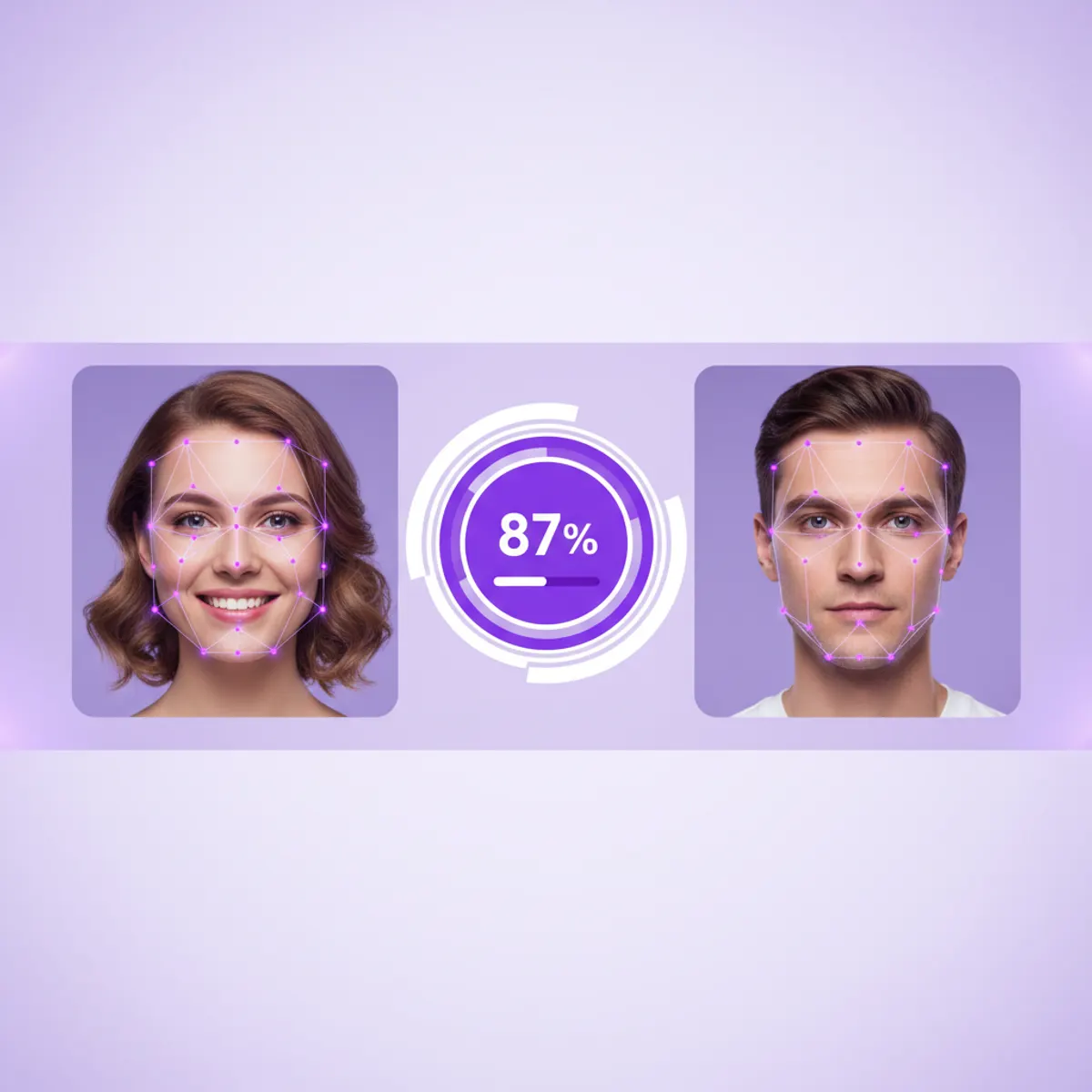
A face similarity test is an automated image analysis tool that compares two faces and generates a similarity percentage. Unlike traditional photo comparison methods that rely on human judgment, these tools use algorithms to measure specific facial landmarks, proportions, and features across multiple images. The technology evaluates dozens of data points including eye spacing, nose shape, jawline structure, and overall facial geometry to determine how similar two faces appear.
Most free face similarity tools allow users to instantly check results without requiring technical expertise. You simply upload two photos, and the tool processes the images to identify facial features and calculate a similarity score. This makes face comparison accessible to anyone needing to verify if two photos show the same person or to measure how much two different people resemble each other. Learn more about face comparison.
How Face Similarity Testing Works
Face similarity testing operates through a multi-step process that transforms photos into measurable data. First, the tool detects faces within the uploaded images and extracts facial landmarks. These landmarks serve as reference points for comparison, creating a mathematical representation of each face's unique characteristics.
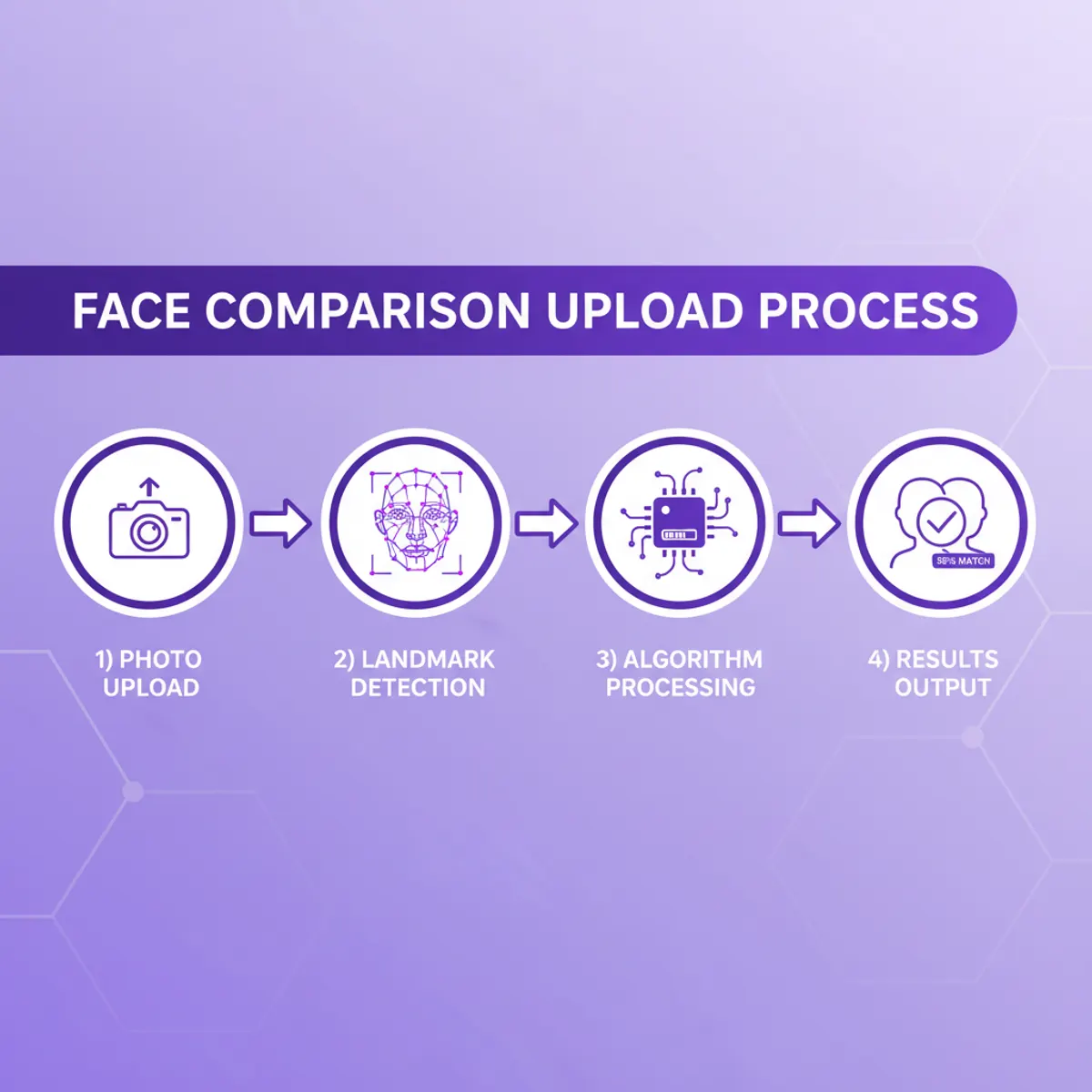
The recognition algorithm then compares these data points between the two images, measuring distances and ratios between facial features. Advanced tools account for variations in lighting, angle, and image quality to ensure accurate comparison. The system generates a similarity percentage based on how closely the facial data matches, with higher percentages indicating greater resemblance.
Real time processing capabilities mean you receive results within seconds of upload. The tool analyzes the facial structure, identifies key features, and calculates similarity scores automatically. This automated approach removes subjective bias and provides consistent, measurable results for every face comparison request.
For teams evaluating comparison methodologies, our facial comparison guide provides additional technical perspectives.
Advanced tools account for variations in lighting, angle, and image quality to ensure accurate comparison.
Free Face Similarity Test Tools Online
Multiple free face similarity test platforms offer instant comparison services without requiring subscriptions or downloads. These online tools let you upload photos directly through your web browser and receive similarity results immediately. Face comparison tools vary in accuracy and features, but most provide percentage-based similarity scores within seconds. Face comparison tools vary in accuracy and features, but most provide basic similarity scoring for personal use at no cost.
When selecting a free tool, consider factors like image upload limits, data privacy policies, and the accuracy of results. Some platforms process images entirely on your device for enhanced privacy, while others use cloud-based systems for faster analysis. Free versions typically support standard image formats like JPG and PNG, with file size limits ranging from 5MB to 20MB per photo.
Professional-grade comparison tools may offer free trials with limited usage before requiring payment. These premium options often deliver more detailed results, including facial feature breakdowns, confidence scores, and batch processing capabilities. However, for basic face similarity testing, free tools provide sufficient accuracy for most casual users.
Understanding Your Face Similarity Results
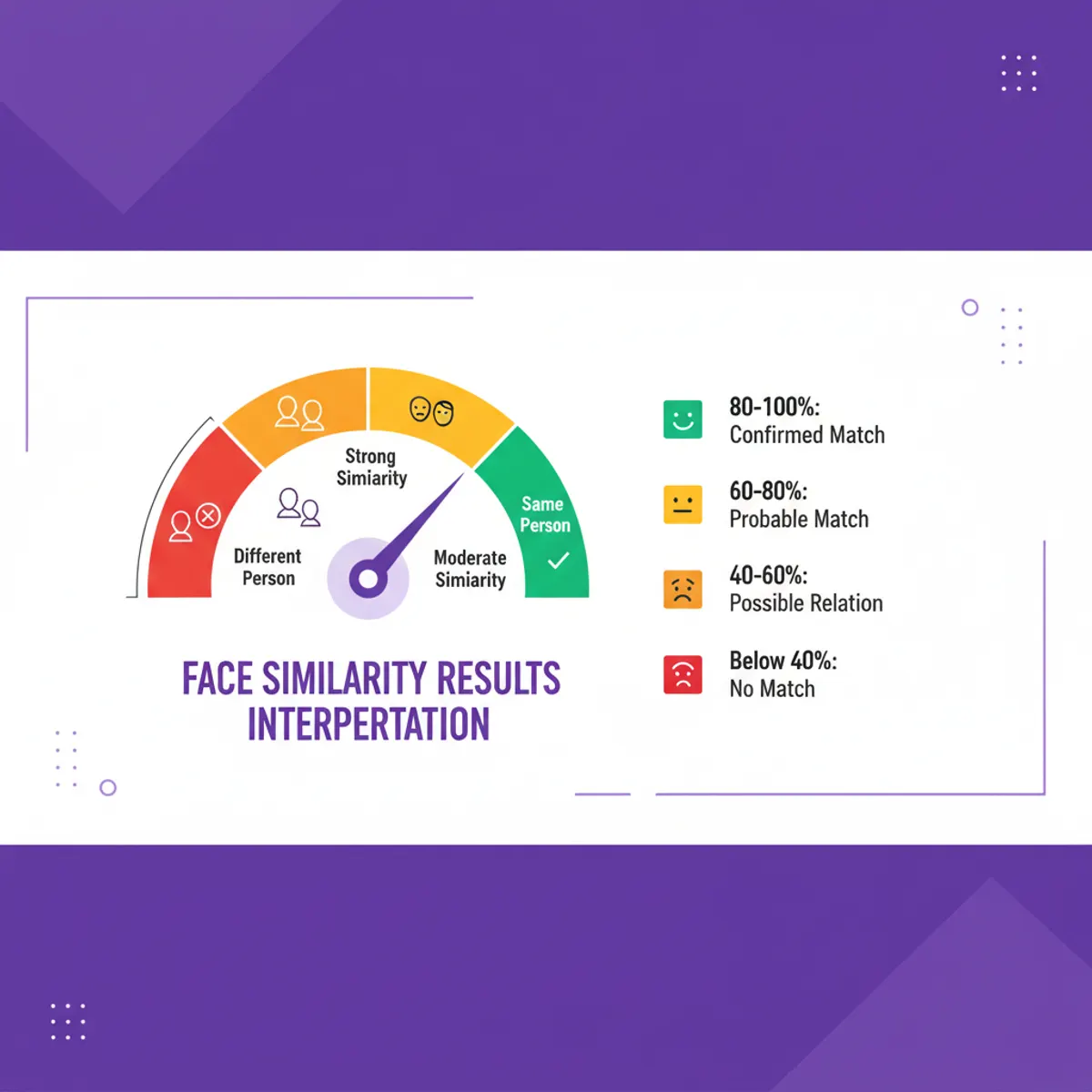
Face similarity results typically appear as a percentage score, with 100% indicating identical matches and 0% showing no similarity. However, interpreting these results requires understanding what the numbers actually mean. Scores above 80% generally indicate the same person in different photos, while 60-80% may suggest strong resemblance between different individuals or the same person with significant changes in appearance.
Results between 40-60% indicate moderate similarity, often seen in family members or people with similar facial structures. Scores below 40% suggest minimal resemblance between the compared faces. Keep in mind that image quality, lighting conditions, facial expressions, and photo angles can all impact similarity percentages, so a single test may not tell the complete story.
Scores above 80% generally indicate the same person in different photos, while 60-80% may suggest strong resemblance between different individuals.
For critical applications like identity verification, it's best to test multiple images of the same person under varying conditions. This approach provides a more comprehensive understanding of facial similarity and accounts for natural variations in photos. Professional face comparison systems often require threshold scores of 85% or higher for positive identification, though specific requirements vary by use case.
Image Quality and Accuracy for Best Results
The quality of uploaded photos directly affects face similarity test accuracy. Clear, well-lit images with faces positioned directly toward the camera produce the most reliable results. Photos should show the full face without obstructions like sunglasses, masks, or heavy shadows that can interfere with facial recognition algorithms.
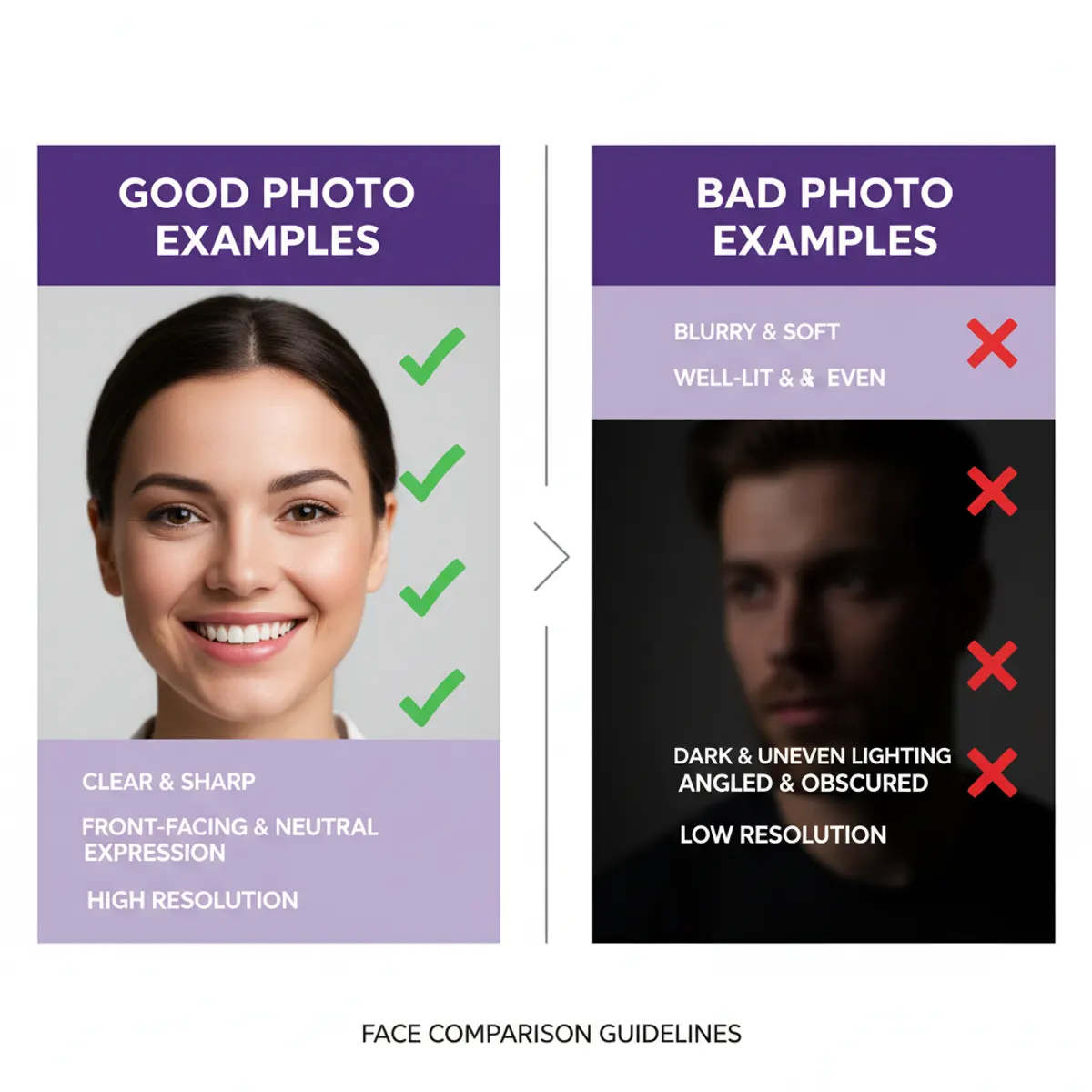
For optimal results, upload images with resolution of at least 640x480 pixels. Higher resolution photos provide more facial data for analysis, though extremely large files may require longer processing times. Both photos should have similar lighting and angles when possible, as dramatic differences in these factors can reduce similarity scores even for images of the same person.
Avoid heavily edited or filtered photos, as digital alterations can distort facial features and skew comparison results. Real time photos captured under natural conditions tend to work better than professional portraits with extensive retouching. When comparing images taken years apart, account for natural aging effects that may lower similarity percentages despite showing the same individual.
Privacy and Data Security in Face Comparison
Data privacy concerns are legitimate when using online face similarity tools, as uploaded photos contain sensitive biometric information. Reputable platforms implement security measures to protect user privacy, including encrypted upload connections, automatic image deletion after processing, and strict no-storage policies for facial data.
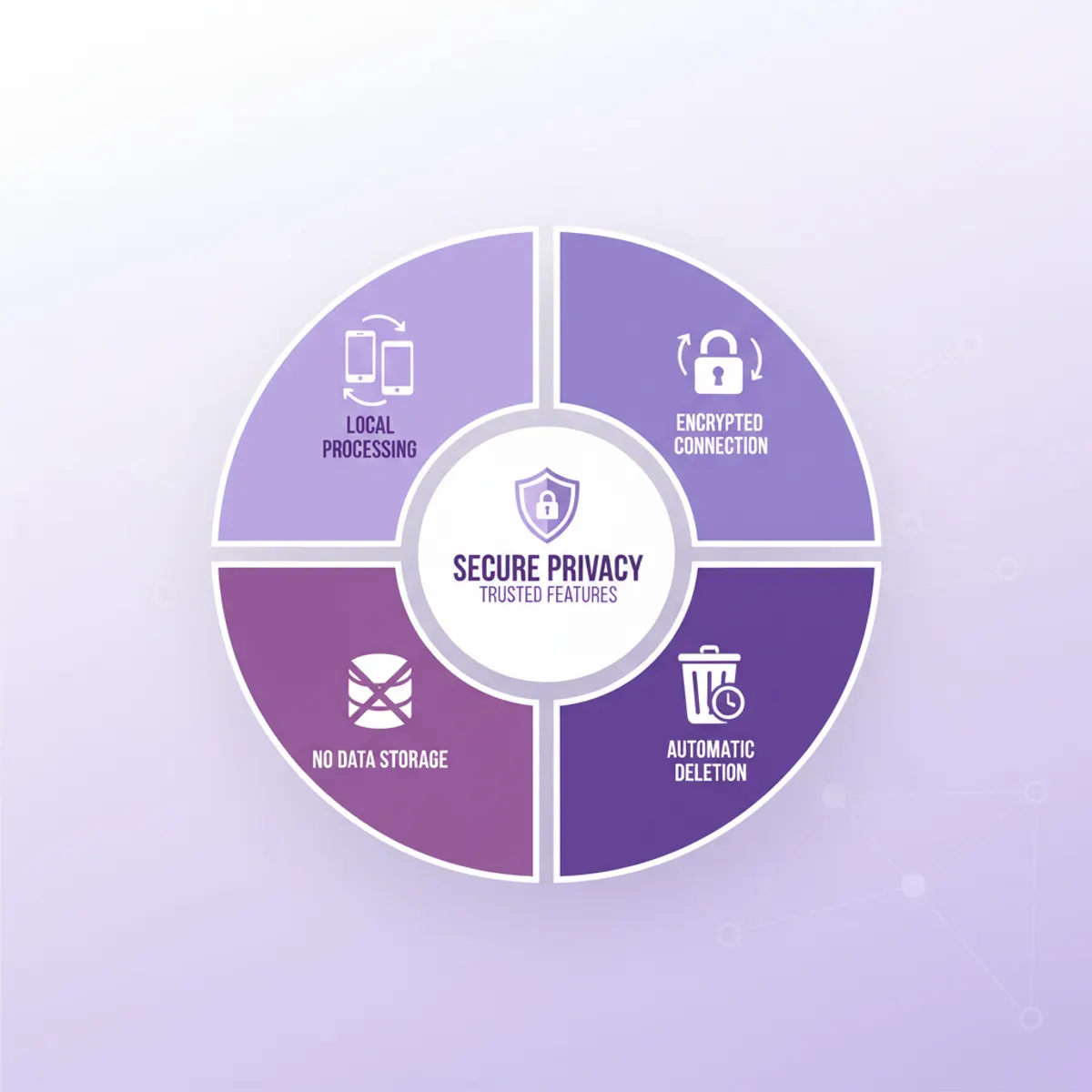
Before using any face comparison tool, review their privacy policy to understand how they handle uploaded images. Look for services that process photos locally on your device rather than transferring them to remote servers. This approach ensures your facial data never leaves your control, providing maximum privacy protection.
Some free tools retain uploaded images to improve their algorithms or for unspecified purposes. If privacy is a priority, choose services that explicitly state they do not store, share, or analyze uploaded photos beyond generating the similarity score. Professional-grade tools often provide detailed data handling documentation and compliance certifications for regulated industries.
Face Recognition vs Face Comparison Testing
While often used interchangeably, face recognition and face comparison serve different purposes. Face recognition identifies individuals by matching a face against a database of known people, answering "who is this person?" This technology powers applications like phone unlocking, security systems, and automated tagging in photos.
Face comparison, by contrast, analyzes two specific images to determine how similar the faces appear, without referencing external databases. A compare faces online tool answers "do these two photos show the same person?" rather than "who is this person?" A compare faces online tool answers "do these two photos show the same person?" or "how much do these faces resemble each other?" This makes face similarity testing more privacy-focused, as it doesn't require storing facial templates or comparing against collections of other people's images.
Face comparison analyzes two specific images without referencing external databases, making it more privacy-focused than face recognition systems.
Both technologies use similar underlying algorithms to analyze facial features, but their applications differ significantly. Face comparison tools are ideal for one-time verifications, finding lookalikes, or comparing photos across different time periods. Recognition systems excel at automated identification tasks requiring matching against large datasets. Understanding this distinction helps you choose the right tool for your specific needs.
Start Your Free Face Similarity Test Today
Testing face similarity has never been easier with modern online tools that deliver instant results. Whether you're verifying identity, exploring family resemblances, or finding celebrity lookalikes, face comparison technology provides fast, accurate analysis without requiring specialized knowledge. Free tools offer accessible entry points for casual users, while professional platforms deliver enhanced features for organizations with higher accuracy requirements.
The key to reliable results lies in using quality images, understanding what similarity scores mean, and choosing privacy-conscious tools that protect your facial data. As face comparison technology continues advancing, expect even greater accuracy and more sophisticated features that make these tools increasingly valuable for both personal and professional applications.
Looking for no-cost options? Our face comparison free service provides excellent results without any charges.