
Fingerprint Scanner: Gel Fingers Fool It 70% of the Time
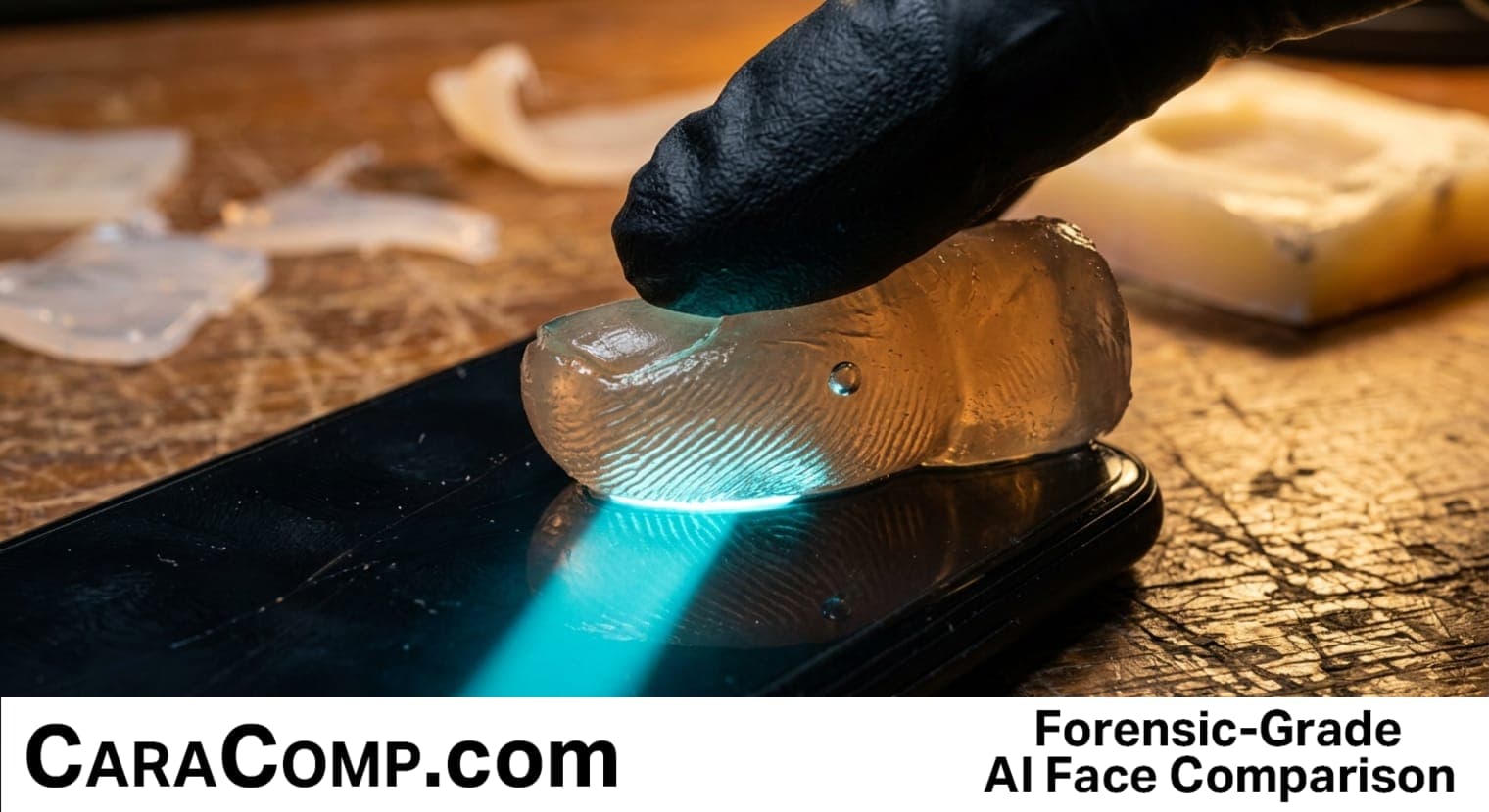
Here's a fact that should bother you more than it probably does: the little fingerprint scanner on your phone doesn't actually store a picture of your finger. It stores math. And math, it turns out, can be fooled by gelatin, play-doh, and a decent photo of your hand.
A fingerprint scanner works by matching partial images of ridges and valleys against a stored math pattern, not a photo, which is exactly why a gel finger made from a photo can trick it in about fifteen minutes.
TL;DR
A fingerprint scanner matches partial ridge patterns against stored math, not a photo of your finger, and that shortcut is exactly why gel copies can slip past it.
Picture the sensor on your phone. It's tiny, maybe the size of your pinky nail. When you first set it up, it doesn't take one clean picture of your whole finger. It takes eight to ten separate images as you press and lift, press and lift, at slightly different angles. Then, every time you unlock your phone afterward, it only needs one of those stored images to line up closely enough. That's not a bug someone forgot to patch. That's the actual design, because your finger never touches the sensor the exact same way twice, and the system needs some wiggle room to still recognize you when you're half asleep at 7am.
But wiggle room cuts both ways. If the system will accept "close enough" from your real finger, it will sometimes accept "close enough" from something that isn't your finger at all.
How Does A Fingerprint Scanner Actually Get Fooled?
It gets fooled because the sensor was built to answer one narrow question: does this ridge pattern match a stored pattern? It was never built to ask a second question: is this ridge pattern attached to a living human being right now? Those are two completely different jobs, and for a long time, phones only bothered with the first one.
There are three ways someone builds a fake finger, according to research published on arXiv covering skilled impostor attacks against fingerprint verification systems. The first, and honestly the creepiest, needs you to cooperate without knowing it. Someone presses a soft material like putty or wax against your actual finger and takes a mold. The second doesn't need you at all. It lifts a latent print, the invisible oily smudge you leave on a glass, a phone screen, a doorknob, and turns that into a mold. The third starts from nothing but a photo, one clear enough to show your ridge lines, which then gets converted into a synthetic print and 3D printed or etched into a mold. This article is part of a series, start with Deepfake Ai One Public Photo Is All Blackmailers Need.
Once there's a mold, the actual fake finger is usually made from gelatin (yes, the stuff in gummy bears), silicone, or even kids' play-doh. Researchers writing in a project called Fingerprint Spoof Buster documented spoof success rates above 70 percent against commercial fingerprint recognition systems using exactly these materials. That's not a lab fluke. That's better than a coin flip, against real hardware, using stuff you could buy at a craft store.
70%+
success rate for gelatin and silicone spoof fingers against commercial fingerprint scanners
Source: Fingerprint Spoof Buster research, arXiv
Your Fingerprint Isn't A Secret Like A Password
Here's the part that trips people up, and honestly, it's an understandable mix-up. You've probably heard your whole life that your fingerprint is unique. That's true. No two people have the exact same ridge pattern, not even identical twins. But unique doesn't mean secret. Your fingerprint is stamped on every glass you drink from, every phone screen you touch, every door handle at the grocery store. A password lives in your head. Your fingerprint lives on everything you own. Uniqueness protects you in a courtroom, where forensic examiners compare prints after the fact. It does almost nothing to protect you at 11pm when someone has your unlocked phone and fifteen minutes.
What Liveness Detection Does And Where It Still Breaks
Once companies figured out fake fingers were a real threat, they started building in what's called liveness detection, sometimes called live finger detection. Think of it as the scanner asking, "okay, but are you actually alive right now?" instead of just, "does this pattern match?" The sensor checks for things like blood flow (real fingers warm up and show tiny temperature changes), electrical properties (your skin conducts electricity in a specific way that gelatin doesn't), and micro-movements, the tiny involuntary twitches a living finger makes that a static blob of silicone can't fake on its own.
Here's where it gets interesting, and a little frustrating. According to a technical overview from 1Kosmos on combatting biometric spoofing, each spoof material behaves differently under the sensor's light because of how elastic gelatin, play-doh, and silicone each are. A detector tuned to catch gelatin might miss silicone. One tuned to catch both might reject your real finger too often when it's dry, cold, or has a paper cut, which is exactly the kind of daily annoyance that makes companies dial the sensitivity back down. Making a fingerprint scanner catch every possible fake would mean expensive hardware, more battery drain, and you rescanning your thumb five times before your morning coffee. Nobody ships that phone.
Fingerprint Scanner Weaknesses Compared To What Actually Protects You
So which layer is doing the real work? It helps to see it side by side. Previously in this series: Age Assurance Eu Plan Bars Under 13s Tests Kids Privacy.
| What the scanner checks | Vulnerable to a gel finger? | Vulnerable to a lifted print? |
|---|---|---|
| Basic ridge and valley matching | Yes, this is the weak layer | Yes, if the print is clear enough |
| Blood flow and temperature check | Sometimes, depends on device | Sometimes, depends on device |
| Electrical conductivity check | Usually catches gelatin and play-doh | Usually catches most non-skin materials |
| Banking app additional login step | Rarely, adds a second check | Rarely, adds a second check |
Fingerprint systems, while having excellent performance, are vulnerable to attacks at the sensor level, replay attacks on the data communication stream, and attacks on the database.
technical finding cited in Frontiers in Computer Science, review of hardware and software liveness detection schemes
Why Trust A Fingerprint Scanner At All, Then?
Fair question. The honest answer is that a fingerprint scanner is still far better than no lock at all, and better than a lot of alternatives, because most people trying to get into your phone aren't running a spoofing lab. They're a stranger who found your phone on a bus seat. For that everyday threat, a fingerprint scanner is fast, convenient, and good enough. The real risk shows up when someone specifically targets you, has access to something you've touched (a glass, a phone screen, a doorknob), and has fifteen minutes and a little patience. That's a narrower group of attackers, but they exist, and banking apps are exactly the kind of prize worth that effort.
This is the same reason facial recognition tools have their own version of this arms race. At CaraComp, the education work we do on facial recognition constantly runs into this exact pattern: a system that matches well gets treated as if it's also excellent at proving you're really there, live, in the moment. Those are different problems with different fixes, whether we're talking about a face, a fingerprint, or a voice.
The Brandon Mayfield Case Shows The Flip Side Of This Problem
It's worth understanding the mirror image of spoofing too, because it shows how fragile fingerprint matching can be even without any fakery involved. In May 2004, an Oregon lawyer named Brandon Mayfield was wrongly arrested and jailed by the FBI as a material witness in the Madrid train bombings, after at least three examiners looked at a partial print from the scene and called it a match to his fingerprint. He was held for more than two weeks before Spanish authorities linked the actual print to an Algerian national, and the FBI issued a formal apology. The U.S. government later paid Mayfield a $2 million settlement. Nobody spoofed a scanner in that case. Trained human examiners, looking at a partial print, made a false match anyway. It's a reminder that both directions of this technology, being wrongly accused and being wrongly let in, come from the same root problem: partial patterns matched under pressure to be "close enough."
What You Just Learned About Fingerprint Scanners
- 🧠 Partial matchingyour phone stores several partial images and unlocks if just one lines up, which is why a "close enough" fake can sometimes pass
- 🔬 Gel fingers worksilicone, gelatin, and play-doh copies fooled commercial systems over 70 percent of the time in documented research
- 💡 Uniqueness isn't secrecyyour fingerprint is one of a kind, but it's smeared on every surface you touch, not locked in your head like a password
- 🛡️ Liveness checks helptemperature, electrical conductivity, and micro-movement checks catch a lot of fakes, but no phone maker can afford to catch every single one
What This Means For Your Actual Phone And Banking Apps
So what do you actually do with all this at 11pm, staring at your phone, wondering if you should even trust the little sensor? Start with the practical stuff. Wipe your phone's sensor and your screen regularly, since a smudged screen is a free mold for a lifted print. If your bank app offers a second layer beyond the fingerprint scanner, something like a passcode or a one-time code sent by text, turn it on for anything tied to money. Most banking apps let you require that second step even after a fingerprint unlock, and it costs you three extra seconds for a real jump in protection. If you ever lose your phone or suspect someone had unsupervised access to it for more than a few minutes, change your banking passwords from another device and consider calling your bank's fraud line, not just your phone carrier.
It's also worth knowing that your fingerprint biometric data, the actual math pattern your phone stores, generally never leaves the phone itself on most modern devices. Your phone doesn't store an actual picture of your finger the way it stores your vacation photos in an album, it stores an encrypted mathematical pattern in a walled-off part of the chip. That's a real protection, and it's also exactly why the attack has to happen at the sensor itself, the literal touchscreen you press your thumb against, rather than by hacking into some giant database of everyone's fingerprint photos.
Where Fingerprint Scanners Show Up Beyond Your Phone
This isn't just a phone story. A smart fingerprint door lock keyless entry biometric system on your front door runs on the same basic matching logic, and so does a USB fingerprint reader some offices use for computer login, or a fingerprint reader bolted onto a time clock at work. Schools use fingerprint readers for library checkout and lunch lines. Some health clinics use them for patient check-in and record filing. Insurance companies have experimented with fingerprint verification for claims filing to cut down on fraud. Even licensing offices, the places that issue professional licenses or ID cards, sometimes use a fingerprint scanner as part of identity confirmation. Every one of these systems is making the same tradeoff between convenience and the "close enough" match problem described above, whether it sits on a desktop computer, a specialty repairable laptop design, or a standalone reader used at retail and healthcare kiosks.
None of that means these systems are unsafe to use for everyday things like clocking in at school or checking out a library book. The stakes there are low. The stakes get higher fast once a fingerprint scanner is the only thing standing between a stranger and your bank balance, which is exactly why banks increasingly build support for a backup login method into their apps rather than betting everything on one sensor. Up next: Fingerprint Scanner Gel Fingers Fool It 70 Of The Time.
A fingerprint scanner isn't checking whether you're you; it's checking whether the ridge pattern in front of it looks close enough to a stored pattern. Liveness checks can flag skin that appears too smooth or too uniform under certain scanner lighting as one small tell that a gel finger, not a real one, is pressed against the glass.
Fingerprint Scanner: Frequently Asked Questions
Can a picture of my fingerprint really be used to make a fake finger?
Yes, if the picture is clear enough to show your actual ridge lines. Researchers have converted a clear photo into a synthetic fingerprint pattern, then 3D printed or etched a mold from it, and cast a gelatin or silicone copy from that mold. This is why high-resolution photos of your hand posted online carry more risk than most people assume, and why some security researchers recommend against posting extreme close-ups of your fingertips in public photos.
Does my phone store an actual picture of my finger?
No. Your phone doesn't store a photo the way it stores an image in your camera roll. It stores an encrypted mathematical pattern built from the ridges and valleys, kept in a separate secured part of the device's chip, sealed off from the rest of the operating system. That's part of why a data breach of an app usually can't expose your actual fingerprint, since the pattern typically never leaves the device in the first place.
Is a fingerprint scanner safer than a passcode?
It depends on the threat. Against a random stranger who finds your lost phone, a fingerprint scanner is faster and just as safe, since they have no way to fake your print on the spot. Against a targeted attacker who can lift a print from your phone screen or a glass you used, a strong passcode is arguably safer, because it can't be molded from gelatin. Many security experts recommend using both together rather than relying on just one.
Why do phones only need one partial fingerprint image to match?
During setup, the sensor captures eight to ten partial images as you press your finger at slightly different angles, building a small library of patterns. Afterward, it only needs one of those stored images to line up closely enough to unlock. This design exists because your finger never lands on the sensor identically each time, so some flexibility is required for the system to work reliably in daily life, but that same flexibility is what opens the door to a close enough fake.
Can a fingerprint scanner tell the difference between a real finger and a fake one?
Sometimes. Liveness detection checks for blood flow, skin temperature, electrical conductivity, and tiny involuntary movements that a static gel or silicone finger can't easily replicate. But no detection method catches every material every time, since gelatin, play-doh, and silicone each behave differently under the sensor's light, and building a detector strict enough to catch all of them would slow down real users too much for phone makers to accept.
What should I do if I think someone unlocked my banking app with a fake fingerprint?
Move fast. Change your banking passwords immediately from a different device, and turn on any additional login step your bank offers beyond the fingerprint scanner, like a passcode or a text message code. Contact your bank's fraud department directly rather than just changing your phone's lock screen setting. If money actually moved, report it to your bank first, then to the FBI's Internet Crime Complaint Center, since fraud involving stolen banking access falls under their scope.
Ready for forensic-grade facial comparison?
Full forensic reports with detailed similarity scoring. Results in seconds.
Run My First SearchMore Education
Baby Passport Photo: Why a Parent's Hand Gets It Rejected
A parent's hand steadying a baby's head is the top reason infant passport photos get rejected. Here's the biometric science behind the rule, and the fix that solves it in one shot.
digital-forensicsDeepfake AI: One Public Photo Is All Blackmailers Need
A deepfake sextortion scam killed a 16-year-old over a fake photo. Here's how the AI technology behind it works, how detection catches what your eyes can't, and where to look first if it happens to your family.
facial-recognitionHow Does Facial Recognition Work: 512 Numbers, Wrong Arrests
Your face gets turned into a string of 512 numbers the moment a camera catches it. Here's what those numbers actually do, why they can vary from one image to another, and how a stranger's numbers can end up matching yours.