
Facial Recognition Benefits: Court Ends "Computer Said So"
Quick answer
What are the benefits of facial recognition technology?
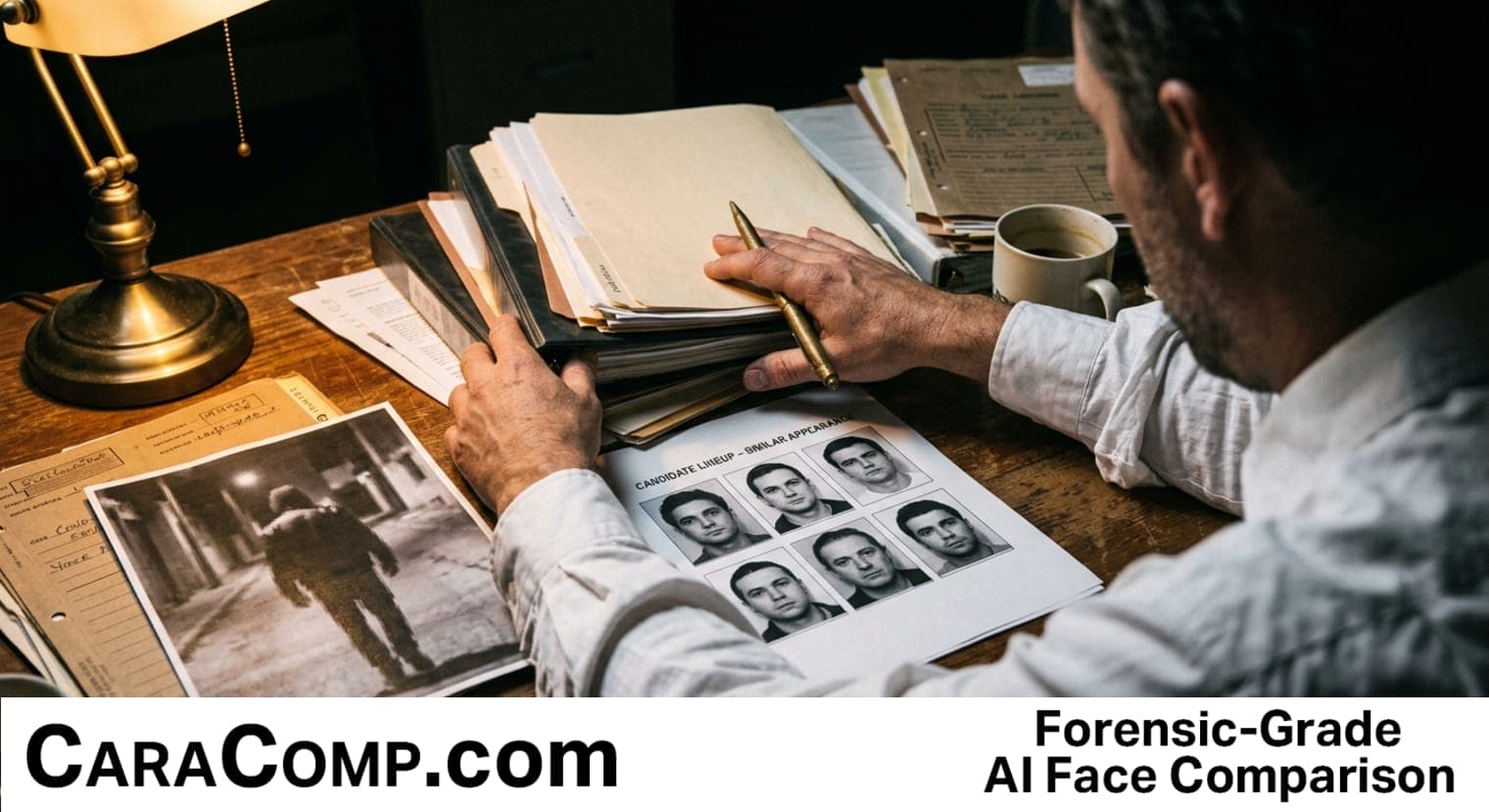
Facial recognition can speed up identity checks, narrow a large pool of possible people to a short list, add a layer to secure logins, and reduce human error at busy checkpoints. These gains only hold when the tool's error rates, photo quality and human review can be examined and questioned.
A single Instagram photo helped point police toward a suspect named Tybear Miles in New Jersey, but until recently, nobody outside the investigation would have known a facial recognition search happened at all. Now, thanks to a new court ruling, that's changing. And it reveals what the real facial recognition benefits we all keep hearing about require: the process behind the match must be checked.
A facial recognition "match" is a math score, not a fact, and the real benefit of the technology only shows up when police disclose the source photo, the candidate list, and the human review behind it.
Here's the detail that should stop you mid-scroll: police in New Jersey ran a blurry Instagram profile photo of someone known online as "Fat Daddy" through a facial recognition system. The system spit back a list of possible matches. One of them was Tybear Miles. From there, according to case details reported by The Jersey Vindicator, investigators leaned on witness identifications of surveillance images taken before the shooting, even though no witness ever actually identified Miles as the shooter. The algorithm's guess became the quiet starting point for the whole case. And for a long time, nobody had to admit that out loud in court.
What facial recognition benefits actually require
People hear "facial recognition" and picture something like a fingerprint scan: clean, certain, done. That's not how it works, and understanding the difference is the whole key to this story. A facial recognition system doesn't say "yes, that's him." It measures. It maps dozens of points on a face, the distance between your eyes, the curve of your jaw, the width of your nose bridge, and turns your face into a string of numbers called a feature vector. Then it compares that string of numbers to every other face in its database using something called Euclidean distance (basically just a fancy way of asking: how far apart are these two faces, mathematically, once you plot them as points). Smaller distance, higher similarity score. That's it. That's the "match."
Starts at 00:12 — this story
Watch this story, in under a minute
A new briefing every weekday — three stories, three minutes.
Subscribe on YouTubeSo what looks like a confident identification is really a ranked list of guesses, sorted by how close the math came out. And that changes everything about what a defendant deserves to see.
Run that math yourself. A 95% confidence score sounds airtight, until you remember it's being applied against a database of 10 million faces. A 5% error rate on that scale means roughly 500,000 faces could trigger a false flag. That's not a hypothetical. It's arithmetic. And it's exactly why a "match" needs context before anyone treats it like proof. This article is part of a series, start with How To Spot A Deepfake.
New Jersey facial recognition disclosure explained
The New Jersey ruling, covered by EPIC (Electronic Privacy Information Center), now requires prosecutors to hand over three specific things when facial recognition played a role in an investigation: the name and manufacturer of the software, its publicly documented error rates, and the original photo used to run the search. That last one matters more than it sounds, a grainy, poorly lit Instagram photo produces a far less reliable comparison than a clear DMV headshot, and until now, defendants had no guaranteed way to even know which kind of photo put them in the suspect pool.
Facial recognition technology is not without its flaws, and just as humans may err in recognizing faces, algorithmic identification carries documented weaknesses across image quality, database size, and demographic performance gaps. summarized from filings by EPIC, the Electronic Frontier Foundation, and the National Association of Criminal Defense Lawyers, EPIC
EPIC partnered with the Electronic Frontier Foundation and the National Association of Criminal Defense Lawyers to file a brief in this exact case, laying out just how often facial recognition errors show up and how bias creeps into the process. Their point wasn't that the technology is useless. It was that nobody can judge whether it worked correctly in this case without seeing how it was used.
The anonymous tip that everyone forgot to disclose
Here's an analogy that actually captures what went wrong. Imagine a detective gets an anonymous phone call: "I think it was this guy." The detective builds a case, makes an arrest, and never tells the defense lawyer that the whole thing started with an anonymous tip. No name to cross-examine. No way to ask if the caller had a grudge, bad eyesight, or was just guessing. The defense is fighting blind, because the court doesn't know the tip exists.
Facial recognition works the same way when it's hidden. If police describe an identification as coming from "traditional investigative methods", witness statements, tips, whatever, while quietly omitting that a facial recognition algorithm generated the initial lead, the defense can't challenge what it doesn't know about. Courts can't evaluate evidence they've never seen. That's not a technicality. That's the entire foundation of a fair trial getting skipped.
Does facial recognition identify a suspect on its own?
No. Facial recognition produces a ranked list of possible matches based on similarity scores, not a confirmed identification. It's meant to generate an investigative lead, like a tip, that still needs corroboration, human review by a trained examiner, and independent evidence before anyone is charged.
Correcting the biggest misconception about facial recognition technology
Most people assume a facial recognition match works like DNA or a fingerprint: unique, mathematically certain, case closed. It's an easy mistake to make, the industry talks about "accuracy percentages" and "confidence scores," which sound exact and scientific. Numbers feel objective. Nobody's lying to you on purpose. Previously in this series: Deepfake Fraud.
But a confidence score isn't a verdict. It's a distance calculation shaped by a pile of hidden variables: how clear the original photo was, what angle it was taken from, the lighting, how big the comparison database is, and where the software drew the line for what counts as "close enough." Change any one of those, and the ranked list changes with it. That's why courts must now separate two categories of information, what tool was used (so its reliability can be judged), and exactly how it was used in this specific case (so the investigation itself can be challenged). A match is a process with a paper trail, not a single fact stamped onto a suspect.
What You Just Learned
- 🧠 A match is a ranked guessfacial recognition produces a similarity score, not a confirmed identity, based on Euclidean distance between facial feature vectors
- 🔬 Error rates scale with database sizea 95% accurate system searching millions of faces can still generate hundreds of thousands of false positives
- 💡 Disclosure fixes the blind spotNew Jersey now requires the software name, error rates, and source photo be shared with the defense
- ⚖️ Anchoring bias is realan early algorithmic lead can quietly shape which witness statements investigators trust afterward
Real benefits of facial recognition technology when it's reviewable
None of this means facial recognition should be thrown out. Used correctly, it's a legitimately powerful tool, for narrowing a suspect pool from thousands to a handful, for helping victims find missing family members, for flagging a person of interest fast enough to prevent another crime. Airports use it for faster security lines. Retailers use it for loss prevention. Banks use it for fraud detection during account logins as an extra layer of multi-factor authentication (MFA, meaning you prove who you are using more than one method, like a face scan plus a password). The technology genuinely can make identity checks faster, reduce human error at border crossings, and support access control systems that used to depend entirely on a badge or a key.
The catch is that every one of those facial recognition benefits depends on the same thing courts just forced into the open: documented, reviewable process. A face recognition system in an airport that's audited for error rates across different lighting and skin tones is a genuinely useful piece of security technology. The same system, deployed in secret with no error-rate disclosure and no human double-check, is a liability wearing a lab coat. Biometric authentication, using your face, fingerprint, or voice instead of a password, only earns public trust when the institutions using it can explain, on demand, how the decision was made.
This is the exact space CaraComp spends its time in: helping people understand not just whether facial recognition technology "works," but what conditions make a result trustworthy enough to act on, whether that's a criminal case, a hotel using facial recognition to speed up room access, or a hospital trying to avoid patient misidentification during check-in.
New Jersey facial recognition: what changes for the next defendant
Go back to Tybear Miles. Under the old rules, the facial recognition search that first surfaced his name could have stayed buried in an investigator's notes forever, dressed up as "traditional police work." Under the new ruling, the next person in that position gets to ask real questions: How clear was the original photo? How many other candidates scored almost as close? Did a trained human examiner independently review the comparison, or did an officer just eyeball the algorithm's top pick and run with it?
Those aren't gotcha questions. They're the bare minimum for treating a computer-generated lead the way it should be treated, as a starting point, not a conclusion. The court didn't demand a rigid checklist or ban the technology. It just said: show the work. Name the software. Share the error rates. Hand over the photo. Let the process be tested the same way any other piece of evidence would be. Up next: How To Spot A Deepfake 1 School Photo Is All It Takes.
A facial recognition match is a distance score generated from a photo, a database, and a threshold, not a fact. If you can't see the source image, the candidate list, and the human review behind it, you're not looking at evidence. You're looking at a guess wearing a lab coat.
So here's the question worth sitting with: the next time you hear that "facial recognition identified a suspect," ask yourself what that sentence is actually hiding. Because somewhere behind it is a blurry photo, a database of strangers, and a number that decided who got arrested first, and until someone's allowed to check that number, calling it identification is really just calling it a hunch with better math.
Frequently Asked Questions
What is the main benefit of facial recognition disclosure in court?
Disclosure lets a defense team check the source photo quality, see how many other candidates the algorithm ranked close behind the suspect, and confirm whether a trained examiner reviewed the match, turning an unchallengeable "computer says so" claim into evidence that can actually be tested.
How does the New Jersey facial recognition ruling affect criminal cases?
Prosecutors must now share the facial recognition software's name, manufacturer, publicly known error rates, and the original photo used in any investigation. This applies even when officers describe the identification as coming from "traditional" police work, closing a loophole that previously hid algorithmic leads from defendants.
Can facial recognition technology be wrong even with a high accuracy score?
Yes. A 95% accurate system searching a database of 10 million faces can still produce roughly 500,000 false positives, because error rates scale with database size. Accuracy percentages sound certain but depend heavily on photo quality, lighting, and how the comparison threshold is set.
Ready for forensic-grade facial comparison?
Full forensic reports with detailed similarity scoring. Results in seconds.
Run My First SearchMore Education
Remove Metadata From Photo: Hidden GPS Can Reveal a Home
Your camera quietly writes where and when you shot every picture inside the file. Learn the common mistakes that leave it there, and the quick fixes on a Mac, a PC and a phone.
biometricsSelfie Verification: The Photo Goes, the Face Math Stays
The photo gets deleted, but the math pulled from your face often stays. Here is how selfie verification really works, and what to check tonight.
privacyWhere to Get a Passport Photo: 3 Questions Before the Flash
Picking a spot for your passport photo takes five minutes. Learn where the file goes afterward, who can search it, and the questions that keep your face in your hands.