
Biometric Authentication: Can Biometric Data Beat a Photo?
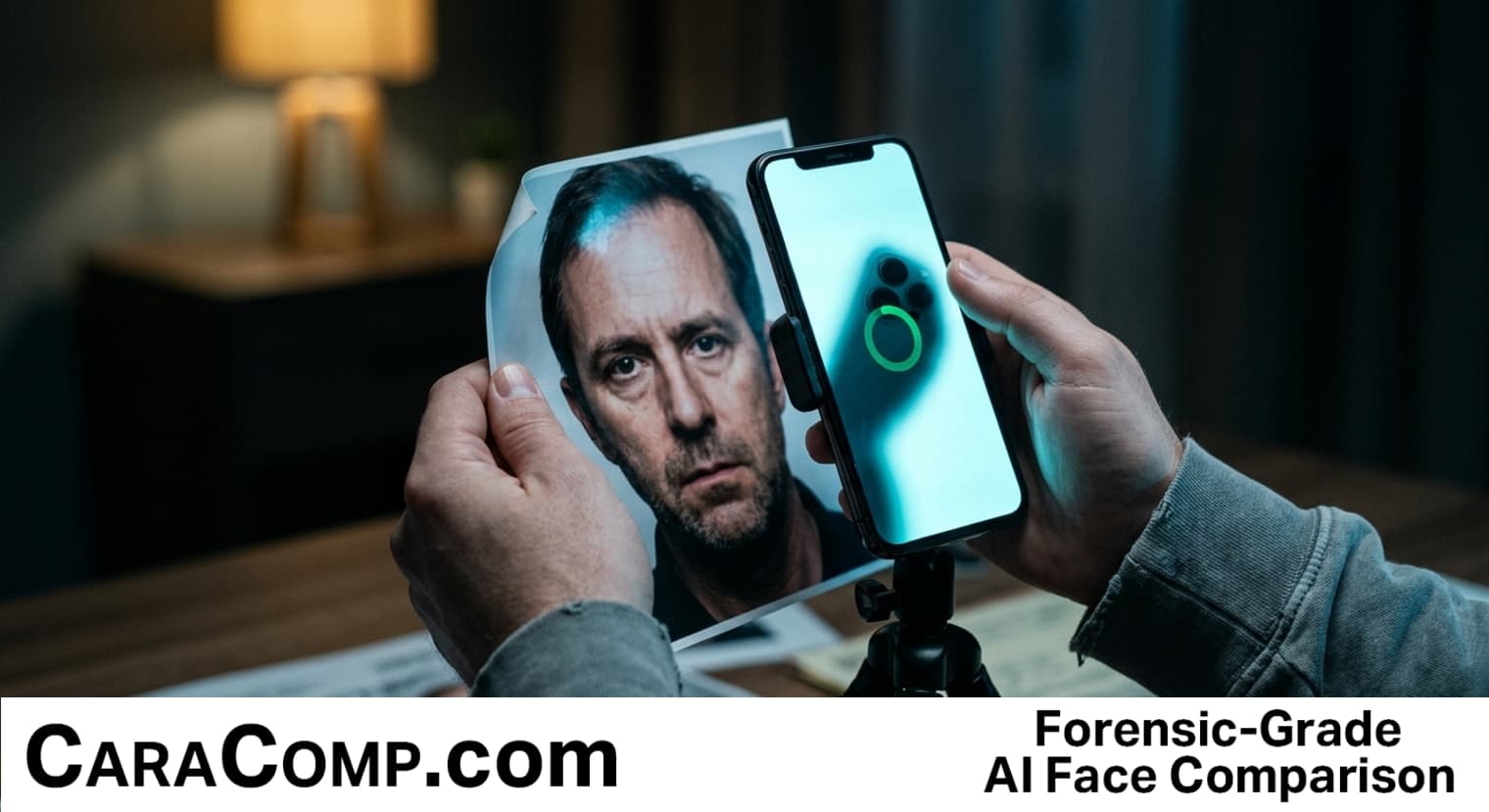
Here's a fact that should mess with your head a little: a face-scanning system can accurately recognize you and still get completely fooled by a piece of paper. Not a Hollywood-grade deepfake. A printed photo. That's it. Somewhere between "wow, technology" and "wait, what," this is the gap most people never see coming, and it's exactly where a real 2026 risk appears: a bank account opened with nothing but a printed face held up to a phone camera.
Biometric authentication is the process of proving who you are using unique physical or behavioural traits, like your face, fingerprint, or iris, but it turns out to be two separate checks bolted together, and only one of them is checking whether you're actually a living, breathing person.
Biometric authentication verifies identity using unique physical, behavioural traits like your face or fingerprint, but "matching a face" and "proving it's a live person" are two completely different jobs, and a lot of systems only ever built one of them.
How Biometric Authentication Verifies Your Face Using Facial Recognition (And Why That's Not the Whole Story)
Let's start with the part that quickly compares numerical faceprints. When a system runs biometric authentication on your face, it isn't storing a photo of you the way your phone's camera roll does. It's measuring you. A camera captures your image, software finds your eyes, nose, jawline, and the distance between your pupils, and converts all of that into a set of numbers, often around 128 of them, called a faceprint. That faceprint gets compared to the faceprint on file. If the numbers line up closely enough, you're in. This whole thing takes under 200 milliseconds, faster than you can blink, which is a little ironic given what's coming next.
This is the concept most people picture when they hear the words biometric authentication: a smart camera "recognizing" you, almost like it knows your face the way a friend would. It doesn't. It's doing geometry. It's asking "how far apart are these two sets of numbers," the same way a GPS asks how far apart two coordinates are. That's genuinely elegant, and it's also why facial biometric authentication can hit accuracy rates well above 94% under controlled conditions, according to peer-reviewed research published by the National Center for Biotechnology Information. But accuracy at matching is not the same thing as security. Hold that thought, because it's the whole article.
biometric fraud attempts now involve a deepfake, not a printed photo
Source: Biometric Update, June 2025 This article is part of a series, start with How To Protect Yourself From Identity Theft 6 Free Moves Pod. This article is part of a series, start with How To Protect Yourself From Identity Theft 6 Free Moves Pod. This article is part of a series, start with How To Protect Yourself From Identity Theft 6 Free Moves Pod. This article is part of a series, start with How To Protect Yourself From Identity Theft 6 Free Moves Pod. This article is part of a series, start with How To Protect Yourself From Identity Theft 6 Free Moves Pod. This article is part of a series, start with How To Protect Yourself From Identity Theft 6 Free Moves Pod. This article is part of a series, start with How To Protect Yourself From Identity Theft 6 Free Moves Pod. This article is part of a series, start with How To Protect Yourself From Identity Theft 6 Free Moves Pod. This article is part of a series, start with How To Protect Yourself From Identity Theft 6 Free Moves Pod. This article is part of a series, start with How To Protect Yourself From Identity Theft 6 Free Moves Pod. This article is part of a series, start with How To Protect Yourself From Identity Theft 6 Free Moves Pod. This article is part of a series, start with How To Protect Yourself From Identity Theft 6 Free Moves Pod. This article is part of a series, start with How To Protect Yourself From Identity Theft 6 Free Moves Pod. This article is part of a series, start with How To Protect Yourself From Identity Theft 6 Free Moves Pod. This article is part of a series, start with How To Protect Yourself From Identity Theft 6 Free Moves Pod. This article is part of a series, start with How To Protect Yourself From Identity Theft 6 Free Moves Pod. This article is part of a series, start with How To Protect Yourself From Identity Theft 6 Free Moves Pod. This article is part of a series, start with How To Protect Yourself From Identity Theft 6 Free Moves Pod. This article is part of a series, start with How To Protect Yourself From Identity Theft 6 Free Moves Pod. This article is part of a series, start with How To Protect Yourself From Identity Theft 6 Free Moves Pod.
Biometric Authentication Is Two Separate Access Management Systems Wearing One Trench Coat
Here's the misconception, and honestly, it's an easy one to fall into. Most people assume that if a system's matching is accurate, say, 99% accurate, then it must be safe from someone holding up a photo. That number sounds like a security score. It isn't. That 99% figure measures how well the system tells two genuine photos apart under lab conditions. It says nothing, zero, about whether the system can tell a live face from a printed one, a video playing on a laptop, or a silicone mask. Recognition and liveness detection are two different engineering problems, solved by two different pieces of software, and some real-world systems only ever built the first one.
Why do people get this wrong? Because it's genuinely counterintuitive. We assume "smart" technology that can pick your exact face out of a crowd of strangers must also be smart enough to notice a piece of paper taped over a camera. It's the same instinct that makes people assume a smoke detector can smell gas. Different sensor, different job. According to research summarized by ComplyCube, as of 2023 roughly 40% of businesses in the U.S. were vulnerable to what security researchers call presentation attacks, meaning someone presenting a fake face, a photo, a video, or a mask, to a camera instead of their real one. Only 60% of organizations had implemented the necessary liveness check for verification. That means four out of ten setups you might trust with your money or your medical records were, functionally, checking a photo against a photo and calling it a day.
Think of it like a bank teller with two jobs. Job one: compare your ID photo to your face. That part is fast, accurate, almost robotic in its precision. Job two: notice that you're a living, breathing customer standing in front of them and not, say, a laminated cutout with eye holes poked in it taped to a broomstick. Most banks would never skip job two in person. But plenty of digital systems have been quietly skipping the digital version of job two for years, because detecting movement, depth, or body heat requires an additional check beyond matching a faceprint. That verification step is the difference between recognizing a customer and confirming one.
What Liveness Detection Adds to Biometric Authentication Systems, Devices, and Access
Liveness detection is the layer that answers a completely different question: is this a real, present, living person, or something pretending to be one. Some systems ask you to blink, turn your head, or smile on command, movements a printed photo simply can't do. More advanced setups use infrared or thermal sensors that detect the heat naturally radiating off human skin and can help distinguish a real person from a photograph, video, or rubber mask, according to industry analysis from FinCrime Central. Without this second layer, a high-resolution printout of someone's face pulled off a public social media profile can be enough to pass. That's the "printed face opens a bank account" scenario in a single sentence, and it's not hypothetical, it's a documented category of attack called a presentation attack. Any device offering account access on the strength of a face alone needs that second layer to mean anything.
Can a Photo Really Unlock Biometric Authentication Systems and Devices?
Sometimes, yes, and that's the uncomfortable answer. Facial recognition algorithms, on their own, have no built-in mechanism for telling a live face from a fake one, according to patent documentation filed with the U.S. Patent and Trademark Office. The vulnerability isn't about image quality either. A cheap, blurry photo might fail. A clean, high-resolution print of someone's real face, the kind anyone could screenshot off a public profile picture, is often more than enough to pass systems that skipped the liveness layer. Your face, remember, is the one password you post in public every single day. Every profile picture, every tagged photo at a birthday party, every video call screenshot, is a copy of the credential a weak system might accept.
This is exactly why biometric authentication isn't hack-proof, and no serious security researcher claims it is. It's a factor, one ingredient among several factors, not a magic seal. Systems that treat a face scan as the entire lock, with no password, no second factor, no liveness check, are the ones most exposed. The safer setups treat your face as one factor inside multi-factor authentication, stacked alongside a password, a one-time code, or a device you already own, so that beating one layer doesn't hand over the whole account. This is also where data security teams push hardest, since a stolen faceprint cannot simply be reset like a password.
Face recognition algorithms do not have a mechanism for differentiating a live face from a fake face without integrated liveness detection. Previously in this series: Biometric Authentication 40 Of Systems A Photo Can Fool Podc. Previously in this series: Age Verification Uk Pubs Now Accept A Phone Tap Not Id. Previously in this series: Age Verification Uk Pubs Now Accept A Phone Tap Not Id Podca. Previously in this series: Deepfake 15 Dutch Lawmakers Demand A Crackdown. Previously in this series: Deepfake 15 Dutch Lawmakers Demand A Crackdown Podcast. Previously in this series: Police Facial Recognition Ai Tossed 94 Of 108 000 Faces. Previously in this series: Police Facial Recognition Ai Tossed 94 Of 108 000 Faces Podc. Previously in this series: Youtube Age Verification When Ai Guesses Wrong Faces Pay. Previously in this series: Anti Facial Recognition Glasses 5 Of 5 Cameras Still Matched. Previously in this series: Youtube Age Verification When Ai Guesses Wrong Faces Pay Pod. Previously in this series: Anti Facial Recognition Glasses 5 Of 5 Cameras Still Matched. Previously in this series: Reverse Image Search Why A 95 Match Proves Nothing. Previously in this series: Reverse Image Search Why A 95 Match Proves Nothing Podcast. Previously in this series: 2k Face Scan 13 Photos Amazon Stores Indefinitely. Previously in this series: 2k Face Scan 13 Photos Amazon Stores Indefinitely Podcast. Previously in this series: Deepfake Technology 350 Fake Nudes Made By Two 14 Year Olds. Previously in this series: Deepfake Technology 350 Fake Nudes Made By Two 14 Year Olds. Previously in this series: Facial Recognition Software 14 Wrongful Arrests So Far. Previously in this series: Ai Deepfake Laws 15 736 Victims In Six Months.
U.S. Patent and Trademark Office, Face liveness detection patent filing
Facial Biometric Authentication vs Fingerprints, Iris Scans, and Voice Authentication
Biometrics are biological characteristics, and your face is just one of several the industry leans on for biometric identification. Fingerprints read the ridges on your finger. Iris recognition maps the unique patterns in the colored ring of your eye. Voice authentication listens for the specific shape of your vocal tract and speech rhythm. Each biometric factor has its own strengths and its own weak spot. Fingerprints can be lifted from a glass. Voices can be cloned from a few seconds of audio. Faces can be photographed from across a parking lot. None of them are individually bulletproof, which is exactly the argument for combining them with something you know, like a password, or something you hold, like a device.
| Security layer | What it actually checks | What it misses | Status |
|---|---|---|---|
| Facial recognition matching | Do these two faceprints belong to the same individual | Whether the input is a live person or a printed photo | Biometric authentication is standard |
| Liveness detection | Is a real, present human generating this image right now | Nothing extra if the face itself was stolen from a database | Often missing without added verification |
| Multi-factor authentication | Do you also have the password, code, or device tied to the account | Convenience, it adds friction by design | Recommended alongside biometric access controls |
What Real Attacks Against Biometric Authentication, Facial Recognition, and Fingerprints Look Like
There are three broad ways attackers try to defeat facial authentication, and each one breaks a different defense. A print attack uses a photo, sometimes just a phone photo held up to a camera, and it's beaten by basic liveness detection asking you to blink or move. A video attack plays a recording of the real person, which can fool systems that only check for movement but not for depth, so more advanced systems check for the subtle 3D shape of a real face. A mask attack uses a 3D-printed or silicone face, which is where thermal and infrared sensors earn their keep, since they detect actual body heat that no rubber mask produces. Layer these defenses together, and researchers cited by the National Center for Biotechnology Information found liveness detection accuracy climbing into the 94.78% to 99.36% range depending on the attack type and the sensor used.
The newer worry, and the one growing fastest, is the deepfake, a synthetically generated video built to move and blink and talk like a real person in real time. According to Biometric Update, deepfakes now power roughly one in five biometric fraud attempts, a shift from static paper attacks toward generated video that older liveness systems were never designed to catch. That number alone tells you this isn't a solved problem sitting quietly in a research paper. It's live, it's growing, and it's aimed at exactly the devices and systems that guard your money.
What You Just Learned About Biometric Authentication, Facial Recognition, and Access
- 🧠 Matching and liveness are separate systemsone asks "is this the same face," the other asks "is this a real person," and skipping the second is how a printed photo gets through
- 🔬 Accuracy percentages don't mean securitya 99% match rate describes lab conditions, not resistance to fake faces
- 🔬 Thermal sensors are the hardest layer to fakebecause they detect actual body heat, not appearance
- 💡 Your face is a public passwordevery photo you've ever posted is a potential credential, which is why stacking it with multi-factor authentication matters, especially for access to financial accounts
Does Biometric Authentication Use a Password Too? Passwordless Authentication and MFA Explained
Often, yes, and that's by design. Good biometric authentication rarely stands alone. It's frequently paired with a password or a one-time code as part of multi-factor authentication, sometimes shortened to MFA, so that a stolen faceprint or a spoofed scan isn't enough on its own to unlock the account. This layered assurance approach is why banks and phone makers increasingly push passwordless authentication built on passkeys alongside a face or fingerprint check, rather than relying on any single factor. Passkeys tied to a specific device add yet another factor that a stolen photo simply cannot replicate.
Where CaraComp's Biometric Data and Facial Recognition Research Fits In
This is the exact seam CaraComp's research into facial recognition and biometric data sits inside: the difference between recognizing a face and confirming a living one is doing the exact thing that separates a secure system from a vulnerable one, and it's the seam that shows up again and again in real-world biometric data breaches. Understanding where matching ends and liveness begins is the single most useful thing a non-technical reader can walk away with, because it turns "I don't understand this stuff" into "wait, I know exactly what question to ask my bank." A customer who understands this seam also asks better questions of any device or app requesting facial access.
Biometric authentication uses physical and behavioural traits, such as facial features, iris scans, and fingerprints, to verify identity, but biometric authentication isn't hack-proof on its own; the real protection comes from pairing it with liveness detection and multi-factor authentication so a printed photo, video, or mask can't do the job alone.
So next time your banking app asks you to blink at the camera, don't roll your eyes at the inconvenience. That blink is the entire security model. It's the difference between a system that recognizes your face and a system that knows you're actually there to claim it. And if a system ever unlocks for you without asking for that blink, that head turn, that small proof of life, that's not a feature working smoothly. That's a door somebody forgot to build a second lock for. Up next: Biometric Authentication 40 Of Systems A Photo Can Fool Podc. Up next: Biometric Authentication 40 Of Systems A Photo Can Fool Podc. Up next: Biometric Authentication 40 Of Systems A Photo Can Fool Podc. Up next: Biometric Authentication 40 Of Systems A Photo Can Fool Podc. Up next: Biometric Authentication 40 Of Systems A Photo Can Fool Podc. Up next: Biometric Authentication 40 Of Systems A Photo Can Fool Podc. Up next: Biometric Authentication 40 Of Systems A Photo Can Fool Podc. Up next: Biometric Authentication 40 Of Systems A Photo Can Fool Podc. Up next: Biometric Authentication 40 Of Systems A Photo Can Fool Podc. Up next: Biometric Authentication 40 Of Systems A Photo Can Fool Podc. Up next: Biometric Authentication 40 Of Systems A Photo Can Fool Podc. Up next: Biometric Authentication 40 Of Systems A Photo Can Fool Podc. Up next: Biometric Authentication 40 Of Systems A Photo Can Fool Podc. Up next: Biometric Authentication 40 Of Systems A Photo Can Fool Podc. Up next: Biometric Authentication 40 Of Systems A Photo Can Fool Podc. Up next: Biometric Authentication 40 Of Systems A Photo Can Fool Podc. Up next: Biometric Authentication 40 Of Systems A Photo Can Fool Podc. Up next: Biometric Authentication 40 Of Systems A Photo Can Fool Podc. Up next: Biometric Authentication 40 Of Systems A Photo Can Fool Podc.
Biometric Authentication, Facial Recognition, and Access: Frequently Asked Questions
What is biometric authentication in simple terms?
Biometric authentication is the concept of verifying identity using unique physical, behavioural traits instead of, or alongside, a password. Rather than typing a code, the system measures something about your body, your face, fingerprint, iris, or voice, and checks it against a stored record. It's fast and hard to forget, since you can't leave your own face at home, but it depends heavily on whether the system also checks that a real, live individual is presenting that trait rather than a copy of it, which is why verification of liveness matters as much as the initial match.
Can a photo really unlock facial biometric authentication?
Yes, on systems that skip liveness detection. Facial recognition algorithms match numbers extracted from a face, they don't automatically know if that face is alive. A clear printed photo or a video playing on a screen can sometimes pass as real. Systems that add liveness checks, like asking you to blink, or that use thermal sensors to detect actual body heat, close this gap. This is exactly why relying on a face scan alone, with no second factor, carries real risk to device access and account access alike.
Is biometric authentication safer than a password?
It's different, not simply safer. A password can be guessed, leaked, or reused across accounts, but it can also be changed if stolen. Biometric data, your fingerprints, your facial features, can't be changed if it leaks, since you only get one face. Biometric authentication is strongest when it's one factor inside multi-factor authentication rather than a total replacement for passwords, combining something you are with something you know or something you hold, such as a device.
What is liveness detection and why does it matter for access management?
Liveness detection is a separate check that determines whether a real, present human is generating the biometric input right now, rather than a photo, recorded video, or mask. It matters for access management because a company can have highly accurate facial recognition and still be wide open to fraud if it never verifies the face is actually alive. Roughly 40% of U.S. businesses were found vulnerable to these presentation attacks as of 2023, largely due to missing liveness detection and weak data security practices around biometric access.
How does iris recognition compare to facial recognition for devices?
Iris recognition scans the unique patterns in the colored ring of your eye. Facial recognition is more convenient on devices since it works from a normal front-facing camera without extra hardware, but it's also easier to photograph from a distance. A device may use facial biometric authentication for daily unlocking and reserve a fingerprint or iris recognition check for higher-assurance actions like payments or account access.
Does multi-factor authentication replace the need for biometric data?
No, they work together. Multi-factor authentication means combining two or more separate factors, something you know like a password, something you have like a device, and something you are like your fingerprints or facial features. Biometric authentication supplies that third factor. Systems that only use one factor, biometric or otherwise, are more exposed to fraud, which is why banks and major platforms increasingly stack a face or fingerprint check on top of passkeys or a one-time code sent to your device.
Ready for forensic-grade facial comparison?
Full forensic reports with detailed similarity scoring. Results in seconds.
Run My First SearchMore Education
Deepfake AI App: One Photo, 225,000 School Fakes
You made a funny video with a face swap app. Here's what most people don't realize: the app kept the data, and the same tech is now behind a wave of fake porn videos hitting middle schools.
facial-recognitionFacial Recognition Software: 14 Wrongful Arrests So Far
Learn exactly how facial recognition software turns your face into data, why it fails more on some faces than others, and what to do if it ever misidentifies you.
digital-forensicsDeepfake Technology: 350 Fake Nudes Made by Two 14-Year-Olds
A teenager with a laptop and a school photo can now create a fake nude in seconds. Here's the actual technology behind deepfakes, why humans can't spot them, and the one legal fact every parent needs to know.