
Baby Passport Photo: Fix the Hand Mistake Causing Rejections
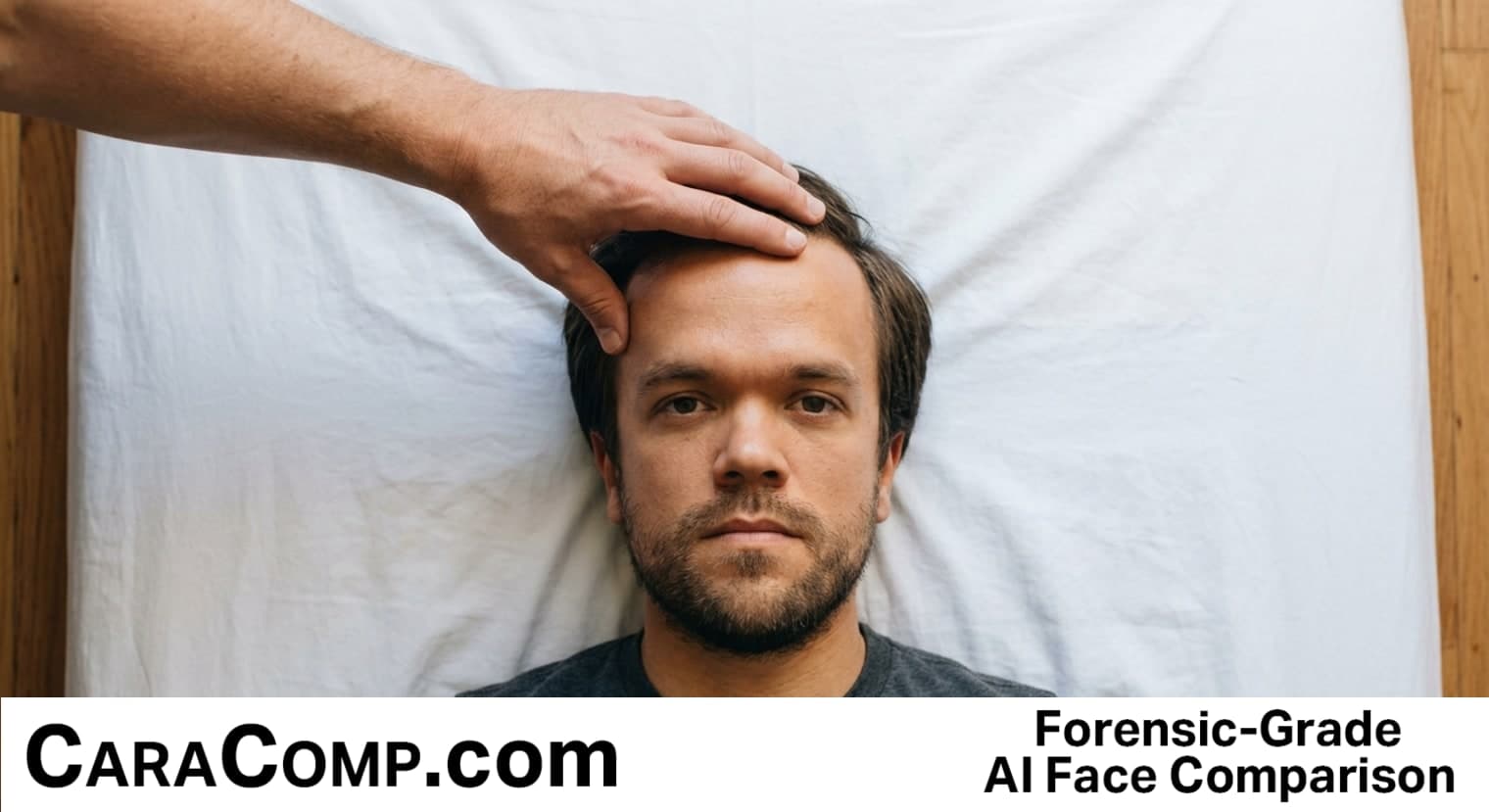
Here is the thing nobody tells you before your kid's first big trip: you can do everything right and still get your baby's passport photo rejected. Good lighting, plain background, calm baby, all boxes checked. Then a rejection letter shows up two weeks later and your flight is in twelve days.
A baby passport photo gets rejected more often for one sneaky reason than any other: a parent's hand or fingertip sneaking into the frame while trying to keep a squirming infant still, which violates the requirement that no other person appear in the photo.
Baby passport photo rejections can come down to one instinct every parent has: propping up the baby's head with a hand that ends up caught in the frame.
Think about it from the parent's point of view. Your baby can't sit up. Can't hold their own head steady. So you do what any sane human would do: you put a hand behind the head to keep it from flopping sideways while you snap the photo. It feels responsible. It feels like good parenting. And it is exactly the move that gets the application kicked back.
Why the Baby Passport Photo Rule Trips Up Even Careful Parents
The rule sounds simple on paper: no other person can appear in the photo. For an adult passport photo, that is easy. Nobody is holding your head up while you pose for your renewal photo at the pharmacy. But a newborn or a six month old cannot support their own head, so parents naturally reach in to help, and that hand, even just a fingertip at the edge of the frame, counts as another person under the rule. The Department of State does not carve out an exception for this. According to the U.S. Department of State, photo requirements apply the same way to a baby passport photo as they do to anyone else's, with only a couple of small allowances built in specifically for infants who cannot yet hold their heads up or keep their eyes fully open.
Here's where it gets interesting. This is not some bureaucratic pet peeve. The rule exists because of how the photo gets used later, not just how it looks today. Passport photos are not just pictures anymore. They are biometric data, meaning measurements of your body, in this case your baby's face, that get fed into scanning software at borders around the world. That software compares facial features such as the spacing between the eyes, the shape of the jaw, and the distance from chin to hairline. A hand in the frame means the image no longer shows only the applicant, so it fails the photo requirement before it can serve as a clean biometric image.
What Counts as a Baby Passport Photo Fail
A visible hand is the single biggest cause, but it is not the only one. Shadows across the face count too, especially the kind that show up when someone holds a camera directly above a baby lying flat, which blocks the room's natural light and casts a dark patch under the chin and around the eyes. Skewed head position counts. A tilted chin counts. Any photo run through an app that automatically smooths skin or brightens the background can count as a rejection too, because digital alteration is not allowed.
is how long a U.S. passport is valid for applicants under age sixteen, compared with ten years for adults
Source: U.S. Department of State passport validity rules This article is part of a series, start with Deepfake Ai One Public Photo Is All Blackmailers Need. This article is part of a series, start with Deepfake Ai One Public Photo Is All Blackmailers Need.
The Baby Passport Photo Rule About Eyes That Everyone Misreads
Ask any parent who has been through this and they will tell you the same thing: "I heard babies get an exception on the eyes." True. Sort of. And this is the misconception that trips up more people than almost anything else.
Here is what actually happens. Newborns, generally under about three months old, get a real exception. If your baby's eyes are closed in the photo because babies that age genuinely cannot control that yet, it is allowed as long as the baby is facing the camera and the rest of the shot is clean. Crying and laughing are still not allowed, but a closed eye on a two week old will not sink your application.
The trouble starts when parents apply that same leniency to a six month old or a one year old. By then, the exception is gone. The child's full face must be visible with eyes open, mouth closed, facing forward, same as any older kid or adult. Why do so many people get this wrong? Because the guidance they skim online often just says "babies get some flexibility" without spelling out the age cutoff. It reads like a blanket rule for anyone under two. It is not. It is a narrow window that closes fast, and it closes right around the time your baby starts actually looking like themselves in photos, which brings up another wrinkle parents rarely see coming.
Infant Passport Photos and the Five Year Rule Nobody Explains
Why does a passport for a baby only last five years instead of ten like an adult's? Because a face taken at three months looks nothing like the same child at two years old. The shorter window exists because infant faces change quickly enough that a single photo cannot keep up.
That five year validity period, set by the U.S. Department of State for anyone under sixteen, is a quiet acknowledgment that baby faces are moving targets. Adults get ten years because an adult face changes gradually. A baby's face changes dramatically in the time it takes to potty train. So even if your infant passport photo gets approved on the first try, know going in that you will be doing this again sooner than you think.
How the Camera and Biometric Scanner Actually Read a Baby Passport Photo
Think of it like airport security screening, the kind you have gone through a hundred times without thinking about it. TSA runs the same checklist on every single person: shoes off, laptop out, liquids in the clear bag. Nobody at the checkpoint decides the rules person by person. The checklist helps the system work consistently. Passport photo rules work the same way. A biometric passport photo has to follow one universal specification so that scanners at any airport, in any country, can process it consistently.
According to guidance summarized by Remitly, international standards set by the aviation authority that governs passport photos worldwide require a neutral expression specifically so that facial recognition software, the kind used at border checkpoints, can read faces consistently. A hand in frame, a tilted head, or a shadow across half the face can interfere with the clean, consistent facial image the photo rules require.
What You Just Learned About Baby Passport Photo Requirements
- 🧠 A parent's hand can cause rejectioneven a fingertip at the frame's edge means another person appears in the photo
- 🔬 The closed-eye exception is narrowit applies to newborns roughly under three months, not to babies of any age
- 💡 Digital touch-ups backfirean app that smooths skin or brightens a background can cause a rejection under current rules
- 📸 A plain white sheet solves two problems at onceit fixes the background and removes the need for a supporting hand
The Fix: How to Take a Baby Passport Photo at Home Without a Hand in Frame
Here is the fix the State Department itself recommends, and it is almost embarrassingly simple once you see it. Lay your baby flat on their back on a plain white or off white sheet or a piece of poster board, on the floor at home, in a spot with soft natural light coming from a window in front of or beside them, never directly overhead. Position the camera straight above, looking straight down. No car seat. No swing. No hand. Previously in this series: Baby Passport Photo Why A Parents Hand Gets It Rejected.
Laying the baby flat solves the exact problem that started this whole mess. Baby must be facing the camera straight on, eyes open if they are past the newborn window, mouth closed, head not tilted to one side with their head turned. Because the sheet or poster board is doing the supporting work that a hand used to do, there is nothing for your fingers to sneak into the shot. It also solves the background rule in one move, since a plain white sheet or a sheet of poster board gives you the clean, shadow free backdrop the photo requirements demand without buying a single prop.
Unacceptable photos are the number one reason passport applications get put on hold, and reviewing the official guidelines and photo examples is essential to learn what actually makes a photo acceptable before you submit.
summarized from guidance published by U.S. Department of State
If you would rather not fumble with a sheet on your floor at home, plenty of parents use a dedicated passport-photo tool that guides camera positioning and checks the shot for the basic dimension and background rules before you submit it. Just be careful with any tool that offers automatic beauty filters or lighting correction, since that is exactly the kind of digital alteration current rules can flag. When in doubt, skip the studio style filters entirely and stick to natural light and a plain background.
| Rejected Baby Passport Photo | Accepted Baby Passport Photo |
|---|---|
| Parent's hand or fingertip visible in frame | Baby lying alone on a plain white sheet, no hands visible |
| Photo taken directly overhead in a dim room, casting shadows | Soft natural light from a window in front of the baby |
| App-smoothed skin or auto-brightened background | Unedited photo straight from the camera, no filters applied |
| Six month old with eyes closed | Eyes open and facing camera, exception used only for true newborns |
There is a version of CaraComp's work that lives in exactly this space, studying how facial recognition and biometric systems read images, whether that is a border scanner checking a child passport or an app trying to verify someone's identity online. The mechanics are the same everywhere: a machine measures a face, and anything that clutters that measurement, a hand, a shadow, a filter, can interfere with the read.
Baby Passport Photo Requirements: What Size and Format Does the USA Require
The USA requires a 2 by 2 inch photo, meaning the head, from chin to crown, must fall within a specific inch range inside that frame, with the baby facing the camera directly, on a plain white or off white background, in color, printed or uploaded at the correct resolution the application system specifies.
What This Means for the Trip You Already Booked
Look, nobody's saying any of this is complicated once you know it. But that is exactly the trap. Parents assume a baby photo is easier than an adult one, less to get wrong, less at stake. It is actually the opposite. A baby cannot follow instructions, cannot hold still, cannot sit for a second take without crying through it. So parents improvise, and the improvising is precisely where the rule gets broken.
The stakes are not abstract either. A rejected baby passport photo does not just mean redoing a photo. It means resubmitting an entire passport application, which can add weeks back onto processing time you did not budget for when you booked a flight for six weeks out. This same logic applies whether you are applying for a first time infant passport or a visa photo for a country that has its own separate photo rules on top of the passport ones, so check both if international travel is on the calendar.
The baby passport photo rule that can trip up parents is not about lighting or expression alone. It is about the hand holding the baby's head steady, and the fix is to lay baby flat on a white sheet so nothing but their face is ever in frame. Up next: Baby Passport Photo Why A Parents Hand Gets It Rejected.
So here is the reframe worth carrying into that spare bedroom with your phone and a bedsheet tonight. You are not just taking a cute picture of your kid for a government form. You are creating the facial image that will appear on your child's passport for the next five years. Lay the baby on the sheet, step your hands out of the frame, and let the background do the holding for you.
Baby Passport Photo: Frequently Asked Questions
Can I use poster board instead of a white sheet for a baby passport photo?
Yes. A piece of white poster board works just as well as a white sheet and is often easier to control since it does not wrinkle or shift. Lay it flat on the floor, place your baby on top facing the camera, and shoot from directly above using natural window light. Either option solves the plain background requirement and removes the need to hold your baby's head with a hand that could end up visible in the shot.
Does the baby have to be facing the camera directly?
Yes, the baby must be facing the camera straight on with their head not tilted or turned to one side. This applies even to very young infants. The only real flexibility built into the rules is around open eyes for true newborns, generally under about three months old. Everything else, including head position and facing the camera, follows the same standard used for older children and adults, because the photo has to work consistently with biometric scanning software at borders.
What size does a baby passport photo need to be for the USA?
The USA requires a 2 by 2 inch photo for a baby passport photo, the same size used for adult passports. The head needs to fall within a specific size range inside that frame, measured from chin to the top of the head. You can take the photo at home and upload it digitally through an approved photo tool, or have it printed at a pharmacy or studio, as long as the final file meets the dimension and resolution requirements listed on the official application.
Is there an app that helps take an infant passport photo correctly?
Yes, several tools exist for this, including passport photo services that walk parents through camera positioning, check background uniformity, and flag common errors like a visible hand or tilted head before submission. Use these tools carefully though. Many apps marketed for this purpose also offer automatic skin smoothing or lighting correction, and under current digital alteration rules, any enhancement like that can cause a rejection, even if the underlying photo was otherwise fine.
Why does skin appear too smooth in some rejected baby passport photos?
Skin can appear too smooth when a parent uses a photo editing app that automatically applies a beauty filter or smoothing effect, often without realizing it is turned on by default. Reviewers can reject this because smoothing filters are classified as digital alteration, which is not allowed on any passport photo, baby or adult. The safest approach is to skip filters entirely and submit the raw, unedited image straight from the camera.
How long is a baby passport valid before it needs renewal?
A passport for anyone under sixteen, including infants, is valid for five years, compared to ten years for adult passports. This shorter window exists because a baby's face changes so quickly that a photo taken at three months old often looks nothing like the same child at two years old. Parents booking international travel should factor renewal timing into their planning, since a passport nearing its five year mark may need updating before a trip.
Ready for forensic-grade facial comparison?
Full forensic reports with detailed similarity scoring. Results in seconds.
Run My First SearchMore Education
Deepfake AI: One Public Photo Is All Blackmailers Need
A deepfake sextortion scam killed a 16-year-old over a fake photo. Here's how the AI technology behind it works, how detection catches what your eyes can't, and where to look first if it happens to your family.
facial-recognitionHow Does Facial Recognition Work: 512 Numbers, Wrong Arrests
Your face gets turned into a string of 512 numbers the moment a camera catches it. Here's what those numbers actually do, why they can vary from one image to another, and how a stranger's numbers can end up matching yours.
biometricsBiometric Lock: How a 12-Year-Old's Finger Opened a Gun Safe
The gun safe said "locked." It wasn't. Here's the hidden setting that let a 12-year-old open a biometric lock with his own fingerprint, and how to check yours tonight.