
Deepfake App: How They Work and How to Detect Deepfakes
Discover how deepfake apps work, explore face swap technology, learn about tools, and understand cybersecurity risks of AI-generated content and fraud prevention.
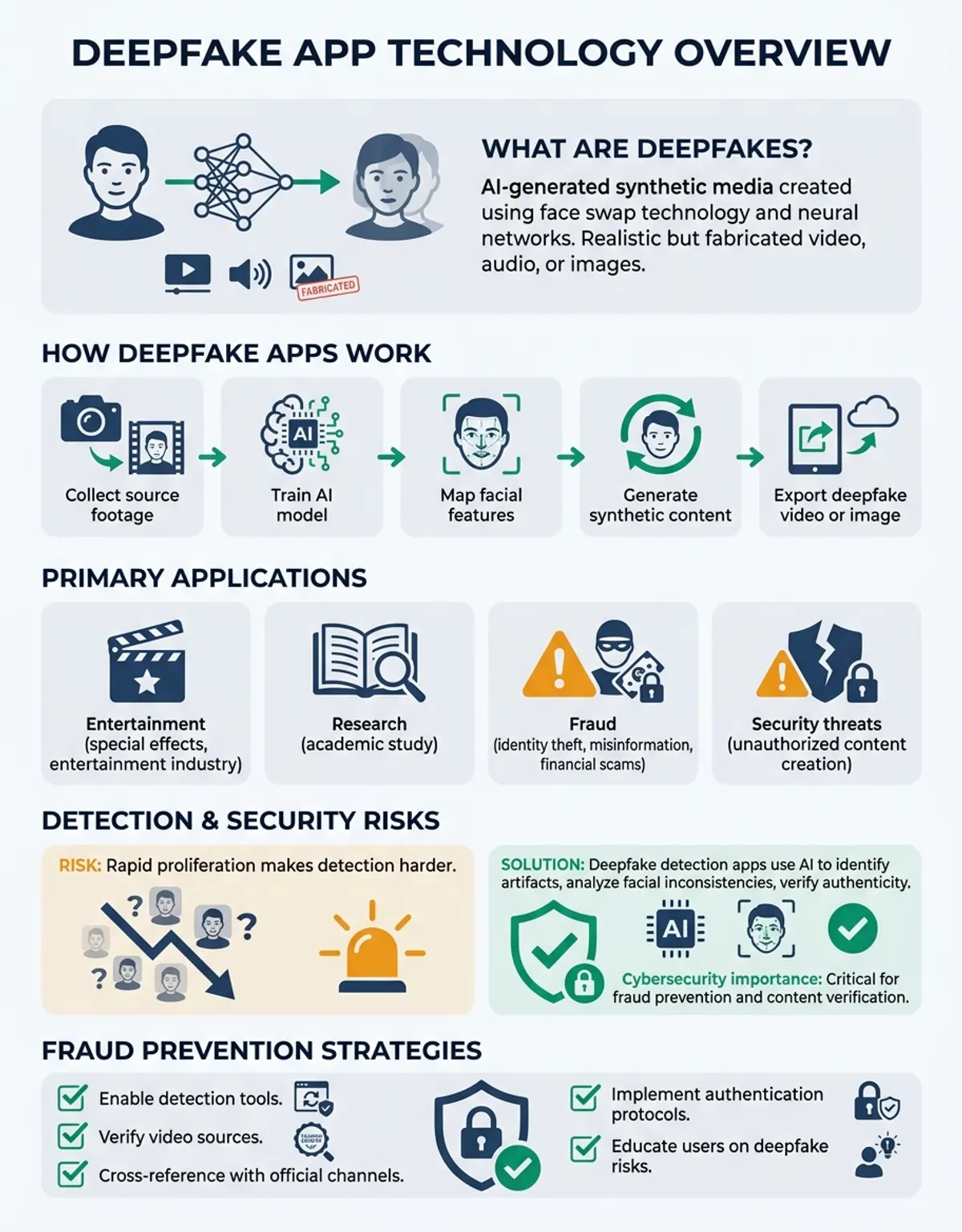
A deepfake app represents cutting-edge AI that creates synthetic media, including images, recordings, and videos. These applications leverage deepfakes and advanced algorithms to manipulate or generate realistic material that can be difficult to distinguish from authentic media. As deepfakes become more sophisticated, understanding how these apps work and their implications for information security, preventing fraud, and proper checks has become increasingly important for both individuals and organizations focused on digital defense.
What is a Deepfake App?
A deepfake app is a software application that utilizes artificial intelligence and machine learning to create or manipulate digital content, producing AI-generated synthetic media that appears authentic. The term "deepfake" combines "deep learning" and "fake," referring to the advanced neural network technology these apps employ. These applications can create convincing face swaps, alter voice recordings, or generate entirely synthetic content that mimics real people and events.
Deepfake applications work by training neural networks on large datasets of images, videos, or audio recordings. The system analyzes patterns in facial features, voice characteristics, and movement to learn how to replicate them convincingly. Modern deepfake apps can swap faces in videos, clone voices with remarkable accuracy, or create entirely synthetic personas that don't exist in reality. This deepfake technology has evolved rapidly, making it increasingly accessible through mobile and web-based applications.
The core functionality of a deepfake app involves several sophisticated processes. First, the app analyzes the source content to identify key features such as facial landmarks, expressions, and lighting conditions. Then, using generative adversarial networks (GANs) or similar AI architectures, the app creates new content or modifies existing media while maintaining realistic appearance and consistency. The result is synthetic media that can be extremely difficult to identify as manipulated without specialized tools.
LinkedIn profiles have become a prime target for deepfake manipulation and fraud. Malicious actors create fake profiles using deepfake technology to impersonate professionals, fake employees to infiltrate companies, or build fraudulent networks. These fake profiles often use stolen or AI-generated profile photos that appear authentic but can be detected through reverse image search and verification tools. Understanding how to identify fake LinkedIn profiles is essential for protecting professional networks and company information security.
Companies face significant risks from fake profiles and fake employees on professional platforms. A deepfake app can generate convincing LinkedIn profiles complete with realistic photos, fabricated work history, and seemingly legitimate connections. These profiles may be used to gather information about organizations, conduct social engineering attacks, or establish trust before launching fraud attempts. Businesses must implement verification procedures to confirm the identity of LinkedIn profiles, especially when sharing sensitive company information or considering new professional relationships through online search and networking.
For professionals and security teams looking to verify suspicious LinkedIn profiles, CaraComp provides a powerful face comparison platform that helps detect AI-generated or stolen profile photos. By analyzing facial features and comparing images against known databases, CaraComp delivers instant verification scores that can identify deepfake-generated faces and duplicate photos used across multiple fake profiles. Whether you're conducting background checks, verifying new connections, or investigating potential fraud, CaraComp's technology offers professional-grade accuracy without requiring specialized technical knowledge—making it an essential tool for maintaining security in today's digital professional networks.
How Deepfake Apps Create Fake LinkedIn Profiles
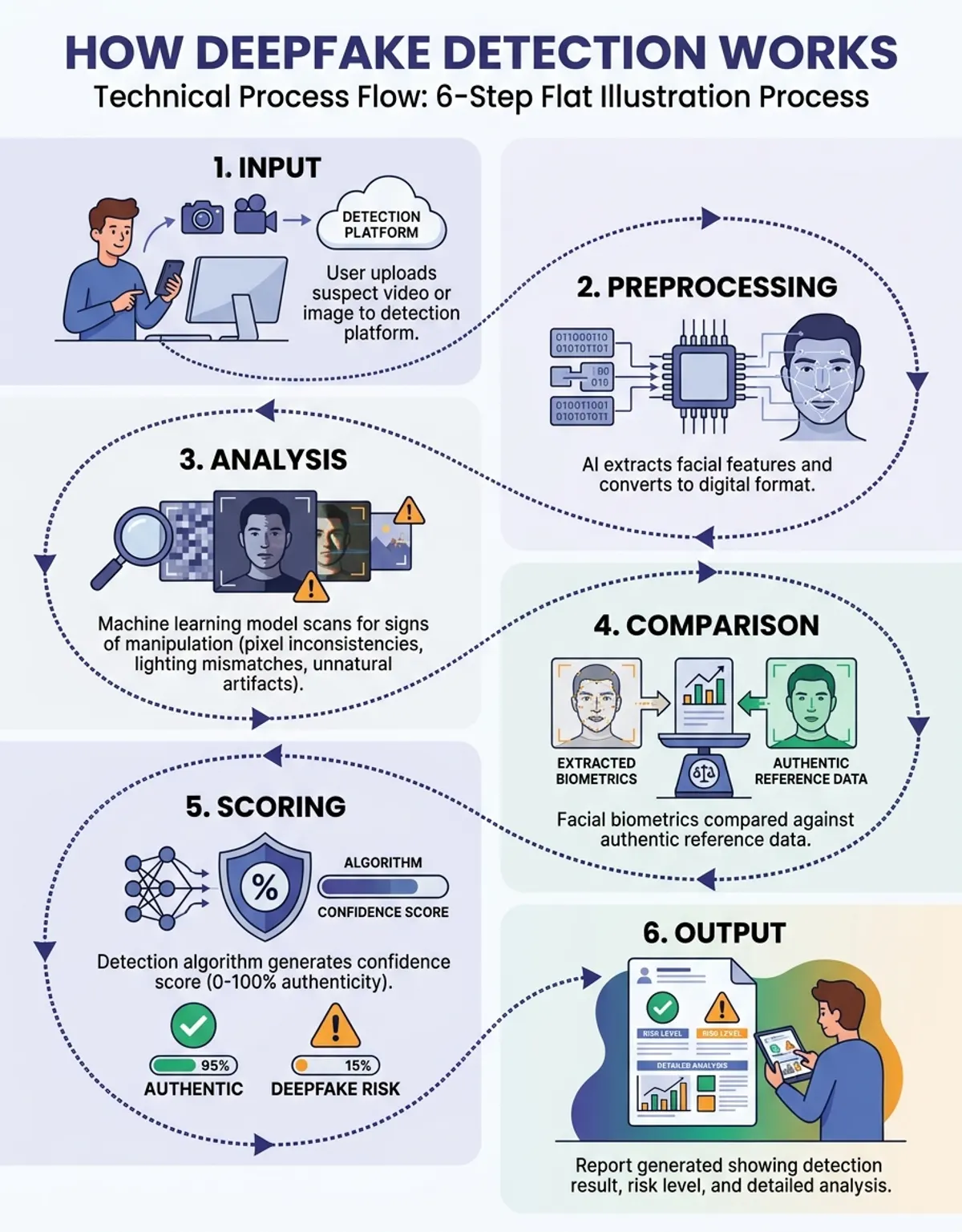
The technical process behind deepfake app creation using generative adversarial networks
The technology powering deepfake apps relies on advanced machine learning algorithms, particularly deep neural networks. These systems learn from thousands or millions of images to understand how faces move, how lighting affects appearance, and how to maintain consistency across video frames. Face algorithms identify and track facial features, while generative models create new content based on learned patterns.
Most deepfake applications use a type of AI called generative adversarial networks. GANs consist of two neural networks: a generator that creates fake and a discriminator that tries to identify fakes. These networks compete against each other, with the generator improving its ability to create realistic while the discriminator becomes better at spotting fakes. This adversarial process results in increasingly convincing deepfakes and synthetic deepfakes that can fool both human observers and some automated systems.
Modern deepfakes and deepfake apps implement several sophisticated techniques to enhance realism. They analyze lighting conditions, skin texture, facial expressions, and even subtle movements like breathing or blinking. Advanced applications can maintain consistency across different angles and lighting conditions, making the manipulated content appear natural in various contexts. The app processes each frame of video individually while ensuring smooth transitions and maintaining temporal consistency throughout the sequence.
The computational requirements for creating high-quality deepfakes have decreased significantly, making this technology accessible through mobile apps and web-based tools. Cloud-based processing allows even smartphones to generate convincing deepfake content without requiring powerful local hardware. This democratization of deepfake technology has both positive applications in entertainment and concerning implications for and misinformation.
Detecting Fake Employees and Profile Photo Manipulation
Face swap apps represent the most common category of deepfake applications, allowing users to replace one person's with another in images or videos. These apps typically offer simple interfaces where users can upload photos or select from templates to create entertainment. Popular face swap apps use real-time processing to swap faces in live video, creating amusing effects for social media sharing. While deepfakes are primarily used for entertainment, the same can be misused for creating misleading.
Deepfake creator apps provide more advanced tools for generating synthetic media. These applications offer features like cloning, where the app learns to replicate a person's voice from audio samples, and full-body deepfakes that can manipulate entire scenes. Professional-grade deepfake creator tools include timeline editing, multiple face swapping, and the ability to fine-tune results for maximum realism. These apps often require more processing time and computing power than simple face swap applications.
On the defensive side, deepfake detector apps help identify manipulated content through various analytical techniques. These verification tools examine images and videos for telltale signs of manipulation, such as inconsistent lighting, unnatural facial movements, or digital artifacts. Detection apps use their own AI models trained to spot the characteristics that distinguish authentic content from ai-generated synthetic media. Some advanced detector apps can identify which specific deepfake app or technique was likely used to create the fake.
Voice cloning applications represent another significant category, capable of generating realistic recordings that mimic specific individuals. These apps analyze voice samples to learn speech patterns, accents, and tonal characteristics, then generate new audio that sounds authentic. Voice deepfake apps have legitimate uses in entertainment and accessibility but also pose serious threats to-based authentication systems. The can create convincing fake phone calls or audio recordings that could be used for or manipulation.
Using Reverse Image Search to Verify LinkedIn Profiles
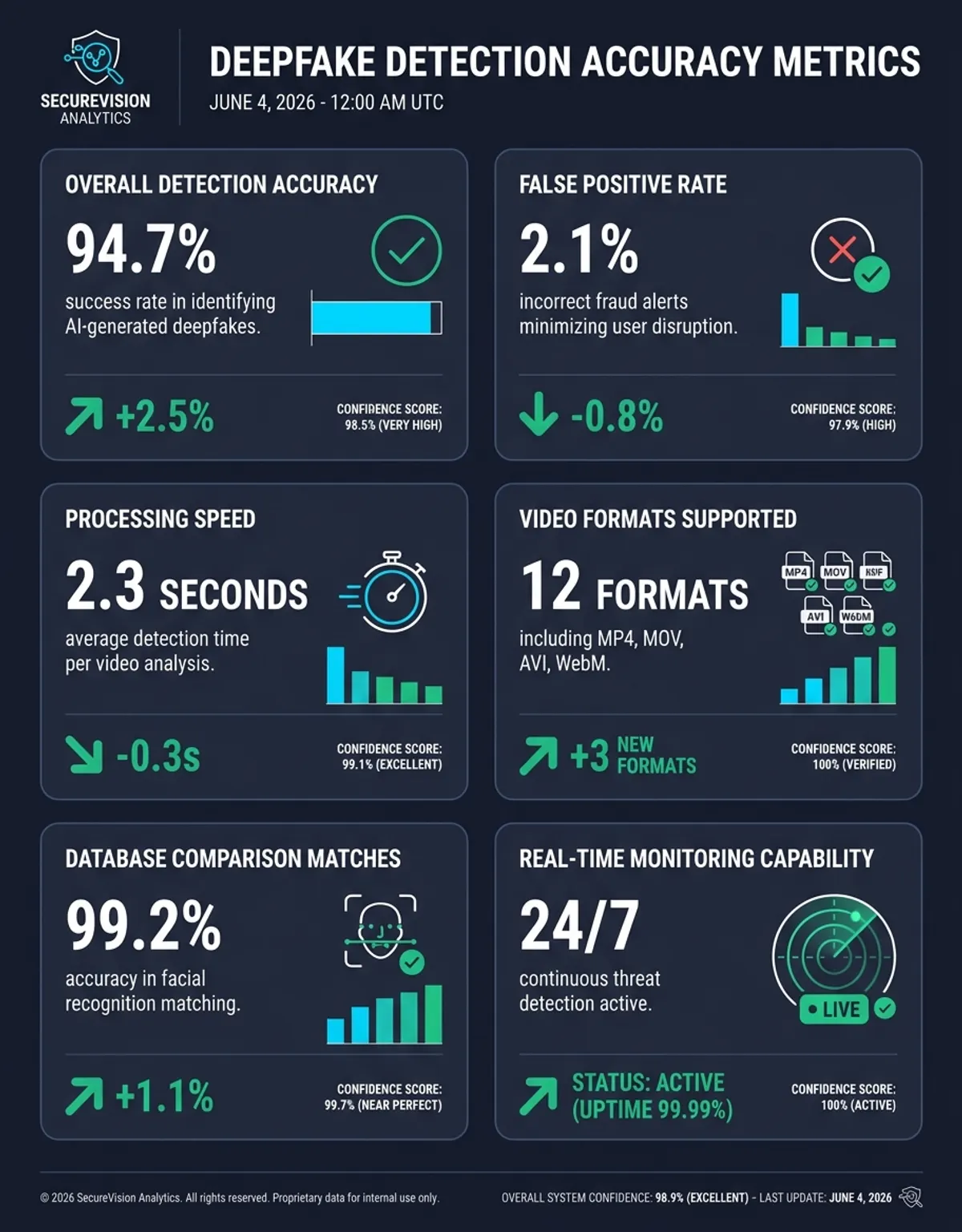
Statistical analysis of deepfake threats and detection success rates in cybersecurity
One of the most effective methods for verifying suspicious LinkedIn profile photos is using reverse image search technology. For iPhone users, our guide on Google reverse image search on iPhone provides step-by-step instructions for quickly checking whether a profile photo has been stolen or generated by AI.
Android users can achieve similar verification using our reverse image search on Android tutorial, which explains how to identify fake LinkedIn profiles and detect AI-generated photos using mobile reverse image search tools.
The digital defense implications of deepfake applications are substantial and continue to evolve as it advances. Deepfakes pose a significant threat to information security through their potential for credentials theft, financial fraud, and reputational damage. Malicious actors can use deepfake apps to create deepfakes and fake videos of executives authorizing fraudulent transactions, impersonate individuals on LinkedIn profiles to bypass security measures and gather company information, or spread online misinformation that appears to come from trusted sources.
One of the most concerning fraud scenarios involves using deepfake technology to defeat biometric protection systems. Sophisticated deepfakes and advanced deepfakes can potentially fool facial recognition systems used for authentication, creating serious vulnerabilities in protection protocols that rely on visual verification. Voice cloning apps similarly threaten-based authentication, allowing fraudsters to impersonate individuals on phone banking systems or other voice-verified services. organizations and organizations must adapt their protection measures to account for these evolving threats.
details protection professionals face the challenge of detecting and preventing deepfake-based attacks while the continues to improve. Traditional protection measures may be inadequate when dealing with convincing ai-generated synthetic media. organizations are implementing multi-factor authentication that doesn't rely solely on biometrics, developing deepfake capabilities, and educating employees about the potential for deepfake-based social engineering attacks.
The misuse of deepfake apps extends beyond direct fraud to include reputation damage, online fake news, and online political manipulation. digital defense experts recommend combining technical tools with human verification processes, especially for high-stakes decisions or transactions. Organizations should establish protocols for verifying the authenticity of video and audio communications, particularly when they involve sensitive credentials or financial transactions. Awareness training helps individuals recognize potential deepfake content and verify details through multiple channels before taking action.
LinkedIn Profile Verification and Fraud Prevention
Identifying deepfake content requires a combination of automated tools and human expertise. Deepfake detector apps use machine learning algorithms trained on large datasets of both authentic and manipulated media to identify subtle inconsistencies that indicate synthetic. These algorithms analyze various factors including facial movements, lighting consistency, audio synchronization, and digital artifacts that result from the deepfake creation process. For more on this topic, see our guide on reverse image search.
Advanced methods examine multiple aspects of media simultaneously. They look for unnatural blinking patterns, inconsistent lighting between the and background, unusual skin texture, or temporal inconsistencies in how facial features move across video frames. Audio analysis checks for unnatural speech patterns, background noise inconsistencies, or artifacts from synthesis. Online detection services allow users to upload suspicious content for automated analysis, providing probability scores indicating whether the content is likely manipulated.
Organizations concerned about deepfake-based fraud are implementing comprehensive protocols. These include using secure communication channels with pre-established authentication methods, requiring in-person or multi-factor for critical transactions, and maintaining knowledge of the latest deepfake techniques. Some organizations use blockchain technology to create verifiable digital signatures for authentic media, making it easier to identify unauthorized manipulations.
Despite advances in detecting deepfakes and in methods, the arms race between deepfake creators and detectors continues. As methods to detect deepfakes improve, deepfake apps evolve to circumvent them. This ongoing competition means that strategies must combine multiple approaches: technological detection tools, procedural safeguards, and human judgment. Users should maintain healthy skepticism about unexpected or unusual communications, even when they appear to come from known sources, and verify important credentials through independent channels. For more on this topic, see our guide on how to spot a deepfake.
Best Practices for Using Deepfake Apps Safely
For those using deepfake for legitimate purposes, following ethical guidelines and legal requirements is essential. Always obtain consent before creating deepfakes of identifiable individuals, and clearly label synthetic content as such when sharing it. Many jurisdictions have laws governing the creation and distribution of deepfakes, particularly when used for harassment, or deception. Responsible use of this requires understanding deepfakes capabilities and both its capabilities and its potential for harm.
Verification of content authenticity should be standard practice in any context where deepfakes could have serious consequences. Organizations should implement policies requiring multi-source for important decisions, especially those based on video or audio communications. Technology solutions like digital watermarking, blockchain, and secure communication channels can help establish content authenticity and maintain details protection in an era of sophisticated synthetic media.
Individuals can protect themselves by understanding the capabilities of modern deepfake apps and maintaining appropriate skepticism about online content. Be particularly cautious about unexpected requests for money, sensitive credentials, or actions that seem out of character, even when they appear to come from trusted sources. Use official communication channels to verify unusual requests, and consider implementing code words or other personal methods for important communications with family or colleagues. For more on this topic, see our guide on what is a deepfake.
As deepfake continues to evolve, staying informed about new developments, methods, and protection best practices becomes increasingly important. Organizations should conduct regular training on identifying potential deepfakes and responding appropriately to suspicious content. The combination of knowledge, technological tools, procedural safeguards, and verification methods provides the best defense against the misuse of deepfake applications while allowing beneficial uses of this powerful technology to continue.
Frequently Asked Questions About Deepfake Apps
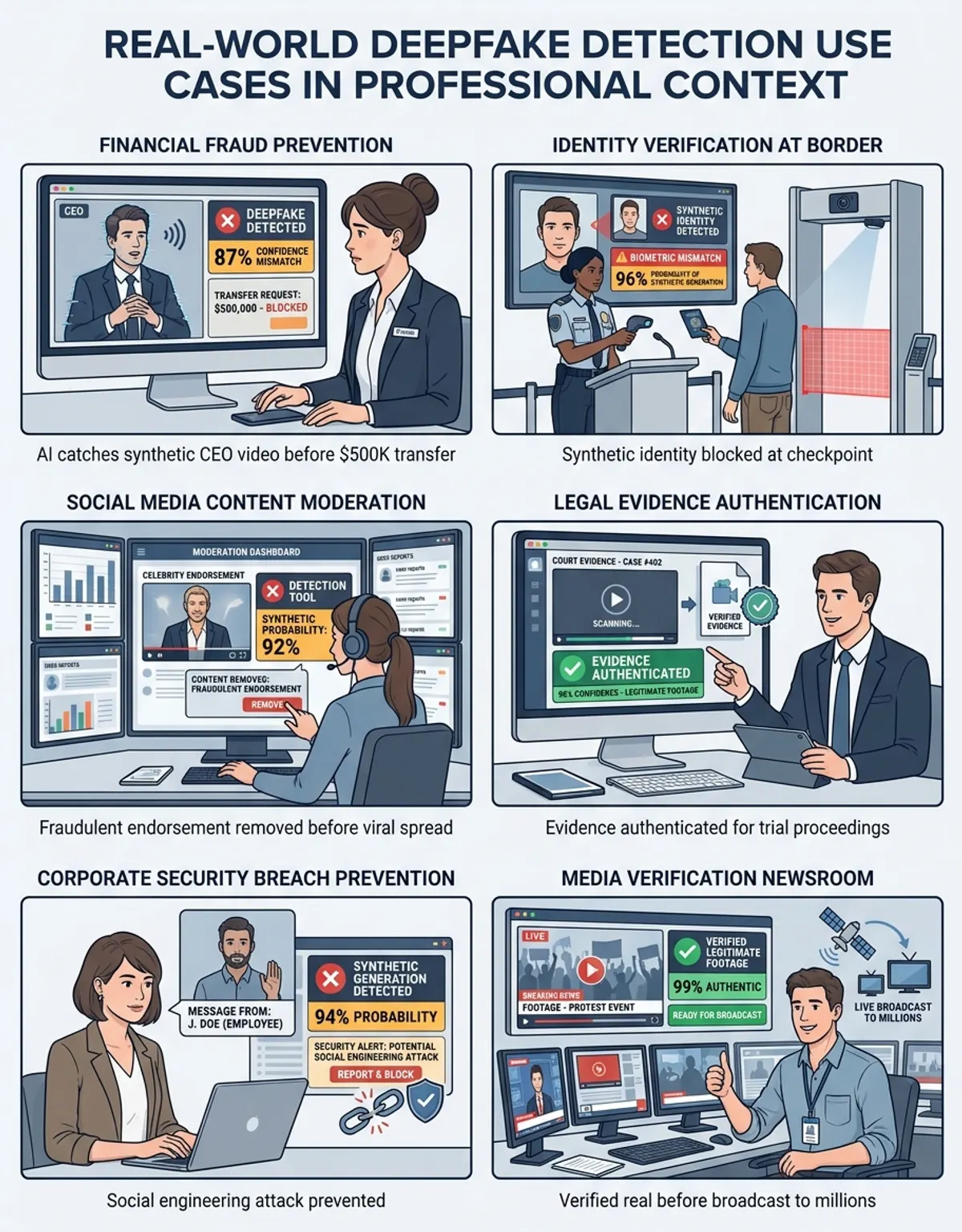
Practical use cases and applications of deepfake technology across different sectors
What is a deepfake app and how does it work?
A deepfake app is an application that uses artificial intelligence to create ai-generated synthetic media by manipulating existing content or generating entirely new that appears authentic. These apps work by training deep neural networks on large datasets of images, videos, or audio. The deepfake analyzes patterns in facial features, movements, and characteristics to learn how to replicate them convincingly. The app then applies this learned knowledge to create swaps, voice clones, or entirely synthetic content. Most deepfake apps use generative adversarial networks (GANs) where two AI systems compete—one creating fake content and another trying to detect fakes—resulting in increasingly realistic output. Modern deepfakes can be created on smartphones using cloud processing, making deepfakes and this widely accessible for both creative and potentially harmful purposes.
Are deepfake apps legal to use?
The legality of using a deepfake app depends on the purpose and context of use. Creating deepfakes for entertainment, artistic expression, or with proper consent is generally legal. However, using deepfake for harassment, creating non-consensual explicit, or deceiving others for harmful purposes is illegal in many jurisdictions. Laws vary by country and state, with some regions implementing specific legislation targeting deepfake-related crimes. The threat of deepfakes to details protection and potential for fraud has led to increased regulation. Always obtain consent before creating deepfakes of identifiable individuals, clearly label synthetic, and avoid using the in ways that could constitute fraud, defamation, or other illegal activities. Organizations using deepfake apps should ensure compliance with relevant digital defense and data protection regulations.
Can deepfake detector apps identify fake videos?
For static images and profile photos, specialized tools provide more accurate results. Our AI photo detector helps identify AI-generated images and synthetic content commonly used in fake LinkedIn profiles. Deepfake detector apps can identify many manipulated videos, but their effectiveness varies depending on the sophistication of the deepfake and the quality of the detection algorithms. Modern detection apps use AI trained on large datasets to spot inconsistencies in lighting, unnatural facial movements, audio-visual mismatches, and digital artifacts. These verification tools analyze multiple aspects of simultaneously and provide probability scores indicating likely manipulation. However, as deepfake technology advances, detection becomes more challenging. The most effective approach combines automated detection tools with human expertise and procedural verification methods. Online detection services and specialized software can help identify many deepfakes, but they shouldn't be relied upon exclusively. Organizations concerned about fraud should implement multiple layers of, particularly for high-stakes decisions. No detection method is perfect, which is why comprehensive strategies are essential for maintaining credentials protection.
What are the security risks of deepfake applications?
Deepfake applications pose significant digital defense threats through their potential for credentials theft, and system compromise. The can be used to bypass biometric protection systems, impersonate executives for fraudulent transactions, or defeat voice-based authentication. Malicious actors might use deepfake apps to create fake videos authorizing wire transfers, impersonate individuals to access sensitive details, or conduct sophisticated social engineering attacks. The threat extends beyond direct fraud to include reputation damage, misinformation campaigns, and political manipulation. credentials protection systems that rely on visual or audio verification are particularly vulnerable. Organizations must adapt their protection protocols to account for deepfake capabilities, implementing multi-factor authentication, employee training programs, and procedures that don't rely solely on biometric data. The evolving nature of deepfake requires ongoing vigilance and updated protection measures to protect against this emerging threat to digital defense.
How can I verify if content was created by a deepfake app?
Verifying whether content is a deepfake requires combining automated detection tools with manual examination and independent verification. Use online deepfake detector apps or specialized software to analyze suspicious for technical inconsistencies. Look for unnatural blinking patterns, inconsistent lighting, unusual facial movements, or audio-visual synchronization issues. Check if the background and facial lighting match, examine skin texture for digital artifacts, and listen for unnatural speech patterns or background noise inconsistencies. For important, seek verification through multiple independent sources—contact the supposed sender through a different communication channel, check official accounts or websites, or request video calls with interactive verification. Organizations should establish protocols for critical communications, using pre-arranged code words, secure channels, or multi-factor authentication. Remember that methods and deepfake creation exist in an ongoing arms race, so maintaining skepticism and verifying through multiple methods provides the best protection against sophisticated synthetic media.
What is the difference between a deepfake creator and a face swap app?
A face swap app typically provides simple, quick face replacement functionality primarily for entertainment purposes, allowing users to exchange faces between people in photos or videos with minimal processing. These apps focus on accessibility and ease of use, often working in real-time on smartphones. In contrast, a deepfake creator offers more sophisticated tools for generating ai-generated synthetic media with higher quality and more control over the final result. Deepfake creator apps typically include advanced features like cloning, full-body manipulation, fine-tuning controls, and the ability to create entirely synthetic personas. They require more processing time and often use cloud computing for complex operations. Face swap apps generally produce results that are obviously manipulated, while sophisticated deepfake creators can generate that's extremely difficult to distinguish from authentic media. The technology underlying both is similar, but deepfake creator apps implement it with greater sophistication, offering professional-grade tools that can be used for both legitimate content creation and potentially malicious purposes requiring detection and verification to identify.
Deepfake App Types Comparison
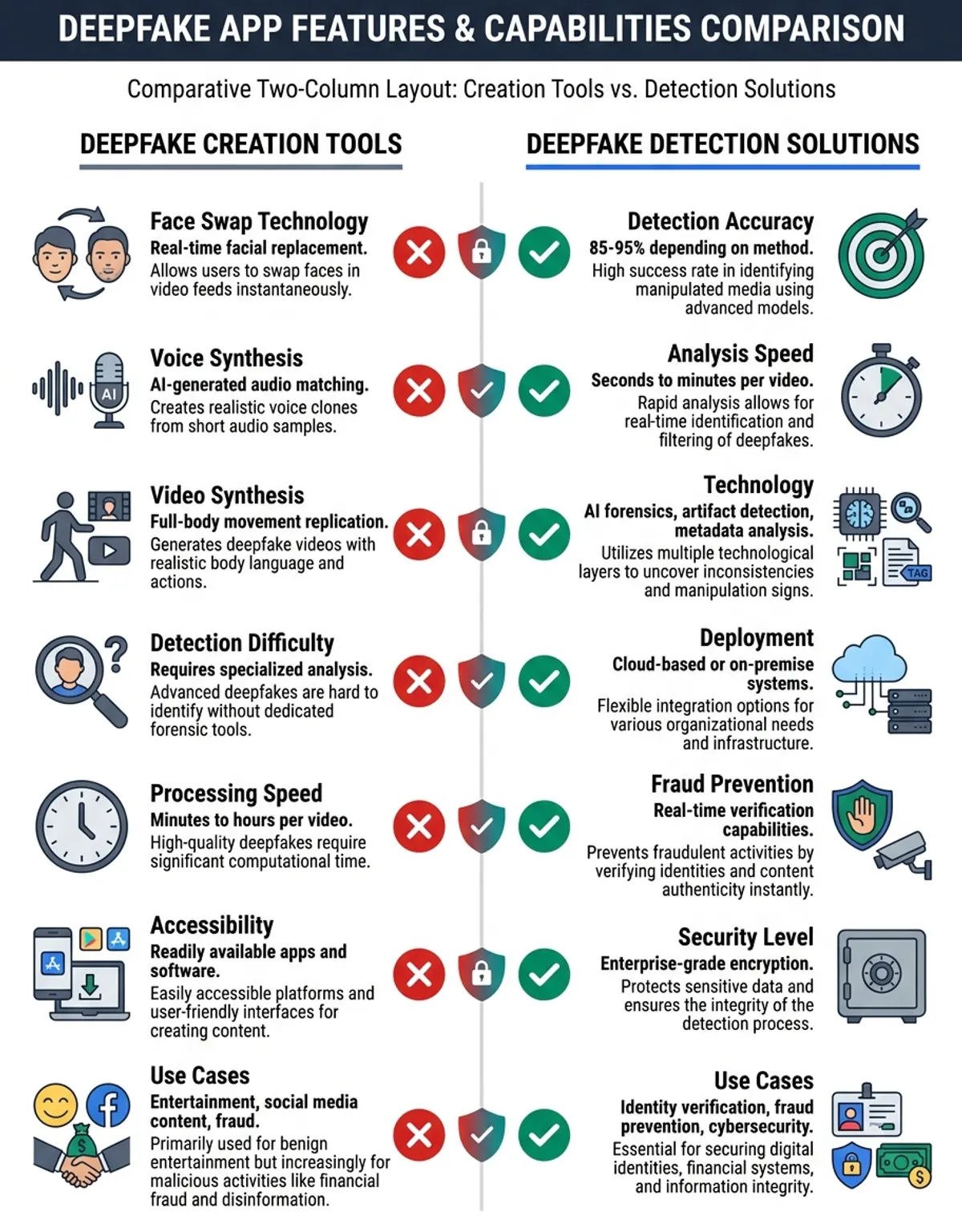
Side-by-side comparison of deepfake app types, technologies, and security considerations
| App Type | Primary Technology | Main Use Case | Security Considerations |
|---|---|---|---|
| Face Swap Apps | Face detection & replacement | Entertainment & social media | Low fraud risk, personal verification concerns |
| Deepfake Creator Apps | AI-generated synthetic media | Video manipulation & content creation | High fraud potential, verification needed |
| Deepfake Detector Apps | Detection algorithms & verification | Cybersecurity & fraud prevention | Essential for information security |
| Voice Cloning Apps | Voice synthesis technology | Audio deepfakes & voice replacement | Threat to authentication systems |
| Video Manipulation Tools | Content editing & deepfake technology | Professional video editing | Malicious use requires detection |
The Future of Deepfake Technology
As deepfake apps continue to evolve, the balance between beneficial applications and potential threats will require ongoing attention from those fighting deepfakes and from technology developers, policymakers, and digital defense professionals. The offers legitimate uses in entertainment, education, and accessibility, but deepfakes potential and its potential for fraud and details protection threats demands robust capabilities and ethical guidelines. Organizations and individuals must stay informed about deepfake capabilities, implement comprehensive protocols, and maintain knowledge of this rapidly advancing technology to protect against malicious use while enabling beneficial applications.