A fingerprint can't be reset like a password.

A mom brings her nine-year-old to a clinic in Kenya. A nurse presses the child's finger onto a small scanner. That scan now lives in a government database. Kenya just opened its health system to kids as young as seven. Not sixteen. Seven. Their fingerprints get taken years before they can even understand it, let alone say no. For a parent, that's the real story. Not the fancy new system, but what you're actually signing away for your kid.
A fingerprint can't be reset like a password.
According to the Daily Nation, over eight thousand scanners are already in Kenyan clinics. This isn't a small test. It's built at national speed.
Kenya calls this a milestone. For a hospital, maybe. For a child whose fingerprint now lives in a database forever, that's a very different thing.
One system promises your body proves who you are. Another promises to check a kid's age.
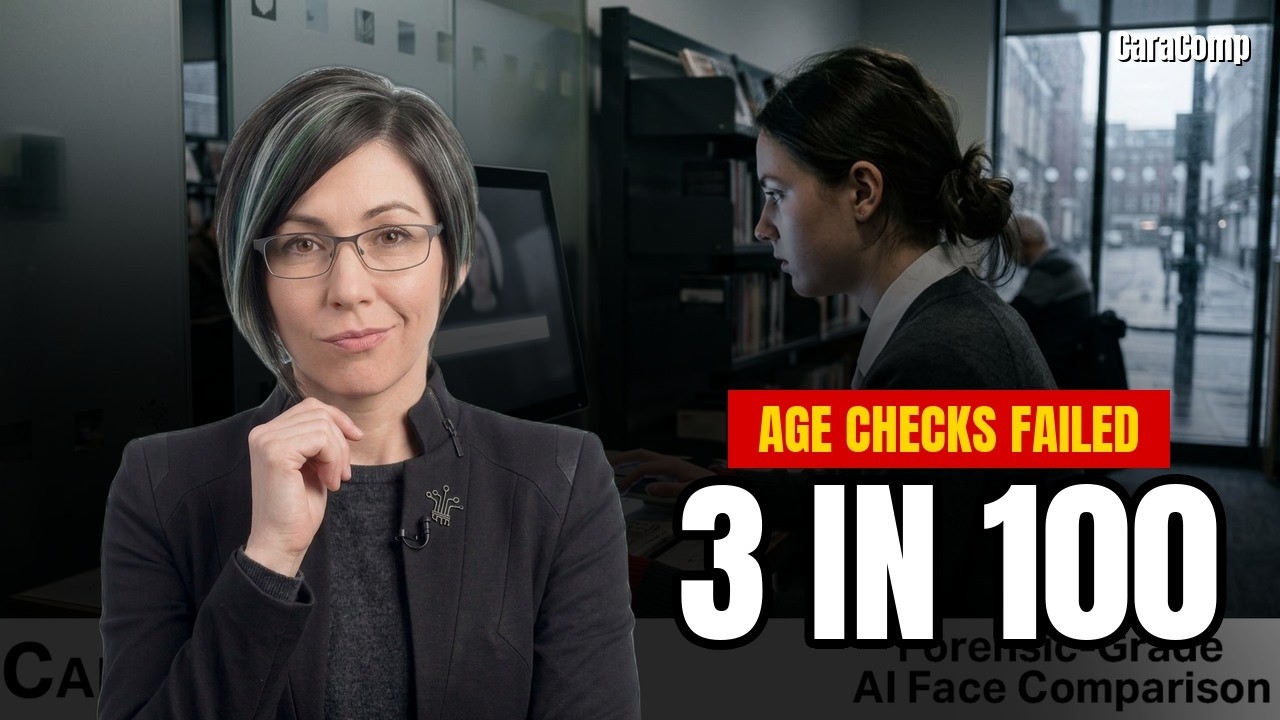
Picture a hundred teens, ages thirteen to fifteen, trying to pass an age check online. Up to three get waved through as adults. And that's not a glitch. It's the allowed error rate, written into the rules. For years, 'age verified' meant almost nothing. A word on a screen. You nodded and moved on. Now Meta has to hit a real number. A percentage it can fail.
'Age verified' finally means a number you can check.
According to Biometric Update, the best face-age tools miss by about two and a half years right at the sixteen-to-eighteen line. That's the exact spot the law cares about most.
'Verified' was never a light switch. It's a dial, with a number for how often it's wrong. Now you finally get to ask what that number is.
But a scan only matters if you know where the face data goes next.
You walk into a supermarket. A camera scans your face to stop shoplifting. Fair enough. But nothing stops that same face data from getting a new job next year. No new camera. No new law. Just a quiet policy change in a room you'll never see. Experts call it scope creep. Data collected for one reason gets used for three more.
Your face has no reset button.
According to ABC News, two big Australian chains rolled out face scanning after store abuse jumped by nearly all over two years. The gear is neutral. The rules around it are not.
The smart question was never why they scan your face today. It's what stops them from doing something else with it next year. Most of the time? Not much.
Look at all three together. A kid's fingerprint. A teen's face. A shopper walking past a camera. In each one, the tech works fine. What's missing is the rulebook. Who can use your body's data, for what, and for how long. That gap is the whole story.
Links to every story and today's podcast deep-dives are in the description. See you next time.