A private investigator opens a case file Monday morning. There's a video clip attached. Before she can ask what it shows, she has to ask something harder, is any of it real. That's the new first question in investigative work, and it's breaking workflows built for a different era.
According to Cybernews, a hundred and fifty-six deepfakes targeted sitting U.S. officials in just two years. Donald Trump accounts for more than half. Russian actors are suspected of cloning Secretary Rubio's voice to contact foreign diplomats. If the most recognizable faces in the country can be faked convincingly, the random face in your surveillance photo doesn't stand a chance.
Authentication used to come after analysis. Now it comes first, or the case doesn't survive cross-examination.
State-level deception is one problem. Documented consent is another, and regulators just moved.
An elderly woman in China paid a service to generate AI conversations with her deceased son. Touching. Also completely unregulated. That single story helped push Beijing's Cyberspace Administration to draft rules requiring explicit consent before anyone's likeness becomes an AI avatar.
According to Biometric Update, the draft mandates documented authorization, prominent labeling, and special protections for minors. Pair that with the U.S. TAKE IT DOWN Act, platforms have forty-eight hours to remove non-consensual deepfakes. For investigators, the courtroom question is shifting from 'is this image authentic' to 'can you prove it wasn't altered.' Those need completely different answers.
A correct facial match you can't document is a correct facial match you can't defend.
If documentation is the new burden, some systems are quietly eliminating the need to re-verify at all.
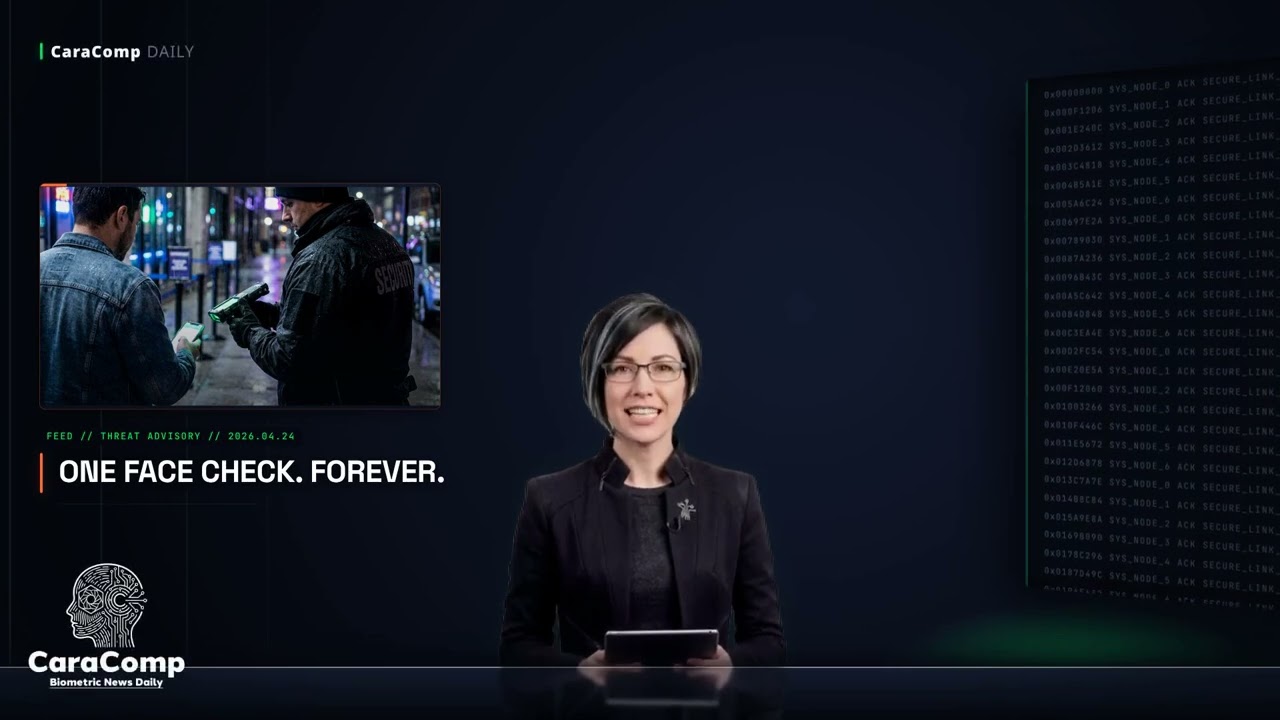
Picture a bouncer squinting at your ID in dim light. Now picture a passport, verified once by a trusted authority, trusted everywhere after. That second model just arrived for age verification, and it changes who looks at your face, and how often.
According to Biometric Update, Yoti and Luciditi now share a network of seven million UK users. The facial comparison happens once, at credential issuance. After that, a cryptographic proof says yes or no. Staff never see your photo. Analysts at Goode Intelligence forecast the reusable identity market at eleven-point-four billion dollars by twenty-thirty.
The future of face verification isn't more matching. It's matching once, and trusting the signature everywhere else.
Three stories. One thread. The question in biometric identity is no longer 'is the match accurate.' It's 'who authorized it, who documented it, and who gets to trust it.' Proof of process is eating proof of accuracy.
Links to every story and today's podcast deep-dives are in the description. See you tomorrow.