Robert Williams spent hours in a Detroit jail for a crime he didn't commit. A detective had treated a facial recognition match as proof, not a lead. That wrongful arrest became the fuel behind a wave of state bans. Now Illinois is advancing a bill to bar police from using facial recognition entirely. Fifteen states already restrict it. Sixteen cities ban it outright. But at the same time, T.S.A. scans travelers' faces at more than two hundred and fifty airports, calling it 'facial comparison,' not recognition. Same core technology. Opposite directions.
According to The Regulatory Review, most airport passengers get little or no meaningful notice they can refuse the scan. That's a consent problem, not a reason to strip investigators of a tool that's solved homicides and found missing children.
The technology isn't on trial. Your ability to explain what you actually do with it, that's what's on trial.
And when someone with a badge can't explain the tool, imagine what happens when someone with a badge weaponizes it.
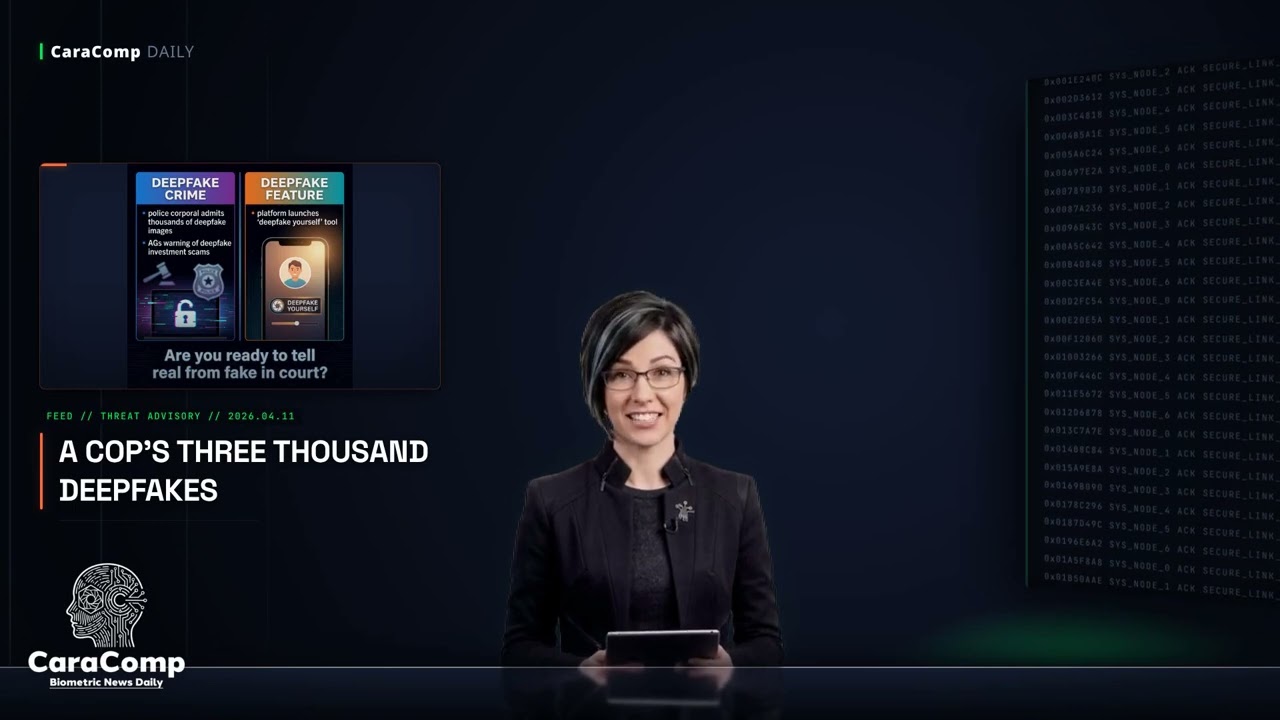
Stephen Kamnik was a Pennsylvania State Police corporal. He had access to law enforcement databases, photos, records, identities. He used that access to generate roughly three thousand A.I.-made pornographic images. He pleaded guilty in April. The same week, attorneys general from New York and Michigan warned that deepfake investment scams are flooding Meta platforms, synthetic videos of trusted figures pitching fake opportunities convincing enough to trigger formal state alerts. If someone hires you to investigate one of those scams, you'll face a simple question: was that video real? If you can't answer with a method a judge accepts, the case stalls.
According to the New York Attorney General's office, scammers are using A.I. to create 'highly convincing fake investment advertisements' impersonating public figures. This isn't a future problem. It's a current caseload.
Detection tells you what's fake. Authentication proves what's real. Only one of those wins in court.
So what do you actually check, when your own eyes aren't enough?
A school employee receives a video. It shows the headteacher, right face, right voice, right office, authorizing an urgent payment. The payment goes through. The headteacher never made that video. The supplier doesn't exist. The money's gone. That scenario isn't hypothetical. Education Executive documented it as a live threat pattern. One in eight people now know a child targeted by deepfake nude imagery, nearly all girls. The people being fooled aren't careless. They're trusting what they see. That's exactly what the technology is built to exploit.
According to N.I.S.T., false positive rates in facial recognition algorithms vary by factors of ten to beyond a hundred depending on demographics. Detection tools carry the same fragility. A confidence score isn't a verdict, it's a starting point.
Never ask 'does this look real.' Ask 'can I verify the source through a channel that didn't come with the content.' If not, you don't have evidence. You have a very well-made suspect.
Three stories. One thread. A state bans a tool because no one explained it. A cop abuses a system because no one audited it. A school loses money because no one verified a video before acting on it. The common failure isn't technology. It's the moment a human skips the process, and trusts what they see instead of what they can prove.
Links to every story and today's podcast deep-dives are in the description. See you next time.