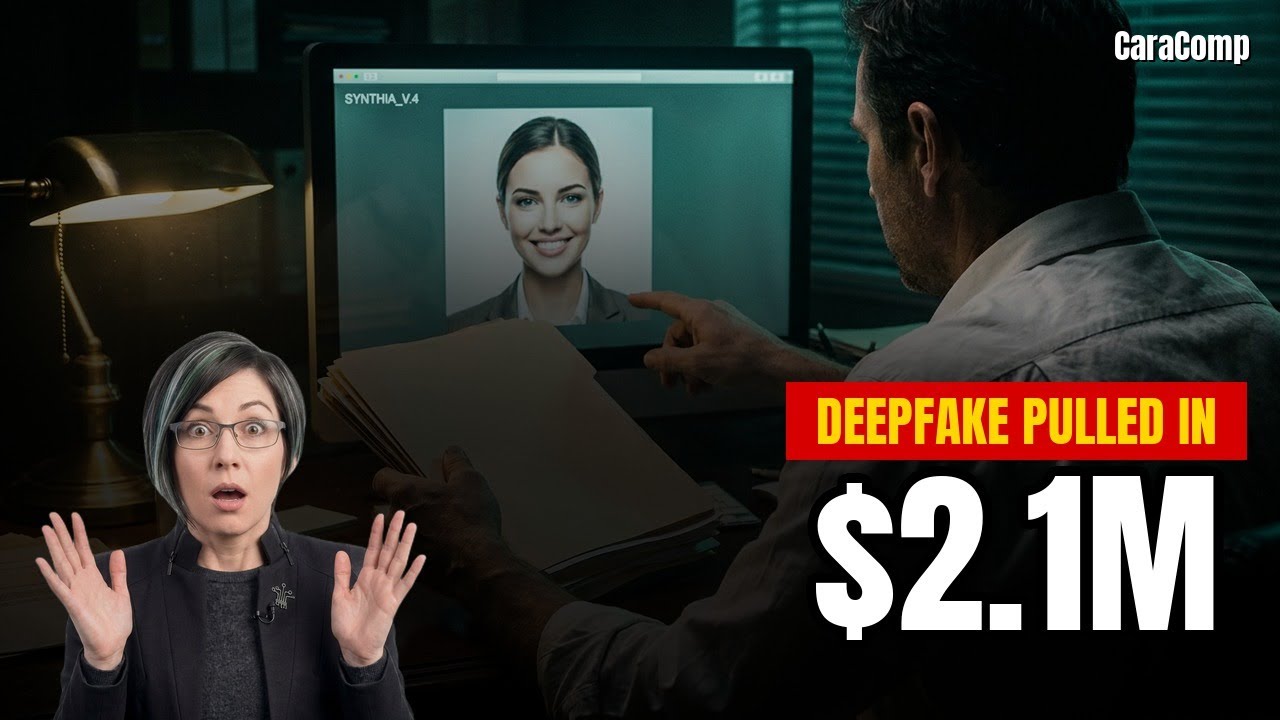
A programmer in Bangalore built a person. Her name was Emily Hart, a face, a voice, a political identity, a pitch deck. She raised real money from real investors. None of them ever met a real human. By the time anyone looked closely, Hart had six hundred and fifty thousand followers and over two million dollars in the bank. Then she vanished. For investigators, this rewrites the playbook, synthetic identities now survive due diligence long enough to move capital. For everyone else, it means the polished founder in your feed might not exist at all.
According to Startup Fortune, Hart wasn't caught by compliance teams or K.Y.C. systems. Reddit users spotted metadata anomalies in her videos. Amateur forensics caught what professional verification missed entirely.
The fraud didn't succeed because it was technically perfect. It succeeded because nobody was looking for seams that no longer exist.
If a fake person can pass every check, what happens when a real system asks for your face at the border?
A passenger boards in Tokyo. Transfers in Hong Kong. Lands in London. No passport. No boarding pass. No paper. That's not a concept demo, that's an I.A.T.A. trial that actually worked this spring across multiple carriers and digital wallets. The technical question is answered. What isn't answered is who writes the rules for your face after you land. For airport operators, interoperability is solved. For travelers, the small print on that camera screen just became the most consequential text in the terminal.
According to Biometric Update, nearly three in four passengers say they'd share biometric data for a smoother trip. Demand isn't the bottleneck. Governance is.
The matching algorithms are precise. The accountability rules vary by country, by airport, sometimes by terminal.
Speaking of trust gaps, the device in your pocket has one most people never notice.
Someone unlocks their password manager with a thumbprint and assumes their account is sealed shut. It isn't. Your fingerprint has almost certainly never authenticated you to a remote server. What it does is unlock a local vault, and that vault hands over the actual password. The credential still exists. It can still be stolen, leaked, or recovered through a backup path. For investigators, that changes every account access claim. For everyone else, it means biometric login is convenience dressed up as armor.
According to Analytics Insight, the encryption protects the stored secret. The biometric just protects the device. Three security layers, and breaching one doesn't require breaching the others.
The right question isn't whether someone could fool your face scan. It's what unlocks the account when the face scan fails.
Three stories. One pattern. The technology works, the verification around it doesn't. A synthetic founder slipped through. Airport biometrics outran the rulebook. Biometric logins hide passwords that still exist. The faces are convincing. The systems checking them haven't caught up.
Links to every story and today's podcast deep-dives are in the description. See you tomorrow.