Picture a traveler walking through Singapore Changi airport. She doesn't slow down. A camera clears her in ten seconds, and she's gone. Multiply that by forty-five million people in six months across Europe alone. That's the new global border. But the same week governments rolled out these systems, deepfake fraud attempts against biometric verification jumped fifty-eight percent. If you've ever had your face scanned at a gate, this matters to you. Your face is now the key. And keys can be copied.
According to Fintech Global, deepfake attacks now account for one in every twenty identity verification failures. One in twenty.
That's twelve people on every full jumbo jet who could slip through with a synthetic face. The airports built beautiful ten-second gates. They forgot to ask whether the face walking through was real.
If a face can be faked at the border, it can be faked on a video call too.
A finance worker in Hong Kong joined a video call with her C.F.O. Everyone on the screen looked right. Sounded right. She wired twenty-five million dollars in fifteen transfers. Every face on that call was a deepfake. The same week, a video of Donald Trump's face stitched onto Jesus spread across Southern Africa as political messaging. Anyone who's ever taken a work call now has a problem. The voice telling you what to do may not be a person at all.
SQ Magazine reports deepfake-enabled fraud attempts surged thirteen hundred percent year over year. Voice cloning needs just three seconds of audio.
Three seconds. That's a voicemail greeting. The fraud isn't artisanal anymore. It's industrial, anonymous, and free.
So how do these fakes slip past systems built to catch them? Start at the very first step.
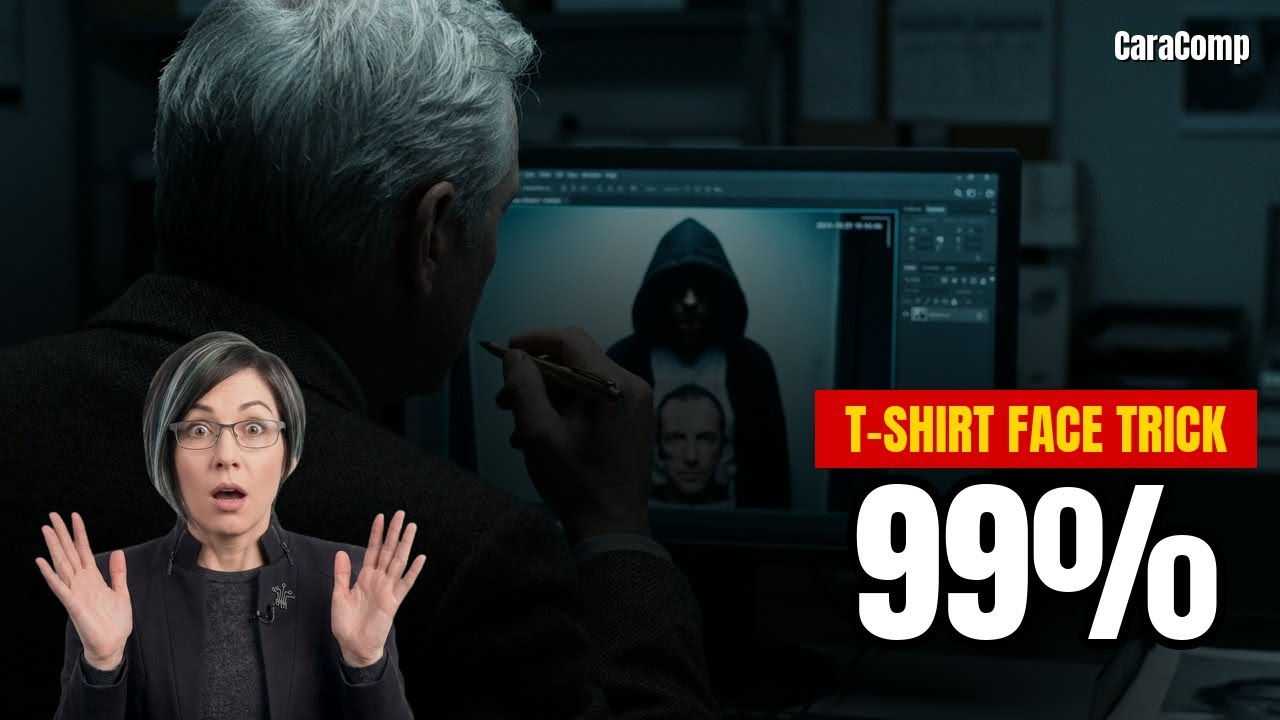
Researchers at Darmstadt University handed eight people T-shirts printed with someone else's face. They walked in front of a camera. The detector locked on, drew a clean box, and passed the printed face along like nothing was wrong. It worked ninety-nine percent of the time. Most people think facial recognition is one step. It's actually four. Detection, alignment, representation, and matching. If step one finds the wrong face, every step after that is mathematically perfect and forensically worthless.
According to Biometric Update, over sixteen hundred test images proved a printer and a cotton shirt can defeat detectors built for silicone masks.
Six months in jail for a match that was wrong. That's the stakes when nobody asked if the face was even real.
Three stories. One pattern. The world is racing to trust the face, at borders, on calls, in courtrooms. And the face has never been easier to fake. The winners in 2026 won't be the fastest gates or the sharpest cameras. They'll be the systems that can prove the face they saw was actually there.
Links to every story and today's podcast deep-dives are in the description. See you next time.