A single mom in a SNAP-required state opened her benefits portal this week and was asked to take a selfie. Same week, Hinge started testing facial scans for dating profiles. Same technology. Wildly different stakes.
Face verification is quietly becoming the internet's default tollbooth. It's spreading into dating apps, benefits systems, and age-gated platforms, not because anyone announced it, but because it's cheap, fast, and works well enough. For everyday users, that means the selfie you take to prove you're not a bot uses the same biometric stack the federal government uses to release your benefits.
According to IDScan, nearly half of U.S. college students avoiding dating apps cite safety as the top reason. That's the argument platforms are leaning on to justify scanning your face.
The accuracy debate is over. The proportionality debate hasn't started. And that's the gap every platform is racing through before anyone notices.
The fraud numbers driving this rollout are real. But there's a cost nobody's putting on the receipt.
Someone deletes a dating app tomorrow. Their face geometry doesn't necessarily go with it. That's the quiet structural risk underneath every selfie check happening this week.
Sixty-one percent of people worry a facial recognition system will misidentify them. Fifty-seven percent worry about where the data ends up. Tinder's Face Check cut fake accounts by about sixty percent in test markets, which is exactly why every platform now wants in. For the everyday user, that means hundreds of separate databases, each holding your face, each with its own rules, or none.
According to Innovatrics, the global age assurance market jumps from roughly five-and-a-half billion dollars today to over ten billion by twenty twenty-nine. Nearly double, in four years.
A dating app and a food benefits portal now extract the same biometric data. Only one of them has a legal framework around it. That's twelve hundred platforms building on sand.
And while everyone debates whether face checks are too much, investigators are missing a different kind of fake entirely.
A fraud investigator clears a video as authentic. The face matches. The expressions match. The behavior matches. They missed it anyway, because only the mouth was fake.
Lip-sync deepfakes are harder to catch than face swaps. The face is real. The geometry is real. Only the mouth was rewritten to match different audio. Most investigators are trained on face-swap artifacts, so they're looking for the wrong things. For anyone who's ever watched a video and trusted what someone said? That trust just got more fragile.
Peer-reviewed research from the I.E.E.E. found authentic videos show an audio-visual distance of zero-point-one-six. Lip-sync fakes? Zero-point-six-three. A measurable, mathematical gap.
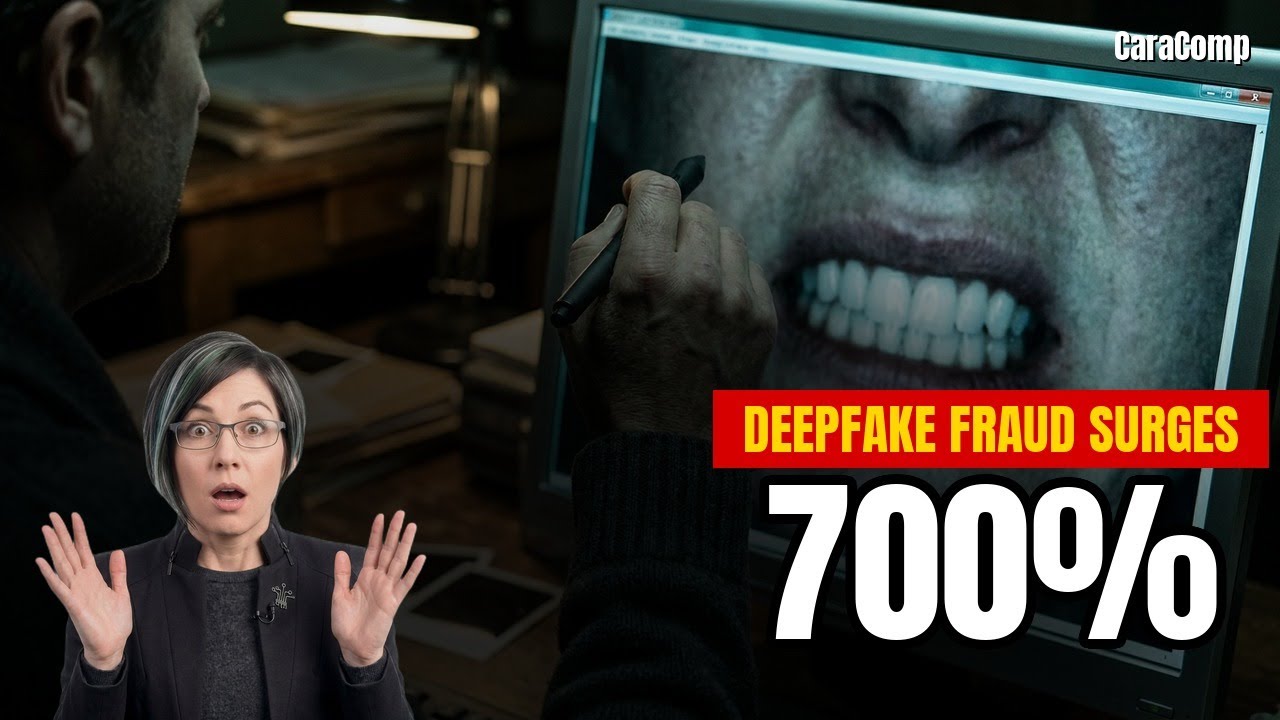
Sumsub recorded a seven hundred percent jump in deepfake fraud attempts year over year. The hardest type to detect is also the easiest to deploy. That's not a coincidence. That's a roadmap.
Three stories. One pattern. Your face is becoming the password, the ticket, and the evidence, all at once. The same week platforms are racing to collect it, investigators are losing the ability to verify it. We're scaling up biometric trust just as the ground beneath it is shifting.
Links to every story and today's podcast deep-dives are in the description. See you tomorrow.