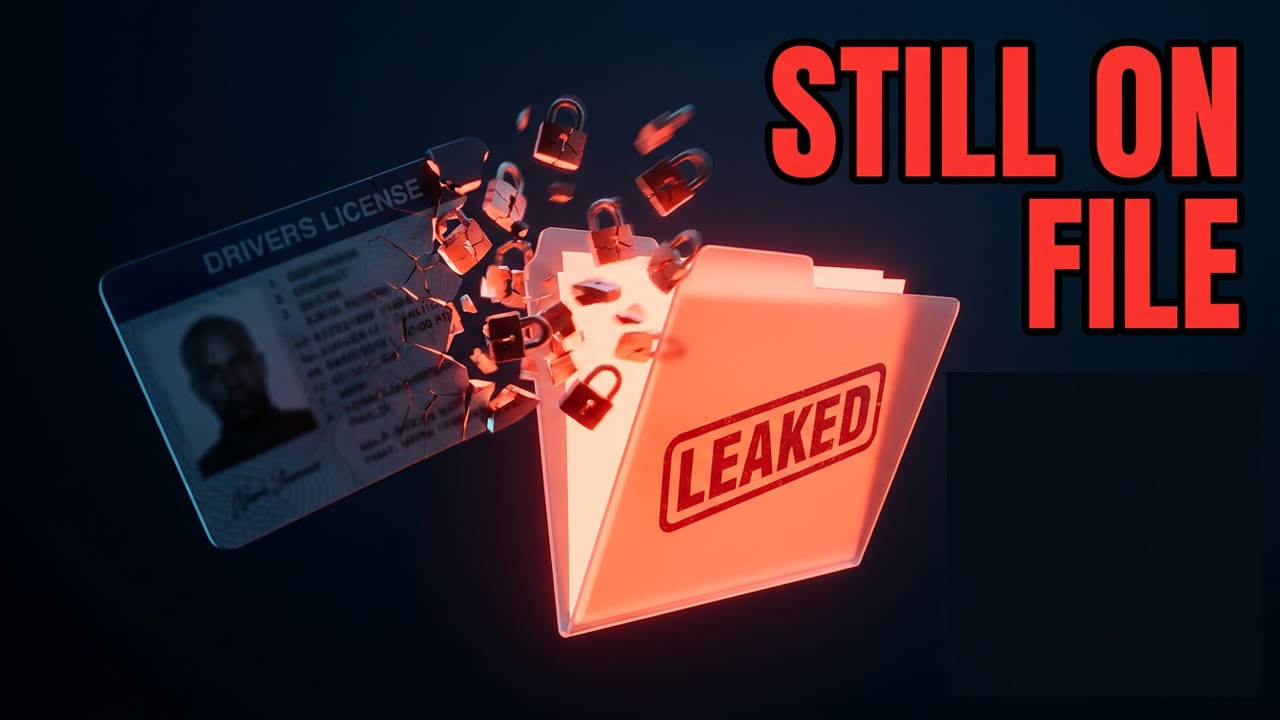
KYC Identity Verification: Files

When you open an account, you upload a photo of your driver's license. You also do a live scan of your face. The company keeps both of them on its own computers. Hackers go after those computers on purpose. Even if you close the account, the company still keeps your files. The company keeps your files for years after you leave. Who has your license photo tonight?
Your bank keeps your file for 5 years after you close the account. Thieves get 5 whole years to try.
A federal rule, 31 CFR 1020.220, says the bank has to do that. The bank keeps your name, your birth date and your address. Your bank keeps your ID number too.
Why would the law want your bank to keep it? Your bank keeps your selfie result for 5 years too.
Closing an account doesn't delete you from the bank's files. The bank can keep your face and your license long after the account is gone. By the end, you'll know who has them.
You do all of this at 11pm in your pajamas.
Say you opened your account in March 2023. Then you closed it in December 2025. Your license photo doesn't leave with you.
The federal government's summary says it plainly. Banks keep your name and ID details for 5 years after you close.
Lenders may add your income and your job to your file. They also add the score for how well your selfie matched your license. They add every note about a mismatch, too.
Banks in the US and Canada spend $61 billion a year fighting financial crime. Would a bank risk deleting your file?
If this helps, a like and a subscribe help us keep it coming.
You'd think closing your account would end all of this. Instead, your bank starts counting 5 years on the day you close.
Your bank starts counting 5 years for your ID check notes on the day you sign up. Your bank can delete those notes in March 2028. For your name and your license number, your bank starts counting on the day you close. Your bank keeps those until December 2030.
In 2024, money-laundering and ID-check fines hit $4.5 billion worldwide. That was a record. So banks keep proof of every ID check.
Your bank keeps watching your account while it's open. Your bank adds to your file with every new record.
A company called Fractal ID leaked the IDs of about 6,300 people. Those people's names, addresses and ID photos got out.
The federal manual says banks do this to fight crime. Because of that same rule, your bank keeps your ID on file. Isn't a stored ID exactly what thieves want?
Banks keep your file for those 5 years for rare crime cases. Investigators may need to look back at your file. A thief can use the scan from your closed account. You carry that risk the whole time.
Call the privacy department at your old bank. Ask what's still in your file.
Ask how long the bank keeps it. Ask if any part of your file is older than 5 years. Ask whether the bank stores your selfie score.
Your bank can keep a wrong match score in your file for years. Ask for a person to review any close calls.
You use your phone to send photos to your bank. Another company checks your photos in minutes. No person looks at them unless something seems odd. Then the bank stores your whole file.
CaraComp goes deeper on this in its write-up. On that page, you can see both deadlines side by side.
With a match score, your bank only learns how much your face looks like your photo. Your bank can't use that score to decide who you are. But your bank can store a score that's wrong.
Keep a copy of every reply you get. Write down the date your bank can delete each file. Then ask again once that date passes.
About 70 percent of financial firms are losing customers. Customers leave because the sign-ups are slow. Banks sign you up fast but keep your file for years.
Closing your account never erased you from the bank's files. You can still ask exactly what they keep.
Tonight, write down every bank where you've closed an account. Find the privacy department's number for each bank. Email each bank the three questions.
Nobody has to tell you any of this. You ask tonight, before a thief does.
Every day we take one story like this and make it simple. Subscribe and tap the bell. Tomorrow's is free too. See you in today's briefing. If this helps, a like and a subscribe help us keep it coming.