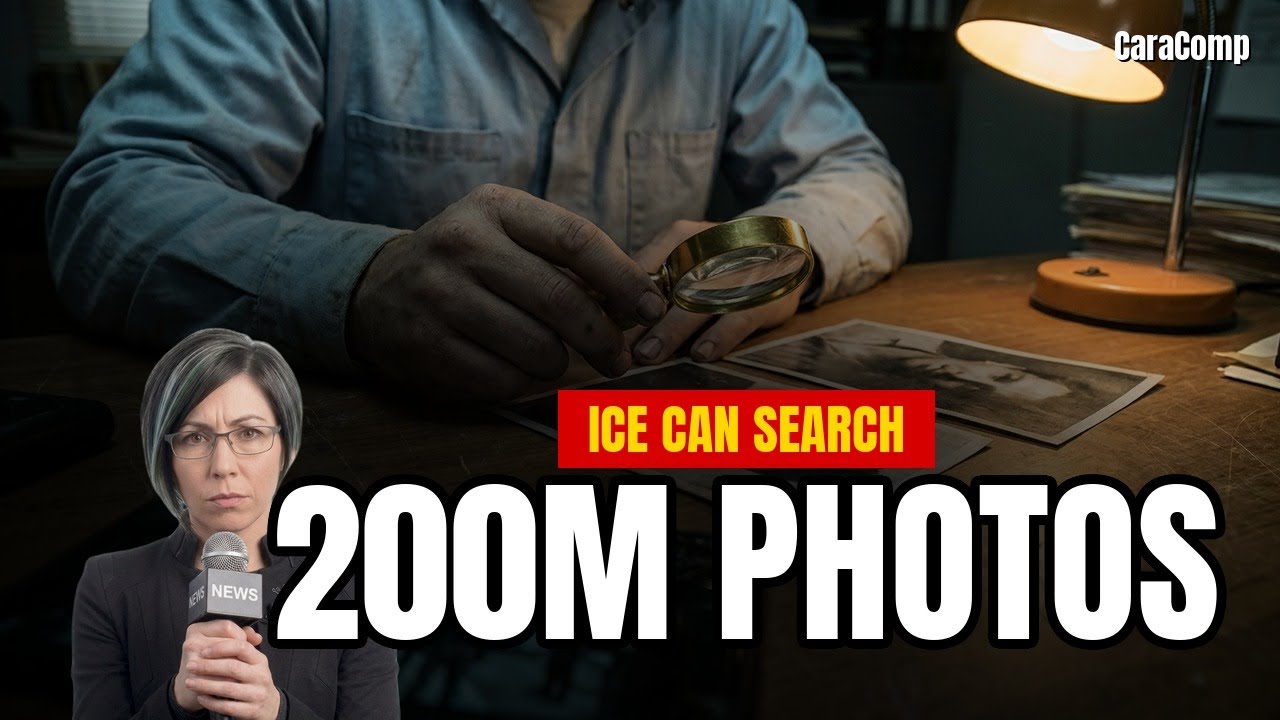
A federal agent walks up to a stranger on a sidewalk, points a smartphone at their face, and runs an instant match. That app is now available for download. The boundary between border enforcement and street-level policing? It's gone. For investigators doing careful, case-by-case facial comparison, every viral headline about that app reshapes how juries see their work. For everyday people, it means your face is now searchable from a pocket.
According to GovFacts, ICE's mobile tools now search a database of more than two hundred million federal photographs. From a phone. In the field.
A trawler and a scalpel are both tools. Nobody confuses them, until they're both called facial recognition.
The deeper problem isn't the scanning. It's what happens when the image itself can't be trusted.
A fraud examiner opens a case file. There's a video, a voice memo, a screenshot. A year ago, that was evidence. Today, opposing counsel doesn't need to prove any of it is fake, just raise the possibility. Lawyers are calling this the Liar's Dividend, and it's already winning challenges in court. For anyone who's ever recorded something important on their phone, the ground just shifted.
According to Biometric Update, eight in ten organizations now encounter A.I. deepfakes or impersonations. Nearly half see them frequently.
Seeing is no longer believing. Authentication isn't paperwork anymore, it's the foundation everything else stands on.
And the tools doing the faking? They're now running on the laptop in your living room.
A student downloads a face-swap app on a consumer Mac. No coding. No cloud. Twenty minutes later, a convincing video of someone who never existed. The catch? These tools work best with clean lighting, a steady camera, and a front-facing subject. That's not how real life gets recorded.
A 2026 review from VibrantSnap found deepfake detectors lose nearly half their accuracy when tested on real-world footage instead of clean lab samples.
Real faces blur in motion. Real video shakes. Real lighting throws shadows. When a clip looks suspiciously perfect through rapid head turns, that polish isn't quality. That's the tell.
Three stories. One thread. The technology that identifies us is everywhere. The technology that fakes us is everywhere. And the systems meant to tell the difference are struggling to keep up. The answer isn't better cameras. It's better questions about where the image came from.
Links to every story and today's podcast deep-dives are in the description. See you tomorrow.