A saved minute isn't worth your kid's face forever.

A five-year-old walks into class in Brazil. A camera reads her face and marks her present. She never got a say. That happened to a million kids a day, in over 1,700 schools. Then Brazil's privacy watchdog said stop. This matters for every parent. A password can be changed in five minutes. A leaked face-map follows your child for life. The watchdog found that data could sit on a server for 14 years.
A saved minute isn't worth your kid's face forever.
According to Biometric Update, the watchdog called the face scans 'unnecessary and disproportionate.' They said saving a few minutes on roll call was not a good enough reason. Teachers even said the system ran slower than calling names off a list.
A slightly longer homeroom beats a copy of your child's face outliving the school itself. From one country protecting kids' faces to another building a shield for their identity.
You want to buy something online. The site asks you to prove you're 18. You expect to upload your I.D. and just hope it doesn't leak. Europe built something better. It can tell a site you're an adult without telling them who you are. It works like a bouncer who sees green light or red, never your I.D. But here's the catch. Using it is only a suggestion, not a rule.
The privacy-safe tool exists. Nobody has to use it.
According to TechRepublic, the app shares zero pieces of your personal identity with a site. Just a single yes. But it's voluntary. So the sites most likely to hoard your data don't have to change a thing.
A better way to prove your age already exists. It's just not required. Both stories protect who you are. This next one shows how easily that gets faked.
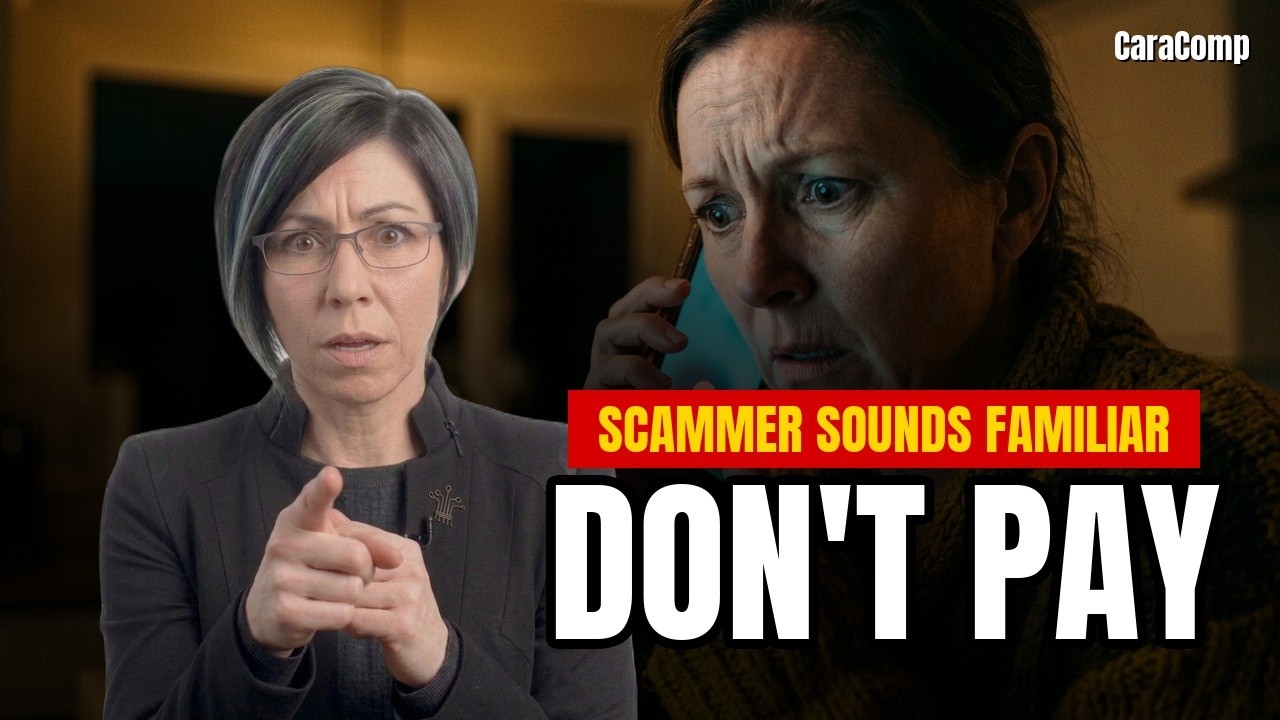
Your phone rings at 11pm. It's your daughter, crying, saying she needs money now. Every instinct says call her back to check. So you do. And the scammer answers, using her cloned voice. Some tools need just ten seconds of audio to copy a voice. They pull it from a video or a voicemail. Then they break into the real account first, so the callback reaches them.
A familiar voice is no longer proof it's them.
In research on ArXiv, 102 people tried to spot fake voices. Only 37 percent got it right. Barely better than a coin flip, and nobody was crying on the line. Under real panic, your ears are the wrong tool.
The fix is low-tech. Hang up. Call back on the number saved in your phone.
Three stories, one thread. Your face, your age, your voice. Each is body data that's uniquely you and can't be reset. Brazil said stop collecting it. Europe built a way to protect it. And scammers proved how fast it gets faked. Links to every story and today's podcast deep-dives are in the description. See you next time.