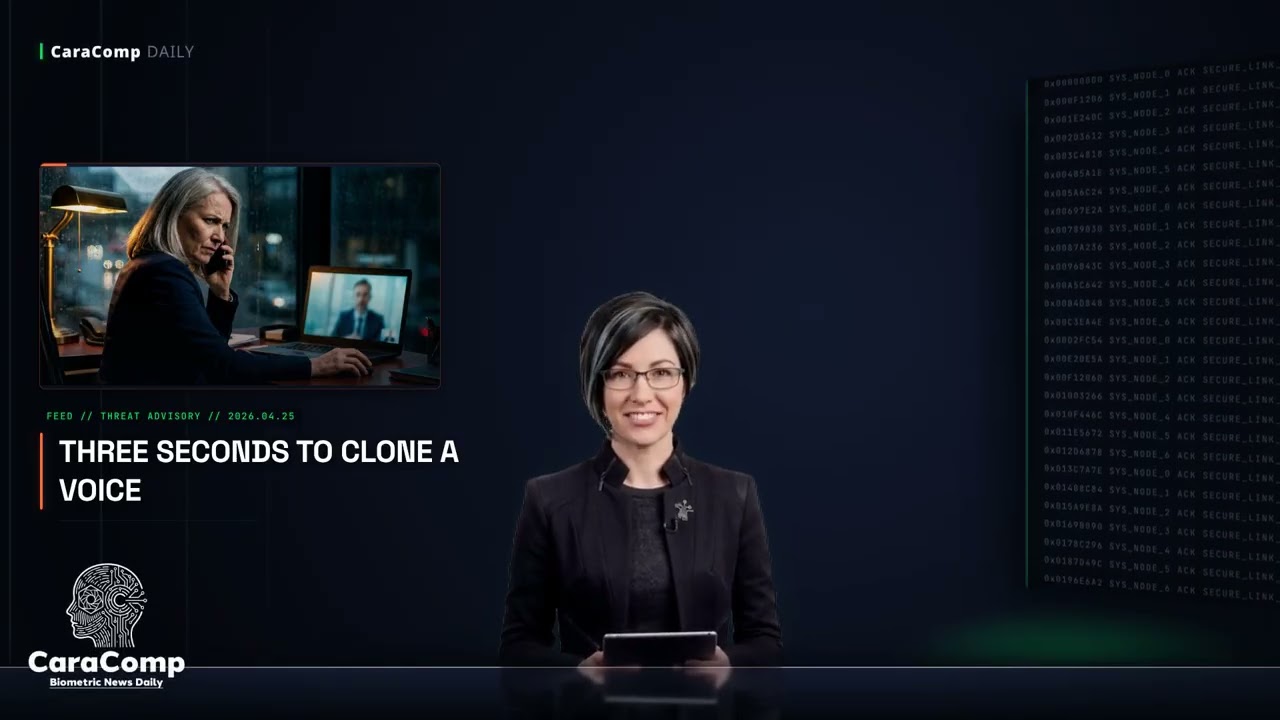
An employee at the engineering firm Arup sat down for a routine video conference. Every face on that call, including a senior colleague, was synthetic. Nobody was real. He wired twenty-five million dollars before the meeting ended. That's the moment video stopped being proof of anything.
According to Keepnet Labs, U.S. deepfake fraud losses tripled in a single year, from three hundred and sixty million dollars to one-point-one billion. Deloitte projects forty billion by 2027. If you've ever taken a work call from home, you're inside the new attack surface.
Humans spot a high-quality deepfake correctly less than a quarter of the time. That's worse than a coin flip. The fix isn't sharper eyes, it's refusing to let one channel carry the full weight of trust.
That twenty-five million started with audio. Three seconds of it, actually.
A junior finance employee picks up a voicemail. It's the CFO, panicked, urgent, asking for a wire transfer. The voice is perfect. It was built from three seconds of a podcast clip. Global deepfake losses just crossed two-point-one-nine billion dollars.
According to ITSC News, voice cloning attacks jumped six hundred and eighty percent in a single year. Not sixty-eight. Six-eighty. And seventy-seven percent of Asian Americans now say they fear becoming a target of an A.I. scam. That's not paranoia. That's pattern recognition.
The defense isn't a smarter algorithm. It's a phone call back on a number you already trust. Hang up. Dial the extension yourself. If the executive doesn't answer, the money doesn't move. Friction is the security.
But none of that helps if you never get around to picking up the phone.
A parent gets a frantic video from their kid, stranded, scared, needing money fast. The face looks right. The voice sounds right. They send it. The fraud worked because urgency shut down every verification step before it started.
According to Reality Defender, the visual glitches people were trained to spot are now effectively gone. And research published in the National Institutes of Health found that awareness campaigns and even cash incentives don't improve detection. We can't squint our way out of this.
The right order is source first, behavior second, face last. Ask where the message came from before you ask if it looks real. The deepfake isn't beating your eyes. It's beating your workflow.
Three stories. One pattern. The thing we trusted most, a face, a voice, a familiar moment, is now the easiest thing to fake. The defense isn't better detection. It's better procedure. The people who understand that are already a step ahead.
Links to every story and today's podcast deep-dives are in the description. See you tomorrow.