A fraud analyst in Frankfurt watches a video call clear verification in three seconds. The face on screen was generated two seconds earlier. The money's already moving. That's the operational reality of deepfakes in 2025, not a lab demo, but a live attack in your verification queue. And most security teams think they're covered when they aren't.
According to CISO Series, citing F.B.I. cybercrime data, deepfake-linked fraud crossed eight hundred and ninety-three million dollars this year. At European banks, deepfakes now make up more than six percent of fraud attempts, up from under one percent in 2021. That's roughly a twenty-one-fold jump in three years.
The problem isn't detection accuracy anymore. It's speed. If your team can't answer 'is this real' before the transaction clears, the answer doesn't matter.
Speed is the new attack surface, and governments are learning that lesson too.
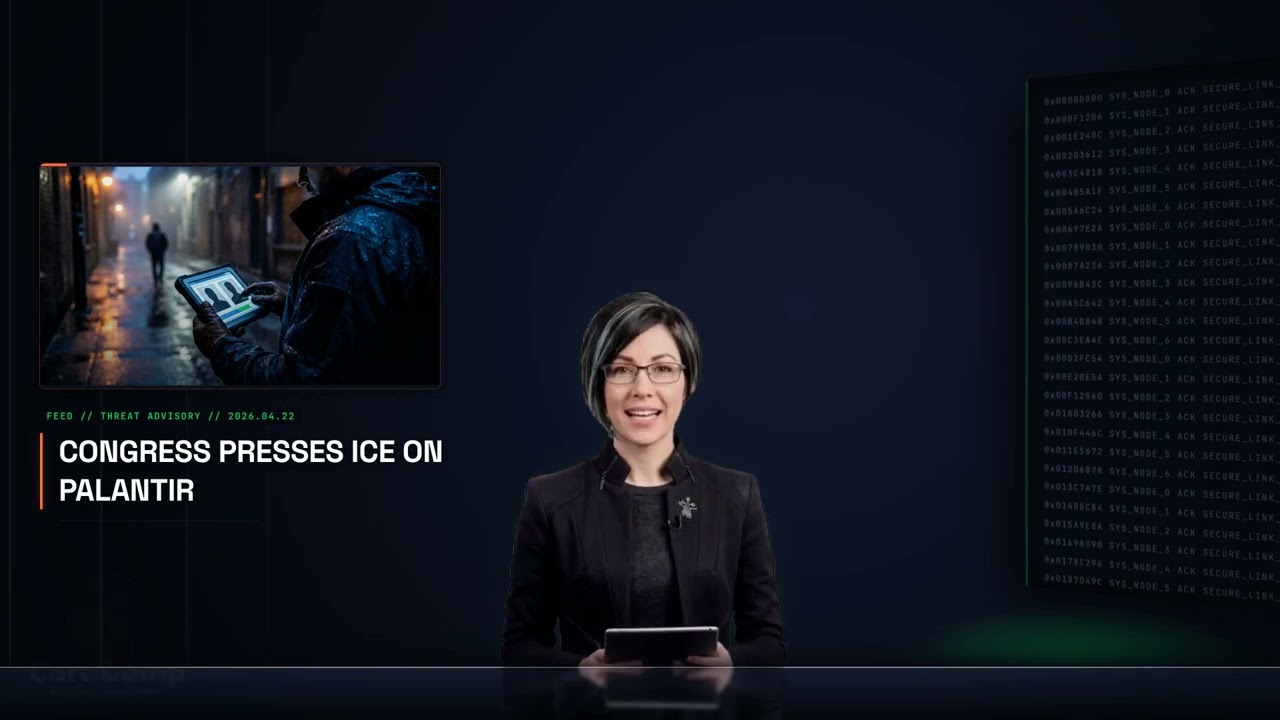
An ICE official, under oath, compared one of Palantir's enforcement tools to Google Maps. It points agents not to an address, but to a neighborhood. And yes, it can be wrong, even when confidence is high. Thirty lawmakers want answers about how that neighborhood-level guess becomes a real stop on a real street.
According to Biometric Update, Representatives Goldman and Velázquez and Senator Wyden are demanding records on Palantir's FALCON and ELITE systems, part of a one-billion-dollar D.H.S. contract. Tools originally built to track noncitizens are already being used on U.S. citizens.
A confidence score isn't proof of identity. It's a probability. And when probability becomes a field decision, someone's door gets knocked on for being statistically close.
Which raises a question nobody's really asking, why do we believe what we see at all?
In April, videos spread of Catholic bishops confronting immigration agents on church steps. Skullcaps, cassocks, impassioned speeches. The bishops didn't exist. Same script, different fake faces. And people believed them, not because the faces were flawless, but because the vestments were.
According to research on arXiv, humans catch audiovisual deepfakes only about sixty-five percent of the time, while A.I. detectors hit above ninety. Studies show follower counts and production quality drive belief more than facial realism does.
The uniform registers before the face does. Strip the cassock, put that same A.I. face in a t-shirt, and the whole illusion collapses. We don't verify authority. We inherit it.
Three stories. One thread. Biometric systems are moving faster than the humans meant to check them, in fraud queues, in field stops, in your feed. The tools got quicker. The verification didn't. And speed, unchecked, is how wrong answers start looking like certainty.
Links to every story and today's podcast deep-dives are in the description. See you tomorrow.