An elderly woman in China saw her deceased son speak to her on screen. She believed it, at least for a moment. The video hit ninety million views on Weibo. That single clip pushed Beijing to rewrite the rules. China's new draft regulations don't ask whether an A.I. avatar looks real. They ask whether the real person said yes. For anyone whose face has ever been online, that's a bigger shift than it sounds.
According to Biometric Update, the draft classifies your face and voice as sensitive personal information, requiring explicit, standalone consent before any avatar can be built from them.
The deepfake problem just stopped being about detection. It became about paperwork.
From Beijing to your office badge, the consent question is spreading fast.
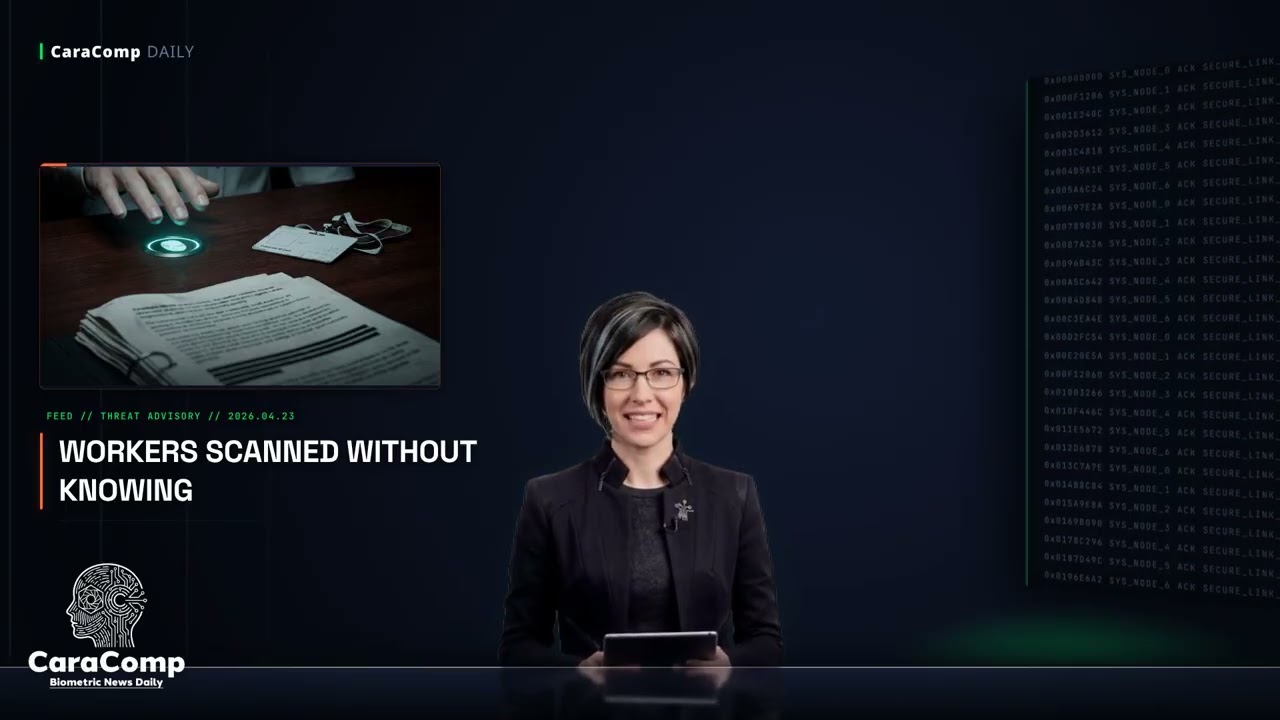
Someone swiped into their office this morning using their face. They didn't sign anything. They didn't read a policy. They just showed up, looked at a camera, and the door opened. Two-thirds of U.S. employers now collect biometric data from workers. But fewer than one in four employees knows it's happening. That's not adoption. That's a lawsuit waiting for a plaintiff.
According to McNees Wallace and Nurick, Illinois law fines companies up to five thousand dollars per violation, one case already settled for six hundred and fifty million.
No hack. No breach. Just missing consent forms, and a nine-figure check.
Consent matters at the door. It matters even more in the hospital bed.
A nurse checks your wristband at eight a.m. For the next eight hours, nobody checks again. Radiology, pharmacy, surgical prep, every team assumes you're still you. That assumption is where medical identity errors hide. The industry is racing to fix it. Healthcare biometrics is projected to grow from nine billion dollars to forty-two billion by twenty-thirty. For patients, it means fewer wrong charts, wrong meds, wrong rooms.
According to Biometric Update, facial recognition confidence can drop thirty to forty percent at just a thirty-degree head turn, barely a glance.
A single check is a snapshot. Continuous verification is a promise.
Three stories. One thread. In China, consent decides if an avatar is legal. In offices, consent decides if a scan is a lawsuit. In hospitals, continuous checks decide if you get the right care. Identity isn't a moment anymore. It's a chain.
Links to every story and today's podcast deep-dives are in the description. See you tomorrow.