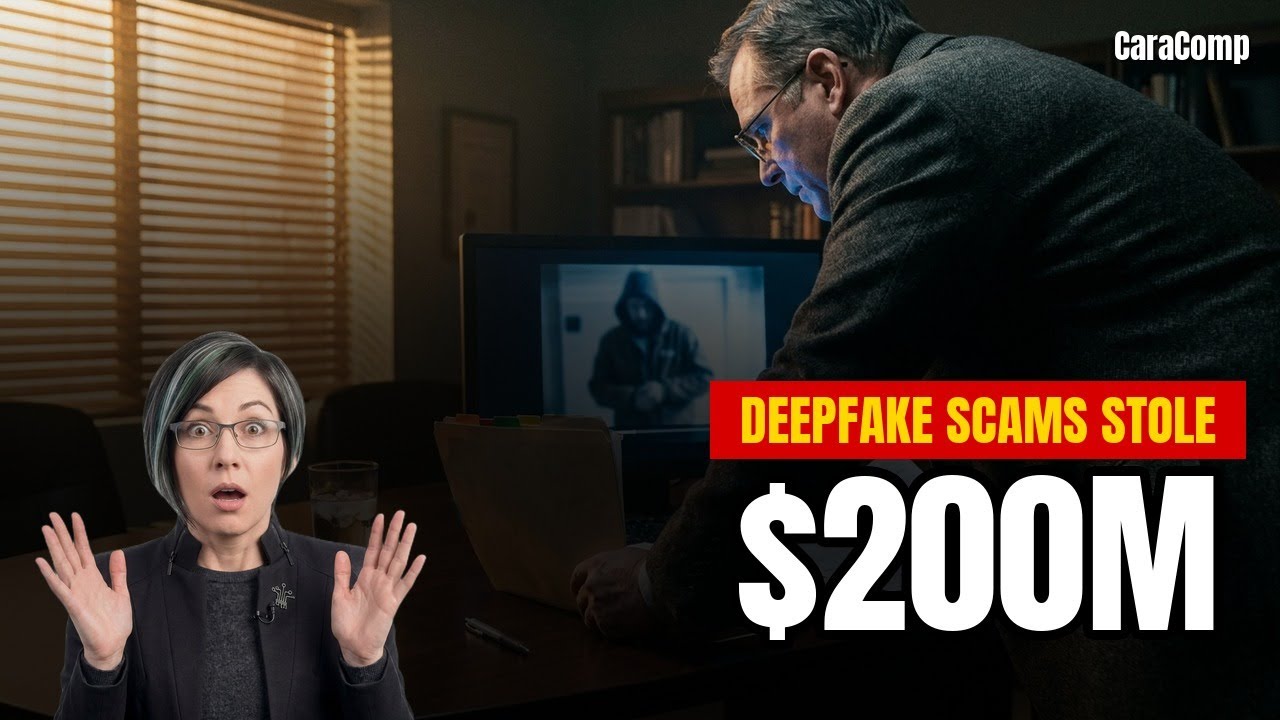
A finance worker in Hong Kong joined a video call with his CFO last year. Everyone on screen looked right. Sounded right. He wired twenty-five million dollars. Every face on that call was fake. That single moment flipped deepfakes from an I.T. headache into a board-level liability. Companies lost more than two hundred million dollars to synthetic fraud in 2024 alone. For the rest of us, it means the voice on the phone asking for a password reset, or the video from your boss approving a transfer, can no longer be trusted at face value.
According to Risk Management Magazine, the attacks aren't beating firewalls. They're beating human trust, the foundation every wire approval and executive sign-off was built on.
The fraud isn't artisanal anymore, it's industrial. And the investigators who can authenticate a video, not just guess at it, are about to be the only ones boards bother calling.
Which raises a harder question. If you can't trust the face on the screen, how does a country verify fourteen million of them?
Picture a retiree in Melbourne opening her tax app, holding her phone up, and watching it confirm she's real. That small moment is what Australia's tax office is now rebuilding from scratch. The current system, called myID, can match her face. What it can't reliably do is prove she's actually there, breathing, in front of the camera. So the government is demanding a new standard, certified by independent auditors, at ten thousand verifications an hour. For everyday Australians, it means stronger protection against someone holding up a printed photo, or a deepfake, to steal their identity.
According to Biometric Update, the system must meet an international anti-spoofing standard called I.S.O. thirty-one-oh-seven, with third-party attestation. No vendor self-certification.
Matching a face was always the easy half. Proving a living human is on the other end of the camera? That's the bar everyone else now has to clear.
But even the best liveness check assumes you can tell real from fake in the first place. Turns out, you mostly can't.
A juror watches a grainy video clip on a courtroom screen and decides whether it's authentic. That decision, repeated thousands of times a day in offices and police stations, rests on a coin flip. Researchers found more than half of people get fooled by manipulated media. Trained investigators don't do much better. The old tells, weird blinks, blurry ears, lagging lips, were training wheels the technology removed years ago. Modern detection lives in places no human eye reaches: pixel frequencies, compression patterns, frame-to-frame inconsistencies.
According to Scientific Reports, detection tools that score ninety-four percent on familiar fakes can collapse by thirty points when shown a manipulation method they've never seen before.
Every time a clip gets reposted, screenshotted, or forwarded, it loses the very evidence detection tools need. The fake might be catchable. The compression is forever.
Three stories. One thread. The systems we built to verify each other, eyes, voices, video calls, were never designed for an adversary that can fabricate all three. Australia is hardening the front door. Boards are hardening accountability. Science is telling us our instincts won't save us. The trust layer is being rebuilt in real time.
Links to every story and today's podcast deep-dives are in the description. See you tomorrow.