Somewhere in France this week, someone picked up the phone, said hello, and heard a click. They thought it was a wrong number. It wasn't. That single word is now training data. French authorities are warning citizens about silent-call scams, where the only goal is to capture your voice for an A.I. clone. The professional impact lands fast. Voice has quietly been used as proof of identity in wire approvals, family emergencies, and customer service workflows for decades. If you've ever recognized a loved one on the phone and trusted what came next, that instinct is now the vulnerability.
According to McAfee researchers, three seconds of audio produces a voice clone with eighty-five percent accuracy. A few more samples, and that climbs to ninety-five.
A familiar voice used to be proof. Now it's a hypothesis that still needs to be tested.
That hypothesis problem doesn't stop at the phone line. It's overhead too.
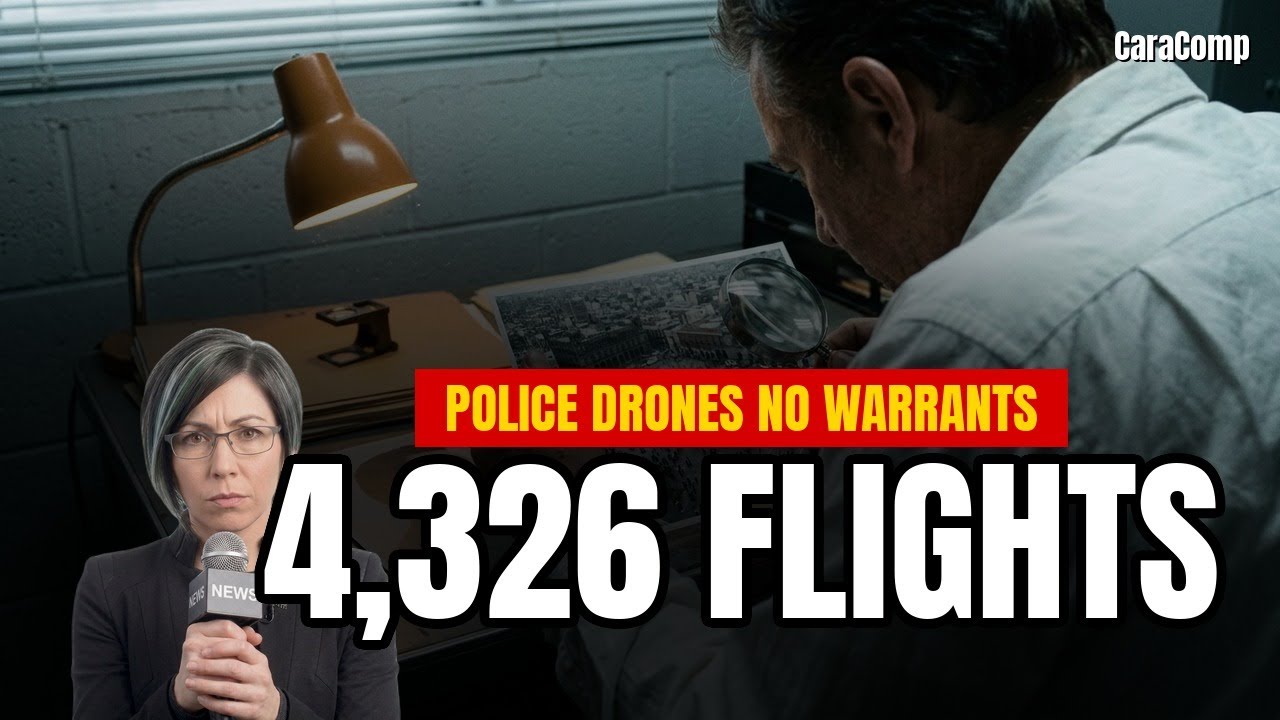
A resident in Philadelphia looks up and sees a police drone. They have no way to know if it's recording, who's watching the feed, or whether their face just got logged. Minnesota law enforcement flew drones without warrants over four thousand times in a single year. San Francisco's police drone flights grew eightfold in twelve months. For investigators building court-ready cases, this is a chain-of-custody nightmare. For everyone else, it's simpler. The camera you can't see is collecting data nobody's auditing.
According to Biometric Update, most state drone laws regulate the flight itself, not what happens to footage afterward. A.I. analysis runs downstream, without separate authorization.
The drone isn't the surveillance tool. The unaudited database it feeds is.
And the same gap, between what a system captures and what it actually proves, lives inside every door you badge through.
An employee walks up to a secure door, looks at the camera, and waits. The system isn't just matching their face. It's running a sequence of checks, and the face is only the first one. Modern biometric access control is a decision stack. Face comparison, liveness detection, confidence thresholds, and access policies. Strip out any layer and you get a known vulnerability. For the rest of us, it's a useful reframe. A high match score isn't a verdict. It's one signal in a system designed to ask more than one question.
According to International Security Journal, A.I. liveness detection catches ninety-six percent of spoofs. Trained humans catch sixty-one. That's four sophisticated fakes missed out of every ten.
A face match is input, not a decision.
Three stories. One pattern. Voice, image, and identity are all being treated as proof when they're really just signals. The systems that hold up, in court, at the door, on the phone, are the ones that ask the second question. The ones that don't are where the damage shows up later.
Links to every story and today's podcast deep-dives are in the description. See you next time.