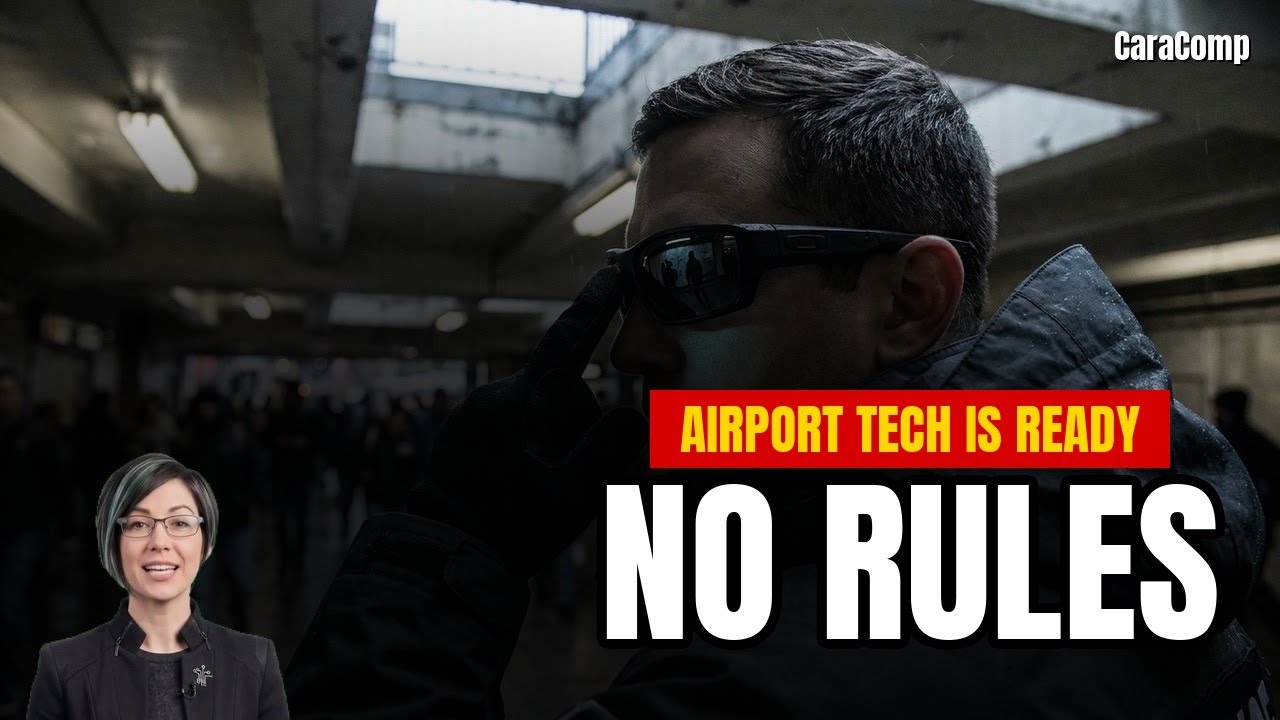
Picture an ICE agent walking down a sidewalk in Los Angeles. He glances at a stranger. His glasses scan her face, and her gait, in real time. No warrant. No review. Just a match alert in his peripheral vision. That's the leaked plan Homeland Security wants operational by September 2027. The technology doesn't enforce targeting. The agent's gaze does. For investigators, this collapses the line between case review and live surveillance. For everyone else, it means standing near a protest could mean being biometrically catalogued by a federal agent's eyewear.
According to Futurism, a Homeland Security attorney warned internally that this push affects all Americans, particularly protesters.
When your own lawyers flag the tool, you've built surveillance infrastructure, not enforcement.
From a U.S. agency speeding up identification, to an Indian court asking why identification is required at all.
A woman in rural Karnataka walked to her Anganwadi center this month for take-home rations. She's pregnant. The app wouldn't recognize her face. She left empty-handed. India mandated facial scans last July before pregnant mothers and children can receive nutrition benefits. In areas with weak connectivity, the system fails roughly nine times out of ten. Workers, 1.4 million of them, among India's lowest-paid, get disciplinary notices when the algorithm fails. For anyone who's ever watched an app crash at the worst moment, imagine that app deciding whether your child eats.
According to LiveLaw, the Karnataka High Court is now demanding the government justify the mandate under India's constitutional rights to equality and dignity.
The moment a face scan becomes mandatory for food, every glitch becomes a human rights violation.
Both stories hinge on one quiet number, the confidence score behind every match.
You walk up to an airport gate. You glance at a camera. Green light. Three seconds. You assume it recognized you the way a friend would. It didn't. Your face was converted into a string of numbers, compared against your passport template, and judged against a probability threshold someone chose in an office. Lower that threshold and lines move faster. Raise it and more travelers get pulled aside. That single decision, not the algorithm, is where the real engineering lives.
According to U.S. Customs and Border Protection, the system has screened nearly 700 million travelers and caught about 2,200 fraudsters, roughly three in every million.
The algorithm isn't the bottleneck. The judgment call about how confident is confident enough, that's the bottleneck.
Three stories. One thread. Whether it's glasses on a sidewalk, an app at a ration counter, or a camera at a gate, the technology isn't the question anymore. The question is who decides what counts as a match, and who pays when the answer is wrong.
Links to every story and today's podcast deep-dives are in the description. See you tomorrow.