A staffer at a remote application center is processing fingerprints today with no federal officer in the room. Software is supervising the whole thing. That arrangement didn't come from a public debate. It came from a line item in the new Homeland Security funding law, which quietly handed U.S.C.I.S. authority to collect biometrics at sites overseen virtually, by technology.
According to Biometric Update, this is the third major D.H.S. biometric expansion in under a year. Facial recognition at every airport exit. Smart glasses for field officers. And now, distributed collection without a human supervisor.
Surveillance infrastructure isn't built in landmark hearings. It's built in appropriations bills nobody reads.
From a federal budget to a Vancouver jet bridge, the same technology is reshaping a moment you actually feel.
A traveler walked up to a gate at Vancouver International this week. No phone. No passport. Just her face. The camera matched her in about two seconds, and she was on the plane. Canada's first full biometric boarding rollout is live, and the public verdict is already in. People love it.
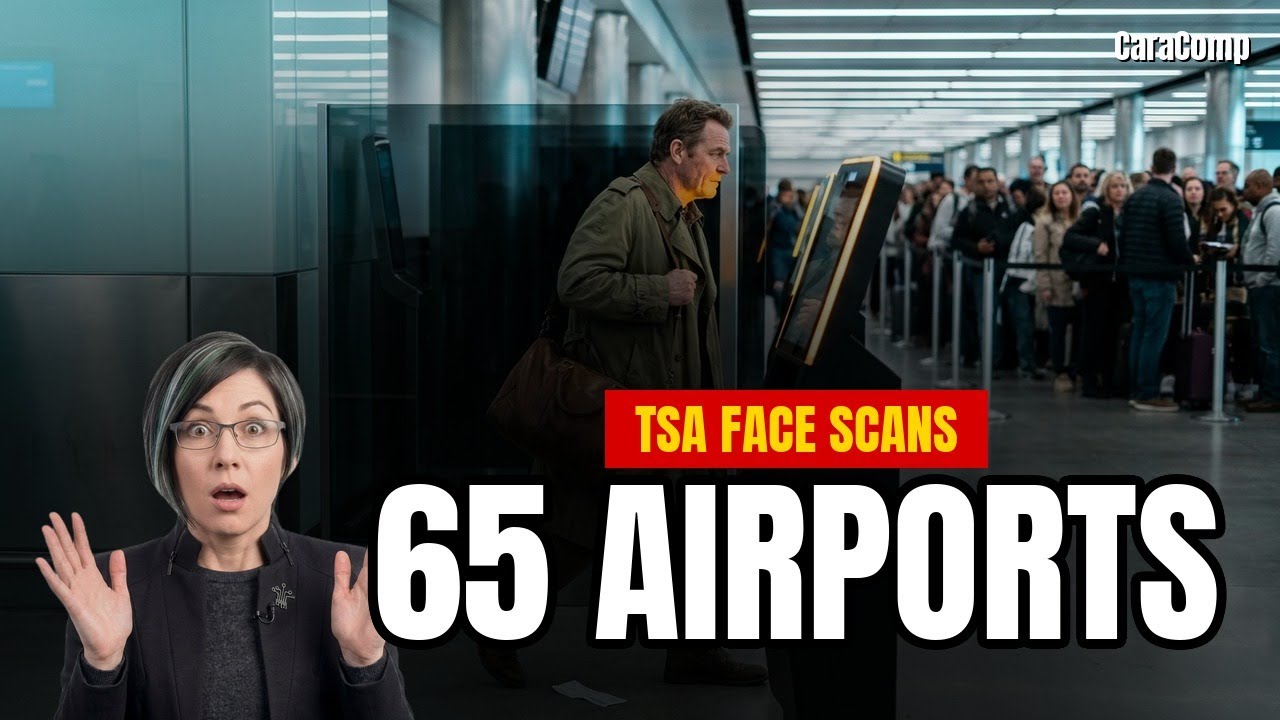
According to industry data from Uniting Aviation, nearly three-quarters of travelers now prefer biometric I.D. over physical documents. The T.S.A. is expanding from fifteen airports to sixty-five by spring.
The privacy debate didn't end in a courtroom. It ended at a boarding gate, two seconds at a time.
If a face can open a gate that fast, imagine what a fake face can open behind a bank screen.
A seven-year-old in Ohio has perfect credit she's never used. Someone took her Social Security number, attached a made-up name, invented an address, and started building a credit file in her digits. She won't know for a decade. This is synthetic identity fraud, and it's the fastest-growing fraud in the country.
According to ConsumerAffairs, children's Social Security numbers are fifty-one times more likely to be used this way than an adult's. Synthetic document fraud jumped more than three hundred percent in a single year.
A clean face match doesn't prove an identity is real. It only proves one check passed.
Three stories. One pattern. Biometric systems are scaling faster than the rules around them, and faster than the fraud designed to fool them. Government builds the infrastructure. Airports build the trust. Criminals build the people who don't exist. The technology is racing. Oversight is walking.
Links to every story and today's podcast deep-dives are in the description. See you tomorrow.