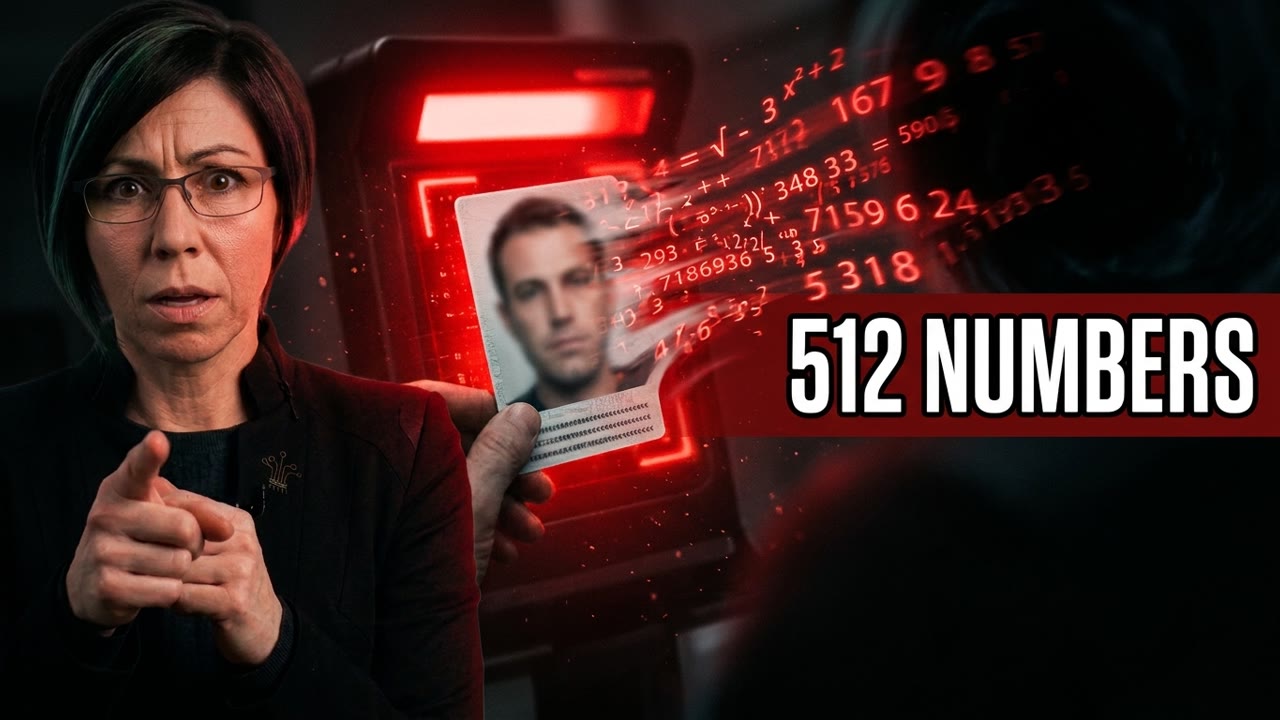
A FACE IS 512 NUMBERS

You hold your phone up. The app scans your face. One second later you are in. That felt like magic. It was not magic. The app threw your photo away. What it kept was 512 numbers. Those numbers are your whole face now. A stranger with the right math could use them. Tonight you learn what that means.
Your face becomes 512 numbers. Not pixels. Not a photo. Hold that number in your head.
A camera catches your face once. A neural net reads it fast. The photo is gone right then. What stays is a string of 512 values.
A sharp selfie holds millions of pixels. The system cuts that down to 512. Those 512 win every time.
You sent your face to prove who you are. The system kept math, not your photo. A thief who gets in finds 512 numbers. Your face lives as digits in a stranger's server.
So how does the system build those numbers? Here is the order it happens in.
First your camera sends one raw image. Then a neural net pulls out key face ratios. Next the photo is dropped from memory. Last a 512 number vector is stored.
Biometric Update summed it up well. A neural net finds key face traits. It maps them to a space of numbers. Close numbers mean the same face.
The 512 values are not random. Each one tracks a real face trait. Eye gap, jaw slope, nose width. These stay steady across years and bad light.
2 photos of you can look nothing alike. The 512 numbers stay close. The system still finds you.
If this helps, a like and a subscribe help us keep it coming.
Now you know how the face becomes numbers. Next comes the part most people get wrong.
Old systems compared raw pixels. A 15 degree head tilt broke them. New systems compare 512 number vectors. A tilt changes nothing. Your face is not a pixel grid.
A match score runs from 0 to 100. A score of 97 means the 2 face vectors sit very close. That closeness is not proof. A human still has to check.
Face and fingerprint are body traits. Typing speed and phone grip are behavior traits. Banks layer both types together.
A 97 score opens a bank account. A wrong call costs real money. One number carries a lot of weight.
Didit published the full breakdown in March 2026. The CaraComp write up on this topic goes deeper. Every number here comes from those two sources.
Here is the part that changes things. A 97 score feels like a verdict. It is not a verdict. It is a direction. The gap between score and proof is where real harm starts.
So what do you do with this? Three steps you can take tonight.
So what do you do tonight? Ask the app if it stores your photo or just your numbers. Check if a human reviews high score flags. No clear answer means look for another service.
A stolen password locks one account. A stolen face vector can follow you for life. You can change a password tonight.
Your face goes in as pixels. A neural net maps it to 512 values. The app compares 2 vectors in math space. A score comes out and a human decides.
The CaraComp write up on this topic covers what to ask your bank. It names the questions that get real answers.
Didit put it simply in its March 2026 report. A high score means vectors sit close. Close is not certain. Certainty needs a person in the loop.
Three things to do this week. Find out if the app stores your raw photo or just your numbers. Ask if a human reviews any flag before action is taken. Read the privacy page before your next face scan.
512 numbers hold your whole face. Every bank and border gate uses this math. One stolen vector is one stolen face.
Your face is now 512 numbers. Those numbers travel without your photo. A breach leaks math, not a picture.
Open the app's privacy page. Find the line that says photo or vector. If the word photo appears, ask why.
Your face became 512 numbers the moment the camera scanned it. A score is a clue, not a verdict.
Every day we take one story like this and make it simple. Subscribe and tap the bell. Tomorrow's is free too. See you in today's briefing.