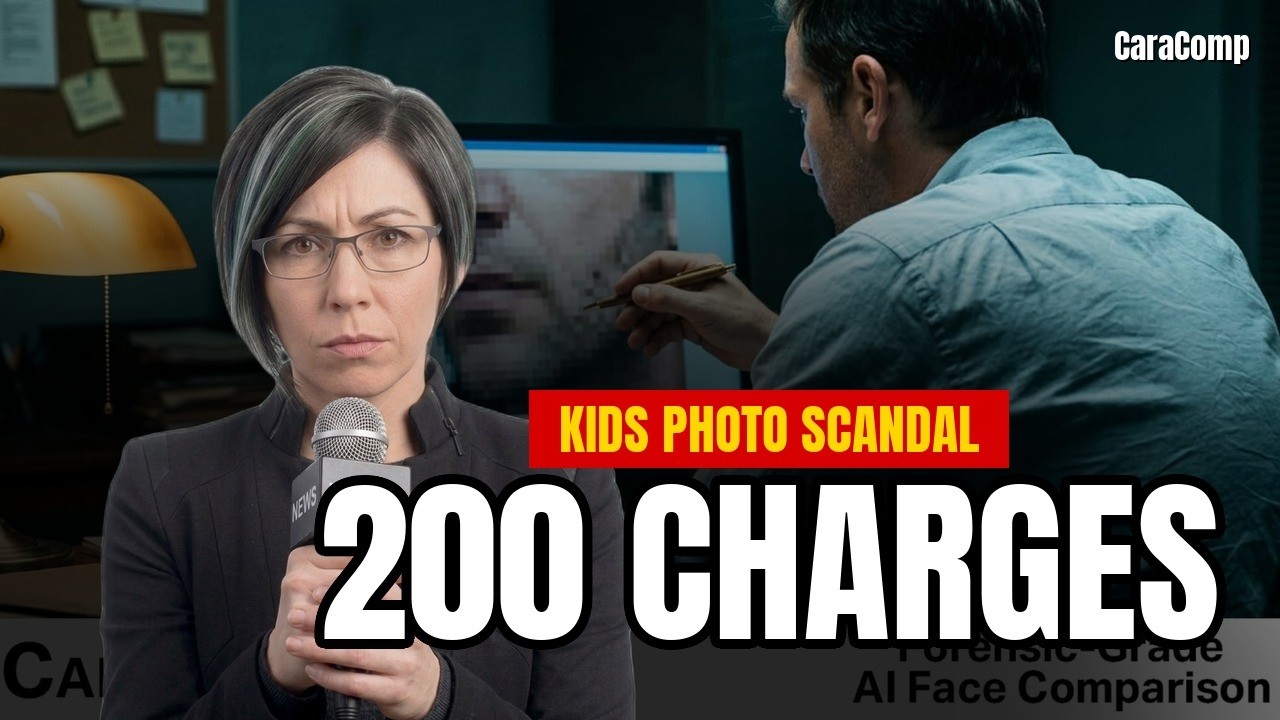
The kids were real. What happened to them next wasn't.

Parents in Bentonville, Arkansas hired a photographer for birthdays and sports days. He took the pictures himself. Then police say he twisted them into something monstrous. He fed real photos of real kids into an A.I. tool. He made fake sexual images of children.
The kids were real. What happened to them next wasn't.
This wasn't a stranger online. It was someone the families trusted, holding pictures they gave him freely. That's what should stop you cold. A photo can look real and still be a lie.
According to Arkansas Online, the man now faces more than two hundred charges. A hundred of them are tied directly to making or sharing fake images. Arkansas even wrote a new law, Act 827, because the old rules never imagined this.
So before you forward that shocking image to warn your neighbors, stop. 'It looked real' can't be your test anymore. Sharing it can ruin an innocent life, or tip off the guilty one.
If a fake image can fool a parent, what stops a fake age from fooling a website?
A dad hands his phone back to his eleven-year-old at bedtime. He assumes the adult sites have some kind of gate. Many do now. But the scariest ones aren't the sites with a bad age check. They're the sites that never ask at all.
A site that never asks your age breaks no law.
A gate that just asks 'are you 18?' isn't a gate. It's a suggestion. And kids click right through it.
According to Au10tix, over a million Australian kids aged eight to twelve got onto social media anyway. Why? The sites just asked them to say how old they were. Real laws only bind the sites that show up to play.
Here's the one test that works. Open a site your kid uses. Try to reach mature content with no login and no age button. If it lets you straight through, you just found your family's real blind spot.
When a site does check your I.D., how sure are you that check really means anything?
You take a selfie. An app flashes a green checkmark. You feel safe and move on. But that one word, 'verified,' is hiding a lot. A real identity check isn't one test. It's three.
A green checkmark can be right and still let the wrong person in.
Is the issuer real? Is the I.D. still active? Is this the right person holding it? Skip two of those, and 'verified' means almost nothing.
According to Biometric Update, a full check needs four separate database lookups. Most apps only run the cheapest one. They match your face to a photo and call it done. That's real work, but it's one link in a long chain.
So next time an app says you're verified, ask the sharp question. Verified against what, exactly? By whom? And as of when?
Look at all three tonight. A fake photo. A fake age. A hollow checkmark. Each one looks real enough to trust. And that's the trap. In 2026, 'it looks real' is the exact moment you should slow down and check.
Links to every story and today's podcast deep-dives are in the description. See you next time.