Below is a live 1:1 comparison of two images you can run yourself, followed by two complete sample reports reproduced in full. Both comparisons were run on deliberately imperfect images, because that is what real footage looks like.
Two sample subjects, one question: same person? Run the analysis and watch the engine work. Real output, sample photos.
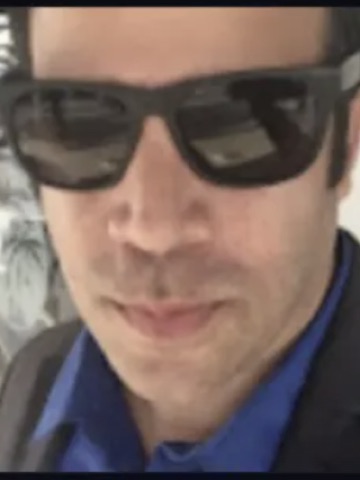

Each report lists the points that do not agree alongside the ones that do, and says which are structural and which are situational. A comparison that only argues one way is not much use to you when the other side reads it.
Report 1 below: 12 findings, 3 of them differences. Report 2: 14 findings, 5 of them differences. Every one of those differences is named, located on the face, and explained.
The subjects in these reports are CaraComp’s founder and AI-generated faces, used with permission. No client, claimant, case material, or confidential information appears anywhere in this document.
CaraComp does not use customer comparisons for marketing. Photo comparisons are analysed in memory and never stored. Video artifacts are deleted automatically within 48 hours.
Two comparisons run on deliberately imperfect images: the conditions real surveillance actually produces, not studio portraits. Both are reproduced below in full. Nothing has been trimmed to make the output look better.
The full PDF is large. Everything in it is on this page already, so the download is only worth it if you want the document itself to keep or forward.
Report 1 of 2 · Sunglasses, low light, off angle
Weighing the quality, quantity, specificity, and stability of the observed similarities and dissimilarities, the features observed are more consistent with the same individual. The strongest evidence is the close correspondence in nasal root/bridge and nasal base shape, the proportional alignment of nose-to-mouth-to-chin positioning, and the broadly consistent lower-face architecture even under different expression and lighting.
A low region score is information, not a failure. In report 1 the eye region scores 50% and the cheeks 0% because the target is wearing wrap sunglasses, which is exactly what occlusion should do to those regions. The comparison then resolves on what remains visible.
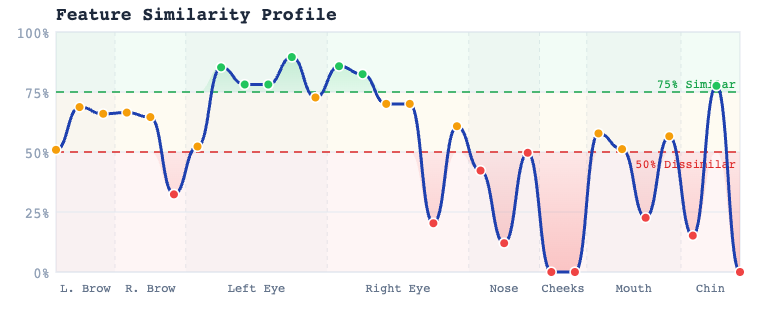
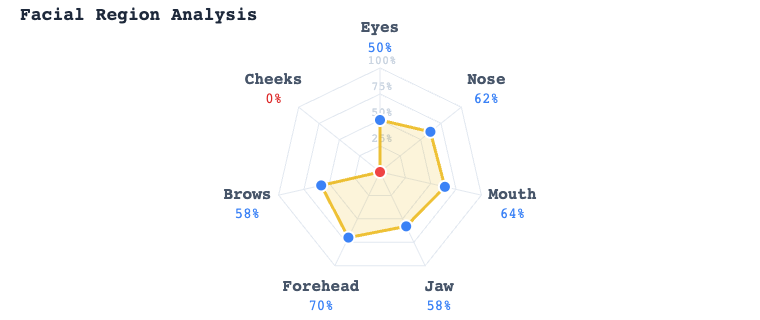

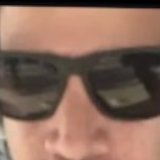
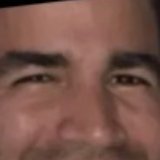
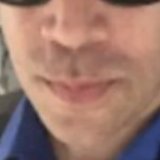
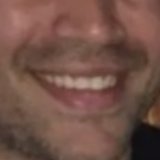
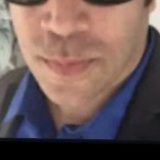

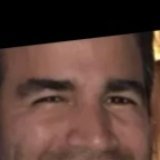
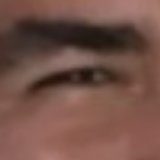
Red panels are the regions the report is arguing against itself on. They are printed at the same size and in the same grid as the green ones, not tucked into a footnote.
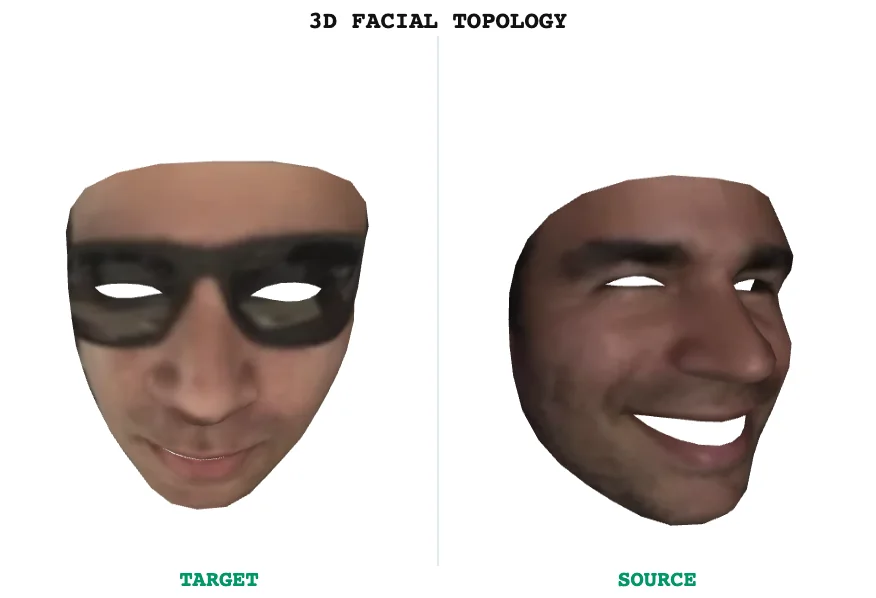
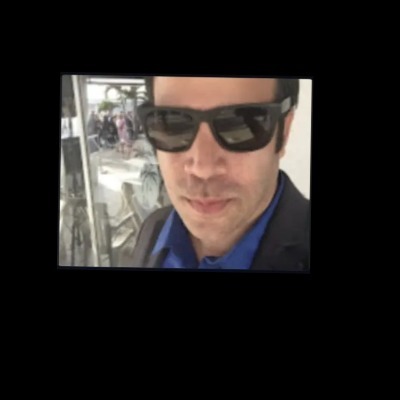
Adult male (late-30s to mid-40s), medium/light-olive skin tone, dark hair worn short and combed back. Neutral, closed-mouth expression with light facial hair concentrated along the chin and jawline. Large, dark wrap-style sunglasses with thick temples obscure the eye region; dressed in a dark jacket over a bright blue collared shirt. Bright outdoor lighting with moderate blur/compression.
Adult male (mid-30s to early-40s), medium/light-olive skin tone, dark hair worn short with a slightly fuller, natural hairline framing the forehead. Broad smile showing teeth, with short stubble across the cheeks, chin, and jawline. No eyewear; wearing a dark collared top. Indoor, warm-toned lighting with moderate image noise/compression.
The overall feature placement shows the same midface-to-lower-face balance: the nose sits centrally with comparable spacing to the mouth corners and chin, producing a very similar facial “map” in both images.
The cheeks and nasolabial (nose-to-mouth) area show a comparable breadth, with similar soft-tissue fullness lateral to the nose before the face transitions into the jaw.
The nasal root/bridge (upper nose) appears narrow and straight into a moderately projected nasal body, with a similar tip position relative to the upper lip (a stable, high-discrimination region).
The alae (nasal wings) show a comparable thickness and curvature, and the nasal base width reads similarly against the midface width in both photographs.
The upper vermilion border (lip line) and the central tubercle of the upper lip (fullest central point) present similarly; the lower lip fullness also tracks closely when you ignore the smile-driven stretching in the source.
The oral commissures (mouth corners) occupy a similar position relative to the nose width, supporting a shared mouth-to-nose ratio despite different expressions.
Both show a moderately projecting chin with a similar vertical distance from the lower lip region into the chin tip, producing a comparable lower-face depth.
Both subjects show short, even stubble concentrated along the jaw/chin region, with a similar density pattern across the lower face (not a strong identifier by itself, but consistent).
The visible forehead-to-hairline relationship appears similar, with dark hair kept short and a comparable frontal framing of the upper face.
The target’s sunglasses cover the eyes and upper orbital region, removing several high-value eye details from direct visual comparison.
The main geometric discrepancies concentrate near the subject’s right outer eye to upper jawline relationship, which aligns with what is visible: the eyewear and strong lighting create a different contour/edge structure in that lateral upper-face zone compared to the unobstructed source.
The source’s smile elevates the labial commissures and deepens the nasolabial folds, while the target remains neutral; these differences are expression-driven and do not outweigh the stable alignment in nose and overall proportions.
Report 2 of 2 · Extreme expression, hat, motion blur
Weighing the quality, quantity, specificity, and stability of the observed similarities and dissimilarities, the features observed are more consistent with the same individual. The strongest evidence is the stable alignment of the midface architecture: a consistent nasal root-to-nasal body width relationship, a matching nasal base footprint relative to eye spacing, and the same patterned distribution of mustache and beard growth. The apparent differences cluster exactly where you would expect them when one image shows high exertion (forced eyelid closure and a clenched-teeth grimace) and the other shows a neutral, relaxed face, making those dissimilarities minor and situational rather than structural.
A low region score is information, not a failure. In report 1 the eye region scores 50% and the cheeks 0% because the target is wearing wrap sunglasses, which is exactly what occlusion should do to those regions. The comparison then resolves on what remains visible.
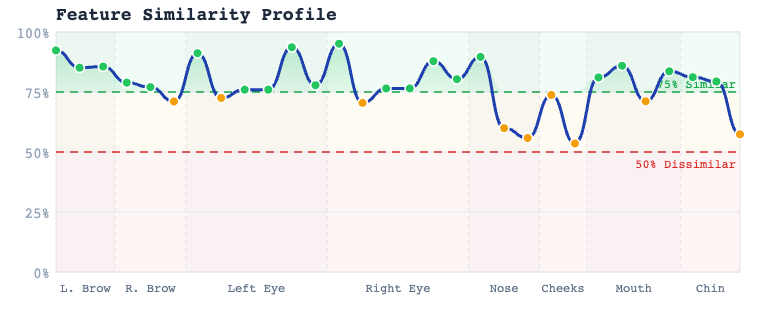
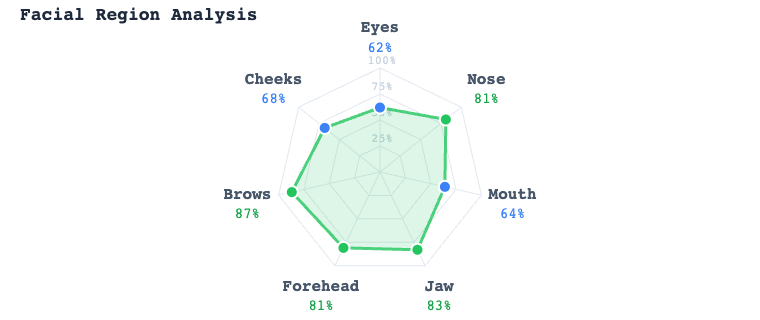

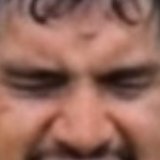
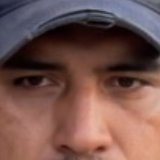
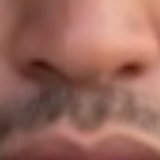
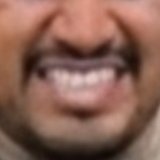
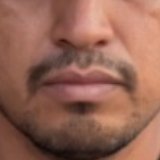
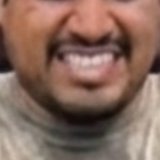
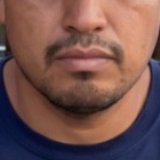
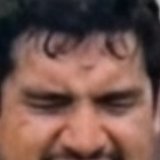
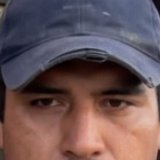
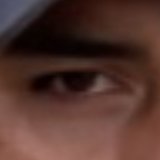
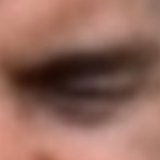
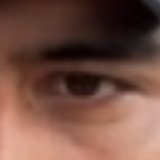
Red panels are the regions the report is arguing against itself on. They are printed at the same size and in the same grid as the green ones, not tucked into a footnote.
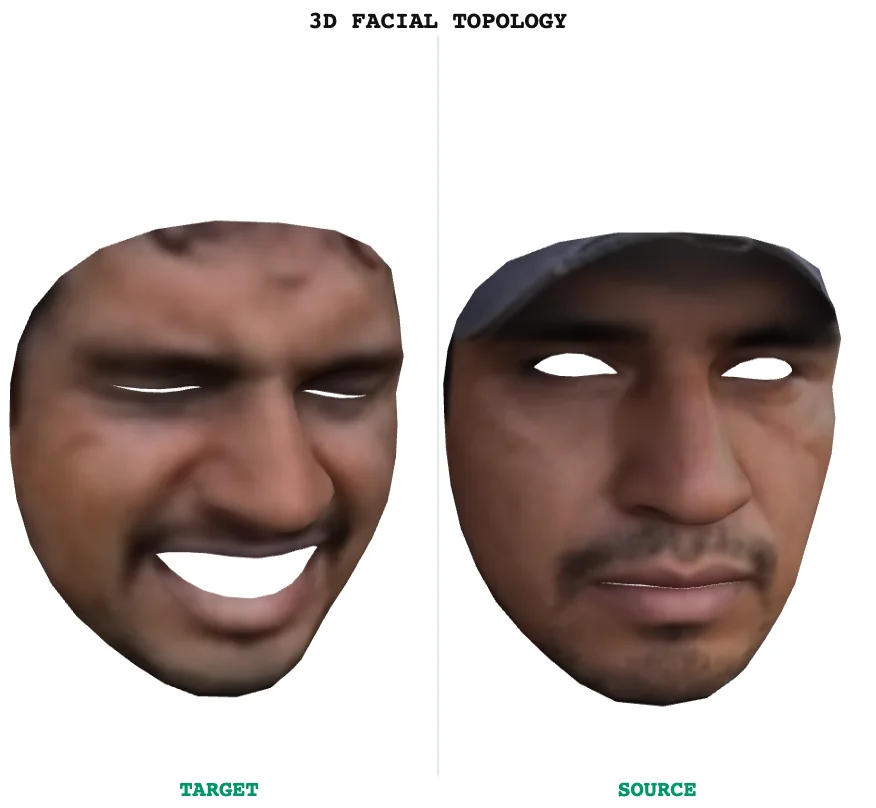
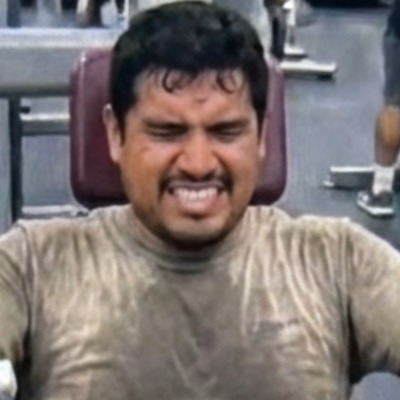
Older adult male (late 60s appearance), medium-to-tan skin tone, dark hair kept short with a forward, slightly tousled top. Expression shows pronounced exertion: eyes squeezed shut, midface tensed, and teeth clenched, creating strong compression in the eyelids and mouth area. Visible dark mustache with short beard/stubble along the chin and jaw; no visible jewelry. Indoor gym setting with harsh overhead lighting and noticeable motion/low-resolution blur that softens fine skin detail.
Older adult male (late 60s appearance), medium-to-tan skin tone, dark eyebrows, wearing a dark baseball cap that covers the hairline. Expression is neutral and steady with relaxed eyelids and a closed mouth, giving a clearer view of baseline facial proportions. Visible dark mustache with short beard/stubble concentrated around the upper lip and chin; no visible jewelry; crutches present (context only). Outdoor daylight photo with higher clarity and even illumination across the midface.
the nasal root/bridge (where the nose meets the forehead) presents as moderately broad with a straight, centered nasal body, and the mid-nose width remains proportionally consistent relative to the eye spacing in both images.
the nasal base (alar-to-alar spread) reads similarly wide in proportion to the intercanthal distance (inner eye-corner spacing), with comparable alae thickness (nostril wing soft tissue) on both sides.
the mustache shows a similar density band across the philtrum region (center under the nose) with the darkest concentration at the midline and tapering laterally toward the labial commissures (mouth corners).
both subjects show short, even stubble across the chin and lower face, with the strongest density at the chin/mentum and lighter coverage toward the cheeks, consistent with the same grooming pattern.
the eyebrows sit relatively low over the superior orbital margin (upper eye socket rim), giving both faces a comparable “hooded” brow-to-eye relationship that remains stable despite different expressions.
the medial brow heads (inner ends) appear similarly close to the nasal root, producing a consistent glabellar span (between-brow space) in proportion to the bridge width.
the chin projects forward with a similar vertical height from the mentolabial sulcus (crease below the lower lip) to the chin tip, producing a comparable lower-third facial architecture.
the lower-face breadth (jaw-to-jaw) reads proportionally similar relative to the midface, even though soft-tissue fullness varies with exertion and lighting.
the target’s exertion compresses the midface, deepening nasolabial folds and tightening the perioral tissues, while the source remains relaxed; these changes are expression-driven and do not indicate different underlying anatomy.
the target’s lip fissure is pulled into a clenched-teeth grimace, which distorts the vermilion borders and elevates the cheeks; the source shows a closed, neutral mouth where the natural lip outline sits flatter and wider.
the target’s eyelids are forcibly closed, collapsing the eye fissure and hiding the palpebral crease pattern, while the source maintains open eyes with a visible superior palpebral crease; this is a direct expression effect.
the target’s lower eyelids are pushed upward by cheek contraction, altering the infraorbital furrow (tear-trough line), whereas the source shows a more natural lower-lid arc under relaxed cheeks.
the source’s cap creates a hard shadow line across the upper face and removes the natural hairline reference, while the target’s hairline and forehead are fully framed by hair; this changes perceived upper-third proportions without changing identity.
the system’s tightest agreements in the eye-to-pupil relationships track with the visual impression of consistent eye placement within the orbital region (stable spacing and alignment), which is one of the most expression-resistant anchors.
CaraComp compares two images and returns a reproducible report. It does not look a face up in a database, and it does not opine on what any court will accept, that is your call and not ours. Firms use it to decide whether an identity question is worth deeper investigation before committing to an investigator or an expert.
