
Biometric Time Clocks: Why Biometric Time Clock Rules Trip Up Healthcare
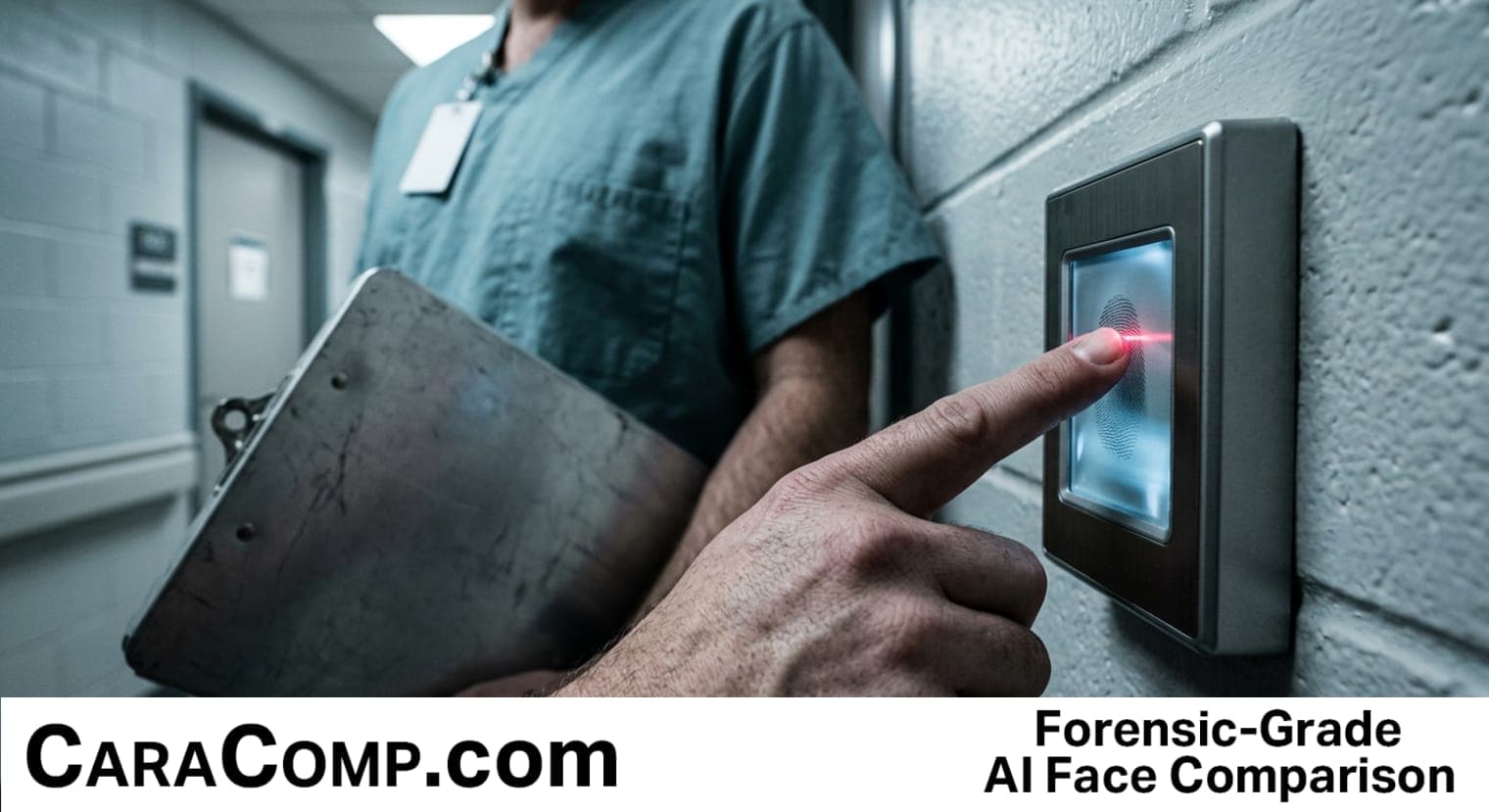
Quick answer
Does the BIPA healthcare exemption cover biometric time clocks?
Generally no. Under the Illinois biometric privacy law, the healthcare exemption covers data tied to patient care, or to treatment, payment and operations handled under HIPAA. Courts have looked at why a scan is taken, not where the employer works, and clocking staff in for payroll and attendance falls outside that purpose.
Here's a sentence that should make every hospital HR department slightly nervous: the biometric time clock bolted to your break room wall might not be legal, even though it's sitting inside a healthcare building. Not because the equipment is broken. Because of what the scan is actually being used for. Every biometric time clock lives or dies on that single question of purpose.
TL;DR: Biometric time clocks used only for clocking employees in and out are not automatically covered by healthcare privacy exemptions, because courts look at the purpose of the scan, not the industry of the employer. Time after time, the same biometric time clock question keeps resurfacing in court.
Biometric Time Clocks, Biometric Clocks, and Why Healthcare Doesn't Get a Free Pass Every Time
An Illinois appellate court just told a group of hospitals something that sounds obvious once you hear it, but apparently wasn't obvious to the companies that built these systems: working in healthcare does not mean every fingerprint scan, hand scan, or face scan in your building gets to skip privacy law. The court reinstated class-action lawsuits from healthcare workers who'd been clocking in with hand scanners time after time, rejecting the employers' claim that a "healthcare exemption" covered their timekeeping systems, according to ID Tech Wire.
Most of us assume privacy rules follow the building we're standing in. Hospital equals healthcare data equals HIPAA rules, right? Wrong. The rule that actually governs your fingerprint scan isn't about where you work. It's about why your body part got scanned in the first place. Every time a biometric clock logs a punch, it's making a legal claim whether anyone realizes it or not, and it does this each and every time an employee arrives for a shift.
$5,000
potential penalty per biometric scan violation, meaning one employee clocked in daily for a year could represent over $1.25 million in exposure
Source: Illinois Biometric Information Privacy Act (BIPA), as reported by ID Tech Wire
How Biometric Time Clocks and Biometric Systems Get Sorted Into "Exempt" or "Not Exempt" Each Time
Picture a healthcare worker walking up to a wall-mounted device at 8:03 a.m. She puts her hand on a PIN pad style scanner, it reads her hand geometry, and it logs her as present. That single action, one second, tops, is where this whole legal fight lives. The hospital's assumption is simple: we're a healthcare employer, this is a healthcare device, so healthcare privacy law protects us. That assumption is exactly what the appellate court rejected. This article is part of a series, start with Biometric Entry One Setting Flags 42 Of Real Fans.
Illinois' biometric privacy law, known as BIPA, has an exemption for healthcare data. But that exemption isn't one big blanket. It's split into two very specific lanes. Lane one covers information collected directly from a patient during actual care. Lane two covers biometric data collected, used, or stored for healthcare treatment, payment, or operations, and only when that collection happens "under HIPAA," meaning the organization is actually following HIPAA's rules of consent and confidentiality for that specific data. A timekeeping system doesn't fit in either lane, no matter how many times an employer repeats the claim. It's not patient care. And payroll isn't something HIPAA regulates at all, according to Censinet. Payroll integration is exactly the kind of everyday function BIPA's exemption was never written to cover, and this payroll integration point is where most employer arguments collapse.
This matters because courts are now demanding actual proof, not just an employer's say-so. The Seventh Circuit's reasoning, later reinforced by the Illinois appellate decision, made clear that a company can't just wave its hand and claim "we're healthcare, this counts." According to analysis from Quarles Law Firm, the exemption requires clear, specific documentation showing the biometric collection is genuinely tied to HIPAA-covered treatment, payment, or operations. Vague claims don't cut it anymore, no matter how many times they get repeated.
And here's where the financial stakes stop being theoretical. BIPA gives individuals the right to sue directly, and it treats each scan as its own separate violation, every single time a badge-free punch happens. Scan your hand every workday for a year, and you've generated over 250 individual violations. At penalties that can reach $5,000 each, one employee's daily punch, over one year, can represent more than a million dollars in potential liability. Multiply that across a hospital's workforce and you understand why this ruling made lawyers sit up straight, per Crowell & Moring.
If the Illinois legislature intended to create a wide-ranging exemption under BIPA for hospitals, it would have done so in the blanket exclusion provision of BIPA.
Illinois Appellate Court reasoning, as reported by ID Tech Wire
Biometric Time Clock Definition: What Actually Counts as a Biometric Clock and a Fingerprint Clock
A biometric time clock is not just a fancy attendance sheet. It's equipment that captures something unique to your body, a fingerprint scan, a hand shape, or a face pattern, and converts that into a digital reference the system checks every time you clock in. This isn't a badge you swipe. Once your fingerprint scan or face pattern gets converted into data, that data doesn't expire when your shift ends. It sits in a system somewhere, and that's exactly what privacy law is worried about every time a new scan gets logged. A standalone biometric unit stores that reference locally, while a networked biometric clock, sometimes just called a fingerprint clock, may send it somewhere else entirely.
Why the Purpose of a Face Scan Matters More Than the Industry It's Used In, Time and Again
Think of it like a building with two separate doors. One door lets patients in for care. The other door only opens if you're carrying an actual HIPAA security badge, meaning the system genuinely follows HIPAA's consent and confidentiality rules for that specific use. A timekeeping system doesn't have that badge. It's standing outside a completely different door, the one marked payroll and attendance, which HIPAA never agreed to guard in the first place. A hospital can't borrow the healthcare door's exemption for the payroll door just because both doors happen to be in the same building, no matter how many times the claim gets made.
Here's the misconception almost everyone makes, and honestly, it's an understandable one: "I work in healthcare, my employer uses a biometric system, so the healthcare exemption must cover it." That feels logical. Healthcare place, healthcare rules. Except BIPA was never written that way. The exemption protects specific data, patient information, and specific purposes, treatment, payment, operations under HIPAA. It was never meant to protect every biometric system that happens to exist inside a hospital's walls. Industry doesn't decide the outcome. Purpose does, every time. A hospital's fingerprint scan used to control access to a medication dispensing cabinet might genuinely qualify for the healthcare exemption, because that's tied to patient care. The exact same hospital's fingerprint scan used to clock the same employee in and out at 8:03 a.m. does not, because payroll was never a HIPAA-governed activity to begin with. Previously in this series: Ai Deepfake Images Korea Sex Crime Cases Jump 17x Podcast.
What You Just Learned About Biometric Time Clocks
- 🧠 Purpose beats industrythe law asks why your scan happened, not where you work, every time it happens
- 🔬 Two-prong exemptionpatient data is protected, employee attendance data is not
- 💡 Per-scan liabilityeach daily punch can count as a separate violation, and the penalties stack fast every time a shift starts
Biometric Time Clocks Compared: Clocks, Accessories, Software, and Standalone Systems, Time After Time
Not every attendance system creates the same privacy exposure, and understanding the differences helps explain why this court case matters so much. Some systems are fully standalone units bolted near an entrance. Others connect through Wi-Fi to a central management dashboard, letting a small business or a large hospital network track employee start times and hours automatically across multiple locations, every time a shift begins. Some rely on a USB connection to sync data manually, others export records straight into payroll software. Even the accessories that come with these clocks, mounting brackets, backup power supplies, cables, are worth checking before purchase, since they affect how the system is actually installed and maintained.
| System type | How it works | Privacy exposure | Time tracking status |
|---|---|---|---|
| Standalone fingerprint clock | Local device only, no network connection, data stored on the unit itself | Still creates biometric data, still subject to consent and storage rules | Time tracking works offline, every time |
| Wi-Fi connected time clock with software | Punch data syncs automatically to a cloud-based management platform | Higher exposure, data may be shared, stored longer, or exported to third parties | Time tracking updates each time a shift starts or ends |
| Face-based attendance system | Camera reads face geometry to confirm identity at clock in | Face data treated as biometric identifier, same legal obligations as fingerprint scan | Time tracking triggers each time a face is scanned |
Notice something in that table? Every single row involves the same underlying legal question: are you collecting a fingerprint scan, hand geometry, or face pattern, and if so, do you have consent and a clear, disclosed reason for storing it? Whether it's a basic standalone punch clock in a small business office or a Wi-Fi-connected system tied into workforce management scheduling and payroll software, the privacy obligation doesn't disappear just because the equipment is more advanced or more integrated, every time it's used.
Does Facial Recognition and Fingerprint Technology Make Time Tracking More Efficient Every Time?
Yes, and that's actually part of why so many companies adopted it. Fingerprint technology makes time tracking more efficient because it removes buddy punching (one employee clocking in for a friend who's running late) and it removes the need for physical badges that get lost or shared. This kind of time tracking also helps managers track employee start times without manual entry. Facial recognition adds another layer of accuracy for the same reason, since a face pattern is just as hard to fake as a fingerprint scan, every time it's scanned. Employers like it because it's accurate. But accurate and legally simple are two very different things, and this case is proof.
What Employee Time Data Means for Support Requests and Payroll Integration, Every Time It's Requested
If your workplace uses biometric time clocks, whether it's a hospital, an office, or a warehouse, you have every right to ask a few plain questions. Who holds this data? Where is it stored? Is it shared with a payroll vendor, an equipment manufacturer, or anyone outside the company? When is it deleted after you leave the job? These aren't paranoid questions. They're the exact questions this Illinois case turned on, time and time again.
Good employers with legitimate biometric time clock systems should be able to answer these instantly, because BIPA already requires them to have a written policy covering retention and destruction of biometric data before they ever collect it, every time a new employee is onboarded. If your company's support team, or HR department, can't answer a simple question about how long your fingerprint scan is stored, that's not a small business detail. That's the exact gap that turns into a class action lawsuit.
The same math that applies to a hand-scan time clock in a hospital corridor applies to face recognition systems used for building access, retail loss prevention, or event security, every time a scan is logged. A face pattern captured for one stated purpose isn't automatically approved for a second, unrelated purpose. That's a principle CaraComp's research on facial recognition deployment keeps circling back to: the technology itself is neutral, but the purpose behind each specific use is what determines whether it's handled responsibly. This is exactly why payroll integration deserves its own scrutiny separate from the clock hardware itself, and why end times using fingerprints deserve the same documentation as start times.
Biometric time clocks are judged by why they collect your fingerprint scan or face pattern, not by the industry stamped on the building sign, so even a hospital using biometric time clocks for simple attendance tracking can face full BIPA liability every time a shift is logged. Up next: Biometric Entry One Setting Flags 42 Of Real Fans Podcast.
So here's the thing worth sitting with. Somewhere right now, a hospital administrator is looking at a hand scanner bolted to a break room wall, assuming the word "healthcare" printed on the building's letterhead is doing legal work it was never built to do. It isn't. That little PIN-pad device doesn't ask what industry you work in before it reads your hand, every time someone clocks in. And neither, as it turns out, does the law.
biometric time clocks: Frequently Asked Questions
What is a biometric time clock definition employers actually use?
A biometric time clock is equipment that verifies identity using a physical trait, most commonly a fingerprint scan, hand geometry, or face pattern, instead of a badge or PIN code. The device converts that physical trait into digital data, then checks it against a stored reference each time an employee clocks in or out on a biometric clock. This is considered more accurate than swipe cards because it can't be shared or lost, but it also means the employer is now collecting sensitive biometric data that carries specific legal responsibilities around consent and storage every time it's gathered.
Can a healthcare employer ever legally use fingerprint scan time clocks?
Yes, but only if it treats the timekeeping system the same as any non-exempt employer would. There is no automatic healthcare pass for biometric clocks. The employer still needs written policies, informed consent before collecting the scan, clear disclosure of how long data is stored, and a defined destruction timeline. Being a hospital does not remove these requirements. Courts have made clear the healthcare exemption only covers data tied to actual patient treatment, payment, or operations under HIPAA, not administrative functions like payroll or attendance, no matter how many times the claim gets made.
Do standalone biometric time clocks track hours automatically without internet?
Yes, a standalone biometric clock can track hours automatically using only local storage, with no Wi-Fi or network connection required, every time an employee clocks in. Many small business owners choose these specifically to avoid cloud dependency. However, standalone does not mean privacy-exempt. The device still collects a fingerprint scan or face pattern, and consent, disclosure, and retention rules still apply, even if the equipment never connects to the internet or exports data anywhere.
How does biometric time clock software connect to payroll and scheduling?
Most modern systems connect punch data directly into scheduling and payroll software through Wi-Fi or a USB sync, letting management export attendance records automatically instead of entering hours by hand every time a pay period ends. Platforms built for this combine time clocks, scheduling, and payroll integration into one dashboard. The convenience is real, but every added connection point, Wi-Fi sync, cloud export, third party payroll vendor, is another place where biometric data could be shared beyond its original stated purpose.
Why do biometric scans raise more privacy concern than a badge punch?
A badge can be replaced if lost. A fingerprint scan or face pattern cannot. Once biometric data is captured and stored, it's permanent and uniquely tied to one person for life, unlike a PIN or card number. That permanence is exactly why laws like BIPA treat biometric time clock collection differently than ordinary attendance tracking, and why courts scrutinize the stated purpose of each scan so closely, every time, rather than accepting broad industry-based exemptions.
What happens to employee time data after someone leaves a job?
Under laws like BIPA, employers are required to have a written policy establishing a retention schedule and destruction timeline for biometric data, generally requiring deletion once the purpose for collection has ended, such as when employment ends. In practice, enforcement varies, and this is precisely the kind of question employees should feel comfortable asking HR or support directly every time doubt comes up, since vague or missing answers were part of what triggered the lawsuits behind this Illinois ruling.
Ready for forensic-grade facial comparison?
Full forensic reports with detailed similarity scoring. Results in seconds.
Run My First SearchMore Education
Google Face Recognition: 1 Switch Deletes Every Face Code
Your photos app has been sorting faces into piles for years. Learn what google face recognition actually does, where it gets people wrong, and the one setting that deletes it.
biometricsImmigration Biometrics: 30,000 Officials Can Search Prints
One fingerprint appointment can put your prints into a chain of linked government systems. Learn how the chain works, what the research shows, and where to look first.
biometricsRoblox Face Scan: Predators Rarely Need to Fool the Camera
A face scan now gates Roblox chat, but the real danger was never at the door. Learn what the scan does, the mistakes parents make about it, and what to check tonight.