
Face Recognition in Healthcare Applications: Facial Recognition & Heal
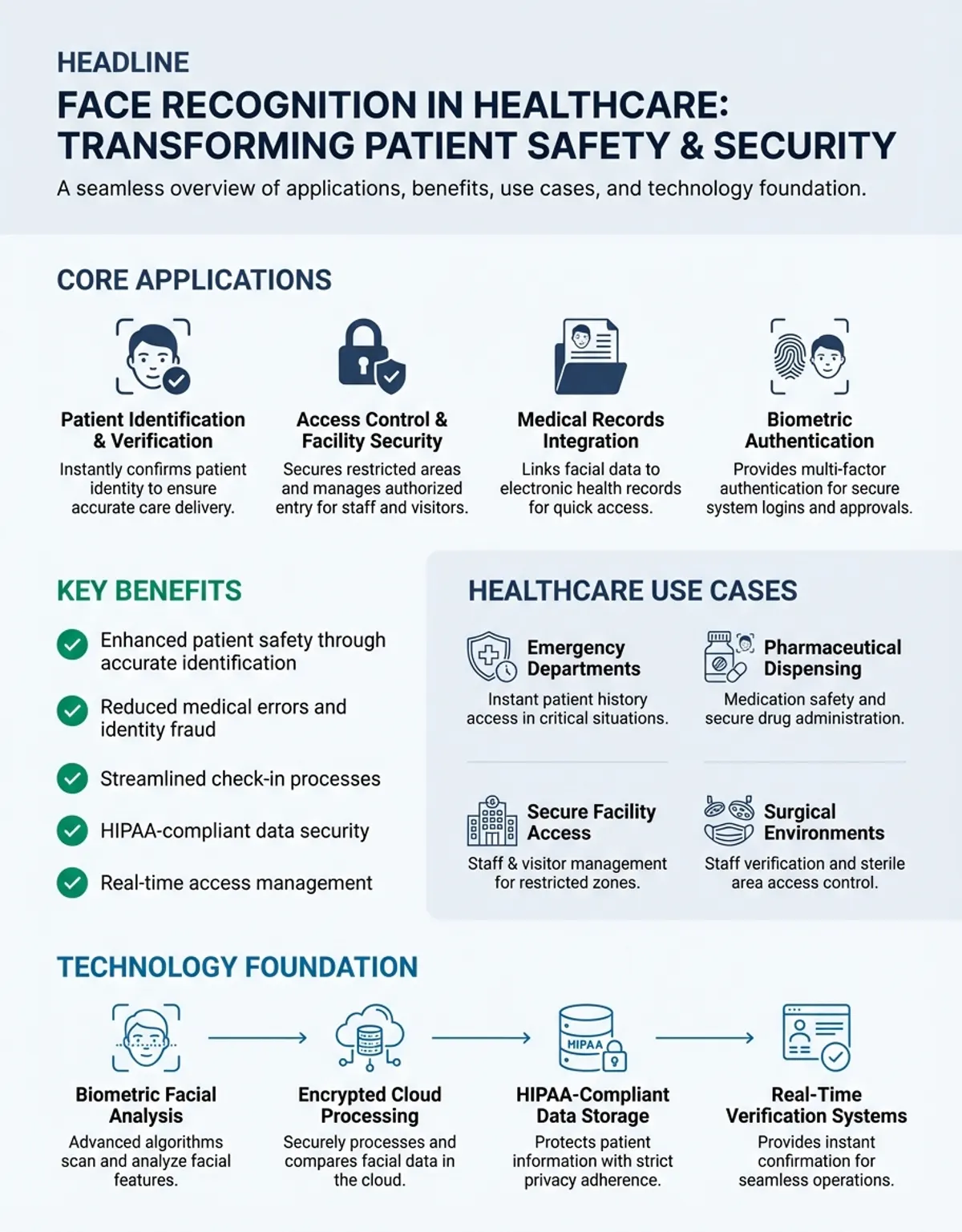
Face recognition in healthcare applications represents a transformative shift in how medical facilities manage patient identification, access control, and data security. As healthcare providers increasingly adopt biometric solutions to enhance patient safety and streamline operations, facial recognition technology has emerged as a robust solution for addressing critical challenges in modern healthcare delivery. This technology leverages advanced biometric data processing to accurately identify patients, secure healthcare facilities, and ensure compliance with stringent regulation frameworks like GDPR and other legal requirements.
For a comprehensive overview of facial recognition technology, explore our face recognition guide.
The integration of facial recognition into healthcare settings offers enhanced patient security while simultaneously improving the patient experience through faster check-in processes and reduced administrative burden. Healthcare providers are discovering that biometrics, particularly facial recognition, can simplify patient check-in procedures, eliminate medical record errors, and provide unprecedented levels of authorization throughout hospitals. These applications extend beyond simple identification to include emotion analysis capabilities that can measure patient comfort levels and analyse feelings during treatment, offering providers valuable insights into patient well-being.
Facial recognition technology presents unique opportunities to elevate care delivery standards while addressing fundamental concerns about data privacy, regulatory compliance, and system security. Understanding how these solutions integrate with existing healthcare infrastructure requires careful consideration of both the technical capabilities and the legal frameworks that govern biometric data usage in medical settings.
Understanding Data Security in Face Recognition Healthcare Applications
Data security forms the cornerstone of any successful implementation of face recognition in healthcare applications. When medical centers deploy facial recognition systems, they must navigate complex data protection requirements that govern how biometric data is collected, stored, and processed. The sensitive nature of biometric information demands robust encryption protocols and secure data management practices that exceed standard healthcare data protection measures.
Healthcare institutions implementing facial recognition must ensure their systems comply with HIPAA regulations in the United States, GDPR requirements in Europe, and other regional legal frameworks that specifically address biometric data handling. These regulation standards require organizations to implement data minimization practices, where only essential biometric information is captured and retained for the minimum necessary duration. The data collected through facial recognition systems must be segregated from other medical records and protected with multi-layered security protocols.
Modern facial recognition solutions incorporate advanced data encryption both in transit and at rest, ensuring that biometric templates cannot be intercepted or misused. institutions must also implement comprehensive audit trails that track every instance of data access, modification, or deletion, providing transparency and accountability in biometric data management. These measures are not merely technical requirements but legal obligations that protect patient privacy while enabling the benefits of biometric authentication.
The challenge for hospitals lies in balancing data accessibility for legitimate medical purposes with stringent security measures that prevent unauthorized access. Facial recognition systems must integrate seamlessly with existing electronic health record (EHR) systems while maintaining separate security protocols for identification data. This dual-system approach ensures that even if standard medical data is compromised, the verification information remains protected under additional security layers.
Understanding Biometrics and Biometric Authentication in Healthcare
Biometrics refers to the measurement and statistical analysis of unique physical and behavioral characteristics that can reliably identify individuals. In healthcare applications, authentication systems utilize facial recognition as a primary authentication method because faces provide consistent, non-intrusive identifiers that don't require physical contact or special equipment beyond standard cameras. This makes identification authentication particularly valuable in medical centers where hygiene considerations and patient comfort are paramount.
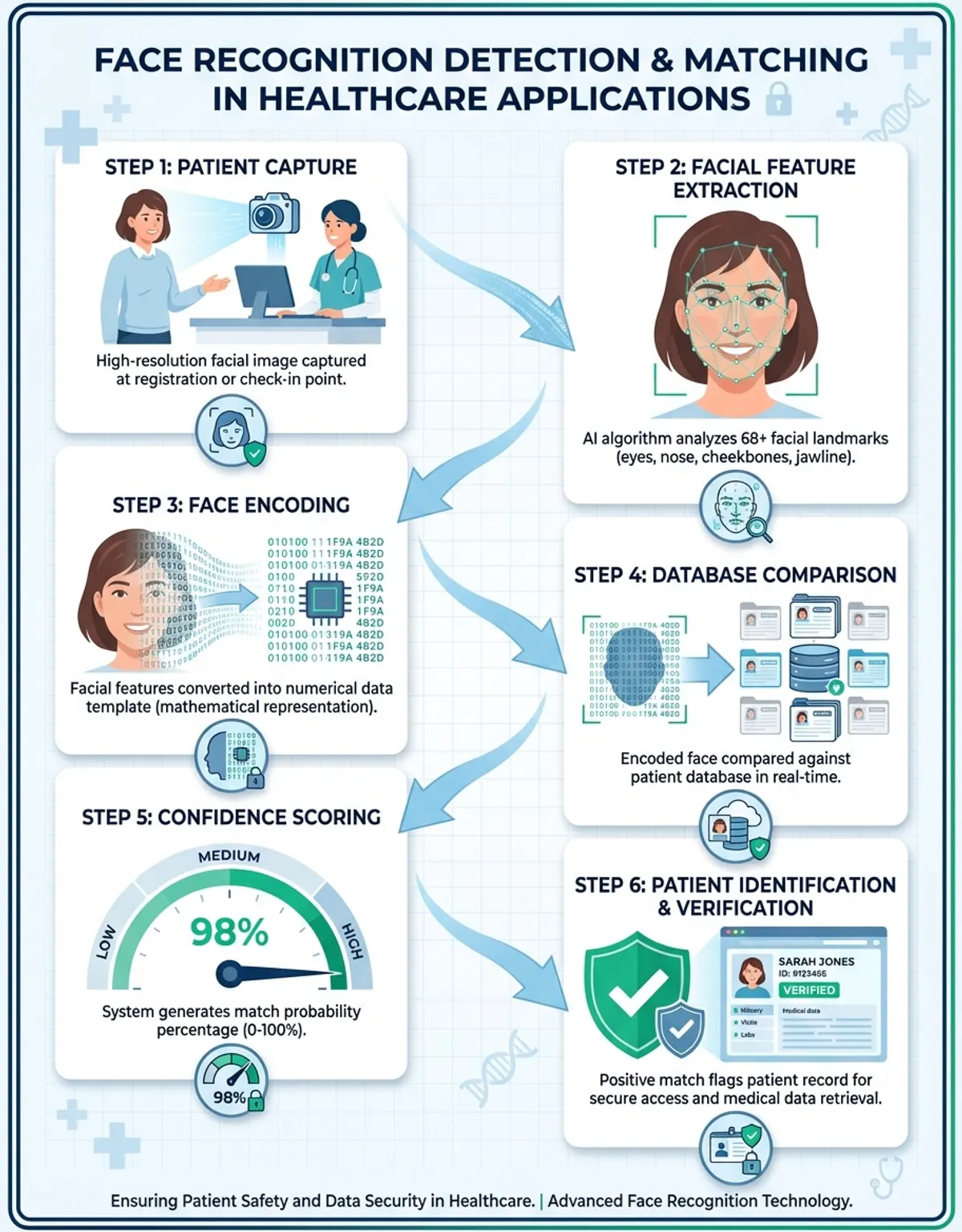
Facial recognition represents one of several verification modalities available to healthcare organizations, but it offers distinct advantages over fingerprint scanning, iris recognition, or voice authentication. Unlike fingerprint systems that require physical contact with scanning devices, facial recognition operates at a distance, reducing infection transmission risks in medical environments. The technology works by capturing facial images, extracting unique authentication features, and comparing these features against stored templates to verify patient identity.
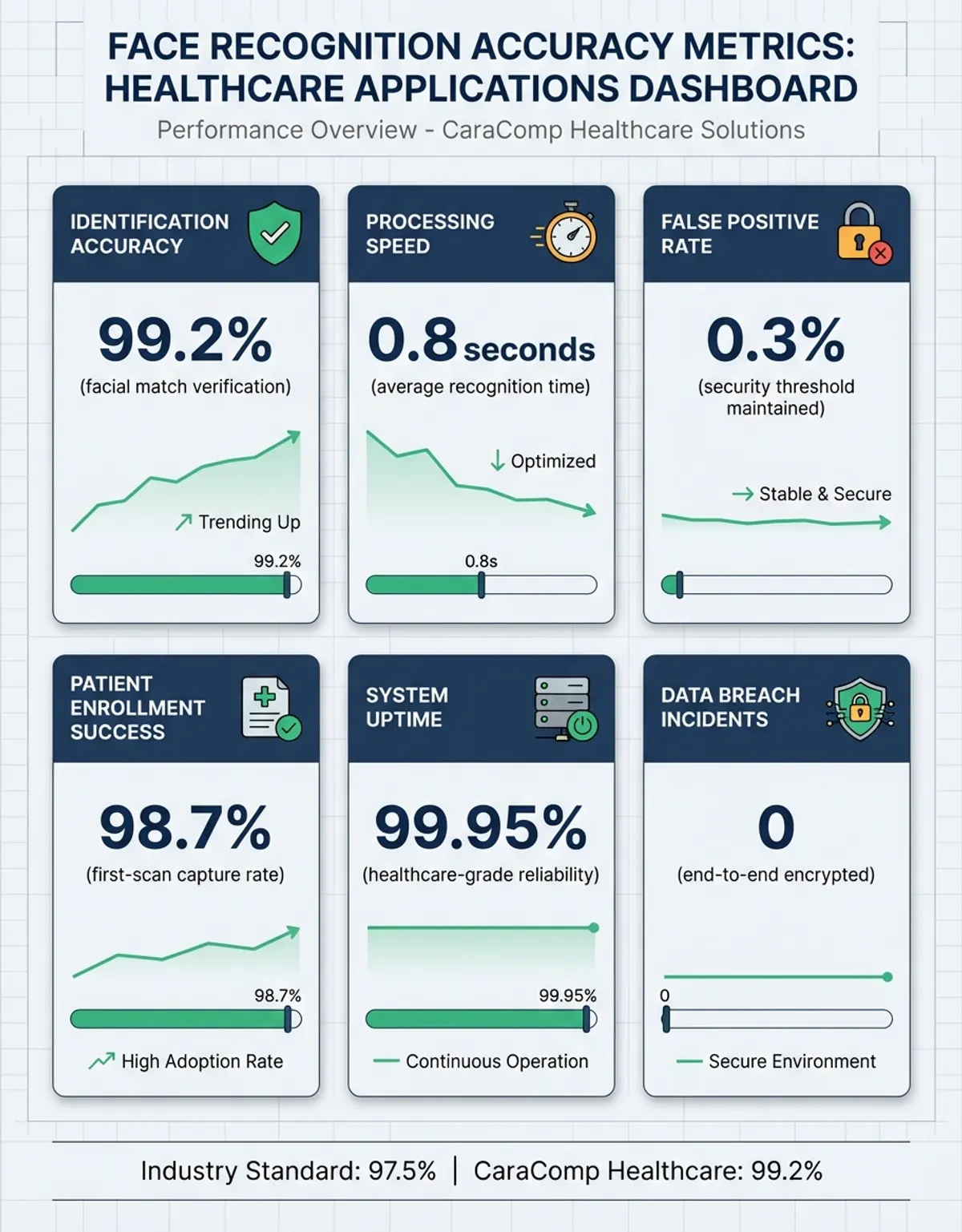
The identification enrollment process in healthcare settings involves capturing multiple facial images under varying lighting conditions and angles to create comprehensive verification templates. These templates convert facial geometry into mathematical representations that can be quickly compared against databases containing thousands or millions of patient records. Modern authentication systems achieve accuracy rates exceeding 99% in controlled healthcare environments, making them more reliable than traditional identification methods like ID cards or verbal confirmation. (Source: https://www.mdpi.com/2306-5354/11/4/384)
institutions implementing identification solutions must consider factors like patient consent, template storage security, and system interoperability. Patients must be informed about how their verification data will be used and provided options to opt-out when medically feasible. The authentication templates themselves must be stored using irreversible encryption methods that prevent reconstruction of the original facial images, addressing privacy concerns while maintaining system functionality.
For insights into financial applications of biometric authentication, see our article on face recognition for digital payments.
Advanced identification systems in healthcare now incorporate liveness detection capabilities that prevent spoofing attempts using photographs or video recordings. These anti-spoofing measures ensure that only live patients can authenticate using facial recognition, protecting against identity theft and fraudulent access to medical services. As verification technologies continue advancing, healthcare institutions can expect even greater accuracy and security in patient identification processes.
Face Recognition Implementation in Healthcare Facilities
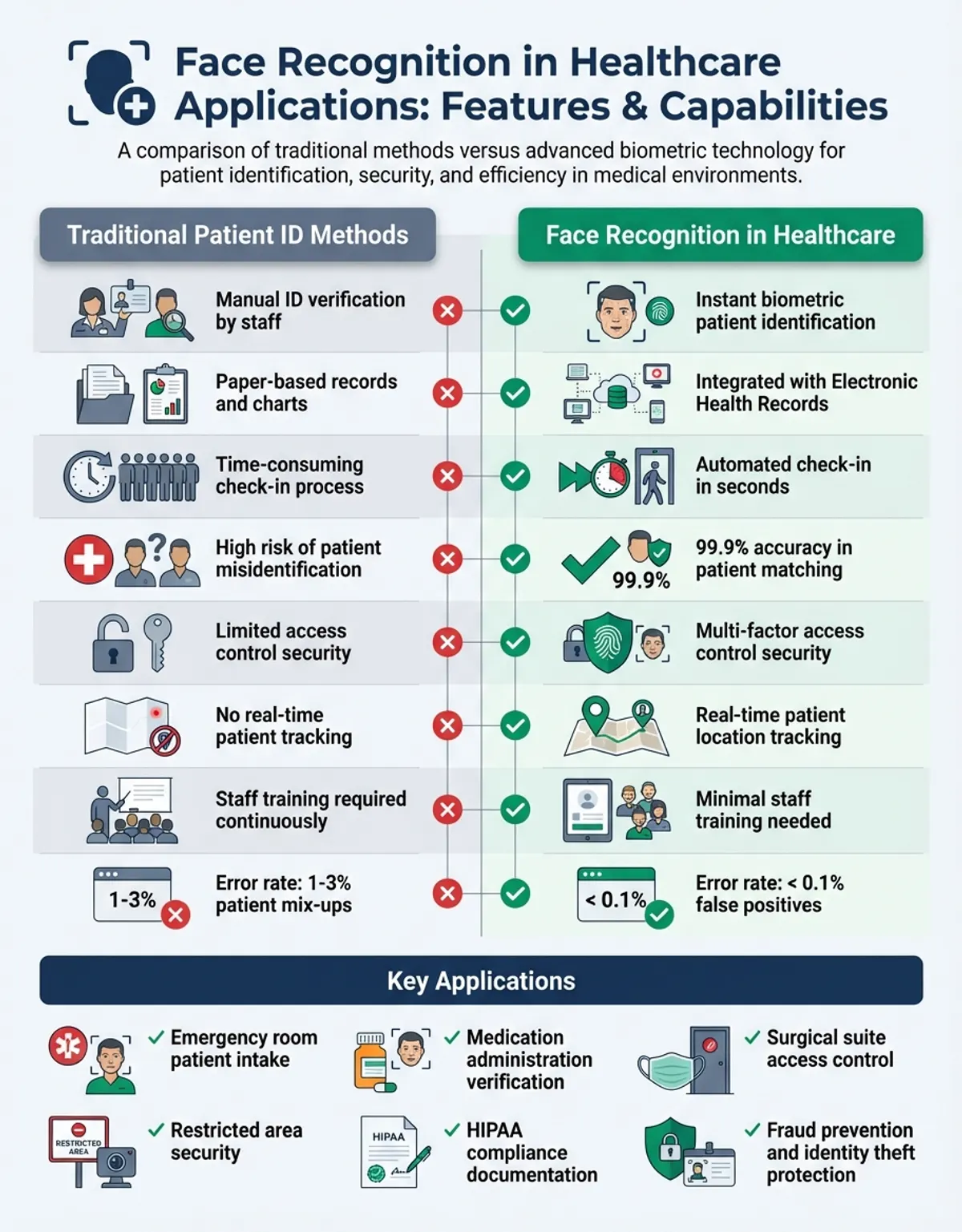
Implementing face recognition technology in hospitals requires careful planning that addresses infrastructure requirements, workflow integration, and staff training. patient centers must evaluate their existing security systems, patient flow patterns, and technical capabilities before deploying facial recognition systems. The implementation process typically begins with pilot programs in specific departments or entry points before expanding to facility-wide deployment.
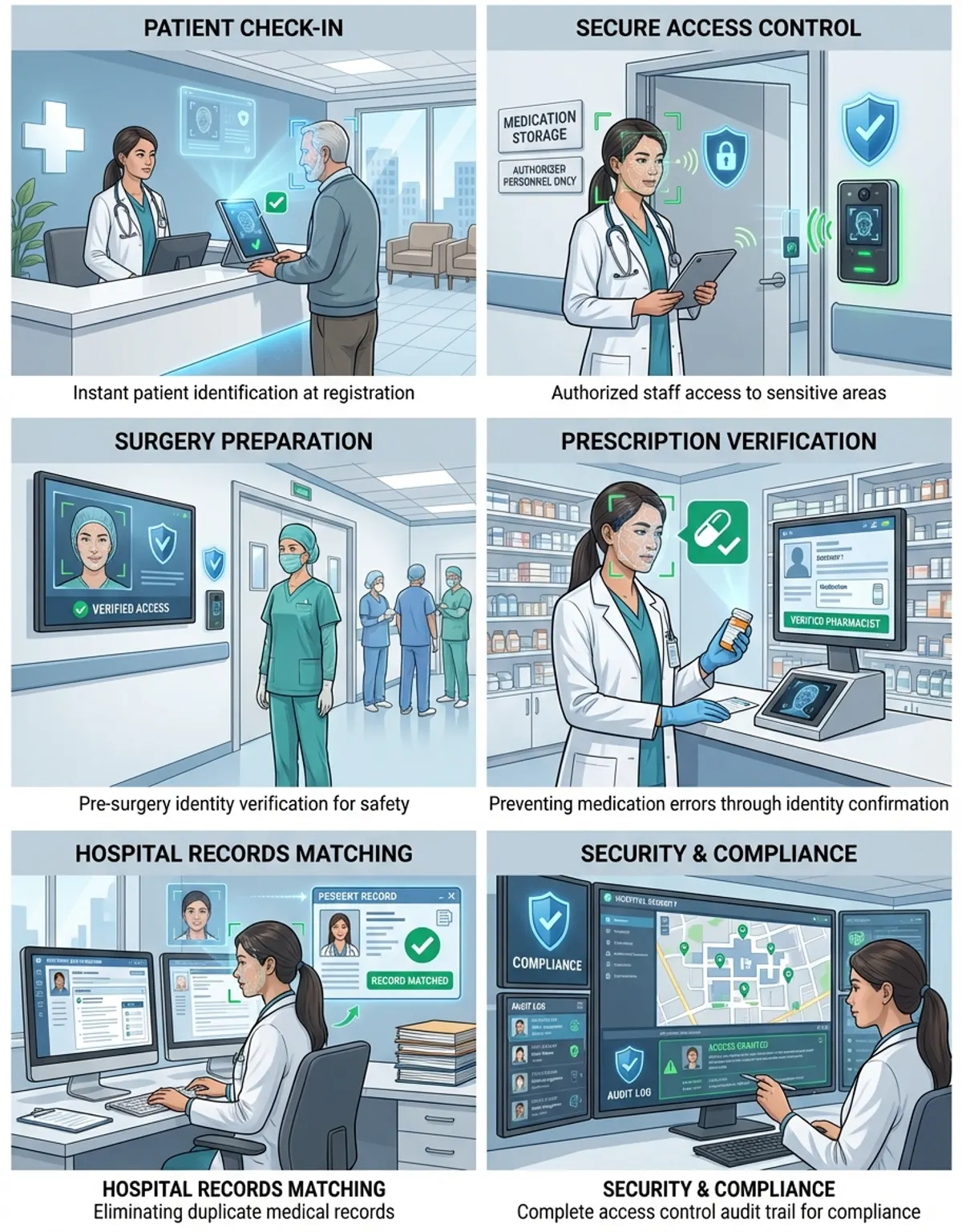
institutions often start with security applications, using facial recognition to manage entry to restricted areas like operating rooms, pharmacies, or data centers. These initial implementations provide valuable data on system performance while addressing critical security needs. As confidence in the technology grows, facilities expand to patient identification at registration desks, emergency departments, and throughout treatment areas where accurate identification prevents healthcare errors.
The technical infrastructure for facial recognition requires high-quality cameras positioned at optimal heights and angles to capture clear facial images under varying lighting conditions. hospitals must install cameras at patient check-in areas, corridor junctions, and department entrances while ensuring coverage doesn't create privacy concerns in sensitive areas like examination rooms or patient bathrooms. Network infrastructure must support real-time image processing and database queries without introducing delays that would disrupt patient flow.
Integration with existing healthcare information systems represents a critical implementation challenge. Facial recognition systems must communicate seamlessly with EHR platforms, scheduling systems, and billing software to provide value beyond simple identification. When a patient is recognized at check-in, the system should automatically retrieve their appointment details, update their arrival status, and alert relevant healthcare organizations—all within seconds of facial capture.
Staff training ensures that healthcare personnel understand how to assist patients with the facial recognition process, troubleshoot common issues, and maintain patient privacy during authentication enrollment. Training programs should address both technical operation and patient communication, helping staff explain the benefits and address concerns about facial recognition technology. Here's the thing—successful implementations typically show that patient acceptance increases significantly when staff can confidently explain how the technology protects privacy and improves care delivery.
Medical Applications and Patient Safety Benefits
clinical applications of facial recognition extend far beyond simple patient identification to encompass critical safety protocols that prevent clinical errors and improve treatment outcomes. When healthcare institutions can instantly and accurately identify patients, they eliminate risks associated with misidentification—a leading cause of medication errors, wrong-site surgeries, and incorrect treatment administration. Facial recognition ensures that the right patient receives the right treatment at the right time.
Emergency departments benefit particularly from facial recognition capabilities, as unconscious or disoriented patients often cannot provide identification information. The technology can instantly match a patient's face against patient databases, retrieving critical information about allergies, medications, and healthcare history that may be life-saving in emergency cases. This capability proves especially valuable for patients with altered mental status, communication barriers, or traumatic injuries.
You may also find our guide on face recognition search helpful for understanding how to locate individuals using biometric technology.
Pediatric healthcare settings use facial recognition to prevent infant abductions and ensure that newborns are matched correctly with their mothers throughout hospital stays. The technology provides an additional verification layer beyond traditional identification bands, which can be removed or switched accidentally. treatment centers report significant improvements in parent satisfaction when they implement comprehensive infant security systems that include facial recognition components.
Mental health facilities and memory care units leverage facial recognition to monitor patient movement and prevent elopement—when patients with cognitive impairments leave secure areas unsupervised. The technology can trigger alerts when specific patients approach exit points, enabling staff to intervene before patients place themselves in danger. These applications demonstrate how facial recognition serves therapeutic rather than purely administrative purposes in clinical settings.
Medication administration represents another critical patient application where facial recognition prevents errors. When combined with electronic medication administration systems, facial recognition confirms patient identity immediately before medication delivery, creating an additional verification step beyond barcode scanning. This dual verification significantly reduces medication errors, particularly in settings where patients may be unable to verbally confirm their identity.
Healthcare Providers and Regulatory Compliance
institutions face complex regulatory landscapes when implementing facial recognition systems, as they must comply with healthcare-specific regulations while also addressing broader privacy laws governing identification data. In the United States, HIPAA establishes baseline requirements for protecting patient health information, but facial recognition introduces additional considerations around verification data that may require enhanced protections beyond standard HIPAA compliance. (Source: https://www.paubox.com/blog/hipaa-and-the-use-of-biometric-data-in-healthcare)
GDPR compliance presents particular challenges for healthcare organizations operating in or serving patients from European Union countries. The regulation classifies authentication data as a special category of personal information requiring explicit consent and heightened protection measures. Healthcare institutions must document legitimate interests for processing identification data, implement privacy-by-design principles in their facial recognition systems, and provide patients with detailed information about data processing activities. (Source: https://gdpr-info.eu/art-9-gdpr/)
State and local regulations add additional compliance layers, as jurisdictions like Illinois, Texas, and Washington have enacted specific verification privacy laws that impose requirements beyond federal healthcare regulations. hospitals must navigate this patchwork of legal requirements, ensuring their facial recognition implementations comply with the most stringent applicable standards. regulatory counsel specializing in healthcare privacy should review implementation plans before deployment.
Regulatory compliance extends beyond initial implementation to ongoing monitoring and documentation. Healthcare organizations must maintain detailed records of consent procedures, data retention policies, security measures, and system access logs. Regular compliance audits should assess whether facial recognition practices align with current regulatory requirements, as both healthcare and privacy regulations continue evolving to address emerging methods.
The regulatory framework also addresses data sharing and vendor relationships. When healthcare institutions contract with third-party vendors for facial recognition services, they must ensure business associate agreements address authentication data handling specifically. These agreements should specify security requirements, data retention limits, and breach notification procedures that protect patient privacy while enabling necessary system functionality.
Legal Considerations and Patient Rights
policy frameworks governing facial recognition in healthcare balance the technology's benefits against fundamental patient rights to privacy and autonomy. patient centers must navigate evolving case law that addresses when and how identification data can be collected without explicit consent, particularly in emergency situations where obtaining consent may be impossible. compliance precedents increasingly recognize that while institutions have legitimate security interests, these must be balanced against patient privacy expectations.
Patient consent procedures for facial recognition require careful design to ensure they meet regulatory standards for informed consent. Patients must understand what verification data will be collected, how it will be used, how long it will be retained, and what choices they have regarding participation. hospitals should provide clear, non-technical explanations of facial recognition processes and allow patients to decline participation when medically appropriate, though facilities may require authentication enrollment for entry management in certain secure areas.
policy cases involving identification records breaches have established significant liability risks for healthcare organizations that fail to adequately protect facial recognition information. Courts have awarded substantial damages in cases where verification information was compromised, recognizing that unlike passwords or account numbers, authentication details cannot be changed if stolen. This compliance reality demands that healthcare institutions implement security measures that exceed minimum regulatory requirements to mitigate potential liability.
Employment law intersects with facial recognition when healthcare centers use the technology for staff timekeeping or authorization. institutions must comply with labor regulations regarding identification time clocks while also addressing union agreements that may restrict verification monitoring of employees. These regulatory considerations require hospitals to develop separate policies for patient and staff facial recognition applications.
Emerging policy challenges focus on algorithmic bias and discrimination in facial recognition systems. Healthcare organizations must ensure their systems perform equally across diverse patient populations, as compliance theories increasingly recognize that biased facial recognition may violate civil rights laws if it results in disparate treatment or denial of services. Regular testing and algorithm updates help mitigate regulatory risks associated with authentication system performance disparities.
Solutions and Technologies for Healthcare Implementation
Modern facial recognition implementations designed for healthcare applications incorporate specialized features that address the unique requirements of healthcare environments. These systems must function reliably despite challenges like patients wearing masks, changes in patient appearance due to illness or treatment, and the need for rapid identification in time-critical situations. Leading platforms employ artificial intelligence algorithms trained specifically on healthcare scenarios to optimize performance in clinical settings.
Cloud-based facial recognition platforms offer clinical centers scalable systems that don't require extensive on-premises infrastructure. These cloud implementations provide automatic updates, redundant records storage, and the ability to share identification databases across multiple facilities within a healthcare system. However, healthcare institutions must carefully evaluate cloud vendors' security practices and ensure that information processing agreements comply with healthcare privacy regulations that may restrict cloud details storage.
On-premises platforms appeal to institutions with stringent records sovereignty requirements or concerns about cloud security. These systems give hospitals complete control over verification information storage and processing but require significant infrastructure investment and ongoing maintenance. Hybrid approaches combine on-premises authentication template storage with cloud-based processing capabilities, balancing security with scalability.
Integration platforms serve as middleware that connects facial recognition systems with existing healthcare applications. These systems provide APIs and standardized interfaces that enable facial recognition to trigger workflows in EHR systems, physical security platforms, and patient engagement applications. Effective integration ensures that facial recognition enhances rather than disrupts established healthcare workflows.
Mobile facial recognition applications enable healthcare organizations to verify patient identity at bedside using tablets or smartphones, extending identification capabilities beyond fixed camera installations. These mobile implementations prove particularly valuable in home health settings, long-term care facilities, and situations where patients cannot easily travel to registration areas. The approaches incorporate liveness detection and image quality checks to ensure mobile captures meet the standards required for accurate identification.
For healthcare organizations seeking reliable and user-friendly facial comparison capabilities, CaraComp offers a powerful platform that combines accuracy with ease of use. Whether verifying patient identities, comparing medical photographs across time periods, or analyzing facial similarities for diagnostic purposes, CaraComp's technology delivers professional-grade facial recognition results with a focus on data security and compliance. The platform processes images securely and provides detailed comparison scores, making it an excellent choice for healthcare facilities that need facial recognition capabilities without the complexity of enterprise-scale biometric systems.
Ensuring Compliance and Best Practices
maintaining ongoing compliance with facial recognition regulations requires healthcare institutions to implement comprehensive governance frameworks that address technical, operational, and policy aspects of verification systems. These frameworks should establish clear policies for details collection, use, sharing, retention, and disposal that align with regulatory requirements while supporting legitimate healthcare operations. Regular policy reviews ensure that governance frameworks evolve alongside changing regulations and technology capabilities.
Privacy impact assessments represent a critical best practice for treatment centers implementing or expanding facial recognition capabilities. These assessments systematically evaluate how authentication processing affects patient privacy, identify potential risks, and document mitigation measures. institutions should conduct privacy assessments before initial deployment and repeat them when system capabilities change or regulations are updated.
Staff education programs ensure that everyone involved in facial recognition operations understands their compliance responsibilities. Healthcare organizations should train registration staff, IT personnel, security teams, and clinical institutions on appropriate system use, patient rights, and incident response procedures. Regular training refreshers address new compliance requirements and reinforce critical privacy principles.
Incident response planning prepares hospitals to address identification records breaches quickly and effectively. Response plans should specify notification procedures that comply with breach notification laws, outline steps for containing and investigating incidents, and establish communication protocols for informing affected patients. Regular tabletop exercises test incident response capabilities and identify areas for improvement before actual breaches occur.
Vendor management practices ensure that third-party facilities of facial recognition platforms meet healthcare organizations' compliance standards. patient centers should conduct due diligence on vendors' security practices, review independent security audits, and include specific compliance requirements in vendor contracts. Ongoing vendor monitoring verifies that institutions maintain agreed-upon security and privacy standards throughout the relationship.
Frequently Asked Questions
How does facial recognition simplify patient check-in procedures?
Facial recognition can simplify patient check-in by automatically identifying patients when they arrive at institutions, eliminating the need for manual ID verification or form completion. When patients approach check-in areas, cameras capture their facial images and match them against enrolled verification templates in the system database. This instant recognition retrieves the patient's appointment information, insurance details, and relevant patient history, allowing registration staff to confirm accuracy rather than manually entering information. The streamlined process reduces wait times from several minutes to just seconds while eliminating errors associated with manual details entry or misread identification cards.
How does facial recognition enhance patient security in healthcare settings?
Enhanced patient security and health outcomes through facial recognition occur at multiple levels throughout healthcare delivery. The technology prevents patient misidentification by verifying identity before medication administration, surgical procedures, and diagnostic tests, eliminating errors that could result in wrong treatments or incorrect healthcare record entries. Facial recognition also secures access to restricted areas like pharmacies, newborn nurseries, and records centers, supporting that only authorized individuals can enter sensitive locations. For vulnerable patients in memory care or psychiatric units, the technology monitors movement and prevents unauthorized departures while alerting staff to potential health and safety concerns. This comprehensive security approach protects patients from both clinical errors and physical security threats.
How does facial recognition technology elevate the patient experience?
Facial recognition technology can elevate the patient experience and health satisfaction by reducing administrative friction throughout healthcare interactions while increasing personalization of care delivery. Patients benefit from contactless, rapid identification that doesn't require them to remember insurance cards, complete repetitive forms, or answer the same questions at each encounter. The technology enables healthcare staff to greet patients by name immediately upon arrival, creating a more welcoming environment. Patients also experience fewer delays and interruptions as authentication verification occurs seamlessly in the background, allowing them to focus on their health concerns rather than administrative processes. This improved experience translates to higher patient satisfaction scores and increased engagement with healthcare services.
How does facial recognition technology work in healthcare applications?
Facial recognition in healthcare works through a multi-step process that captures, analyzes, and compares facial features to verify patient identity. First, cameras capture digital images of patients' faces, with systems optimized to obtain clear images despite varying lighting, angles, and patient positioning. Sophisticated algorithms then extract unique facial landmarks—measurements of features like eye spacing, nose width, and jawline contour—converting these into mathematical templates. The system compares these templates against a database of enrolled patients, using artificial intelligence to identify matches even when patients have aged, changed hairstyles, or are wearing glasses. (The accuracy here has gotten impressive in recent years.) When a match is confirmed, the system retrieves the associated patient record and triggers appropriate workflows like appointment check-in or record access.
What role does facial recognition technology play in patient identification accuracy?
Facial recognition technology presents a significantly more accurate patient identification method compared to traditional approaches that rely on verbal confirmation or visual inspection of ID cards. Clinical research demonstrates that identification identification achieves accuracy rates exceeding 99% in healthcare settings, far surpassing the reliability of manual processes that are subject to human error, fraudulent IDs, or simple mistakes. The technology eliminates common identification errors like similar names, transposed numbers in patient record systems, or patients providing incorrect information. By providing that each patient is correctly matched to their unique healthcare record, facial recognition prevents medication errors, wrong-site surgeries, and treatment delays that could result from misidentification—protecting patient health across all care encounters. This level of accuracy proves particularly critical in emergency situations where patients cannot self-identify or in complex healthcare systems serving large patient populations.
How can facial recognition be used for access control in healthcare facilities?
Facial recognition can be used for sophisticated security systems that manage entry to restricted areas throughout hospitals based on role, clearance level, and time-based permissions. The technology replaces traditional access badges with verification verification, preventing unauthorized entry that could occur when badges are lost, stolen, or shared among staff members. healthcare centers implement facial recognition at entry points to operating rooms, medication storage areas, neonatal units, and patient record repositories, creating audit trails that document exactly who entered restricted areas and when. The system can enforce time-based restrictions that allow access only during scheduled shifts or specific procedures, while also enabling emergency overrides when critical situations demand immediate entry. This granular entry management improves security while eliminating the administrative burden of managing physical credentials for hundreds or thousands of staff members.
What measures ensure facial recognition systems comply with GDPR and healthcare regulations?
maintaining facial recognition compliance with GDPR and healthcare regulations requires implementing technical and administrative safeguards specifically designed for authentication information protection. institutions must obtain explicit patient consent before enrolling identification information, clearly explaining how facial details will be processed, stored, and shared. Systems must incorporate records minimization principles, capturing only the verification features necessary for identification while deleting source images immediately after template creation. Encryption protects authentication templates both in storage and transmission, with access restricted to authorized personnel through multi-factor authentication. hospitals maintain detailed processing records that document the compliance basis for identification collection, information retention periods, and any third-party details sharing. Regular compliance audits assess whether facial recognition practices align with current GDPR requirements, while privacy impact assessments evaluate system changes before implementation. These comprehensive measures demonstrate accountability and protect patient rights while enabling legitimate healthcare uses of facial recognition technology.
Comparison of Healthcare Facial Recognition Solutions
| Solution Type | Primary Use Cases | Deployment Model | Key Advantages | Compliance Considerations |
|---|---|---|---|---|
| Cloud-Based Platforms | Patient identification, visitor management, staff authentication | SaaS with remote data processing | Scalability, automatic updates, multi-facility support | Requires business associate agreements, data residency controls |
| On-Premises Systems | Access control, high-security areas, research facilities | Local servers and databases | Complete data control, no internet dependency, customizable | Direct HIPAA compliance, full audit trail control |
| Hybrid Solutions | Enterprise healthcare systems, multi-site operations | Local storage with cloud processing | Balances security with functionality, flexible architecture | Split compliance requirements between local and cloud components |
| Mobile Applications | Bedside verification, home health, remote care | Smartphone/tablet apps with cloud backend | Point-of-care flexibility, lower infrastructure costs | Device security requirements, transmission encryption mandates |
| Integrated EHR Modules | Clinical workflows, medication administration, patient portals | Built into existing healthcare IT systems | Seamless workflow integration, unified patient records | Covered under existing EHR compliance frameworks |
Conclusion
Face recognition in healthcare applications has matured from experimental technology to practical systems that address real challenges in patient identification, facility security, and regulatory compliance. Healthcare organizations implementing these verification systems must balance the significant benefits—improved patient safety, streamlined operations, enhanced security—against the complex regulatory and regulatory requirements governing authentication records processing. Success requires careful attention to information protection, transparent patient communication, and ongoing compliance monitoring.
The future of facial recognition in healthcare will likely see expanded applications in telemedicine, remote patient health monitoring, and personalized care delivery as methods continue advancing. Clinical centers that establish strong governance frameworks and prioritize patient privacy while deploying current facial recognition capabilities will be well-positioned to adopt these emerging applications. As regulation evolves to address identification systems more comprehensively, early adopters who have developed robust compliance practices will find themselves ahead of facilities still navigating initial implementation challenges.
Ultimately, facial recognition represents one component of broader digital transformation in healthcare, working alongside electronic health records, artificial intelligence diagnostics, and connected clinical devices to create more efficient and effective healthcare delivery systems. When implemented thoughtfully with appropriate attention to security, privacy, and patient rights, facial recognition technology can significantly enhance healthcare operations while maintaining the trust that forms the foundation of effective patient care.