
Facial Recognition Cameras: Security Systems & Technology Guide
Advanced security camera technology combining AI-powered facial recognition with comprehensive surveillance systems for modern security needs.
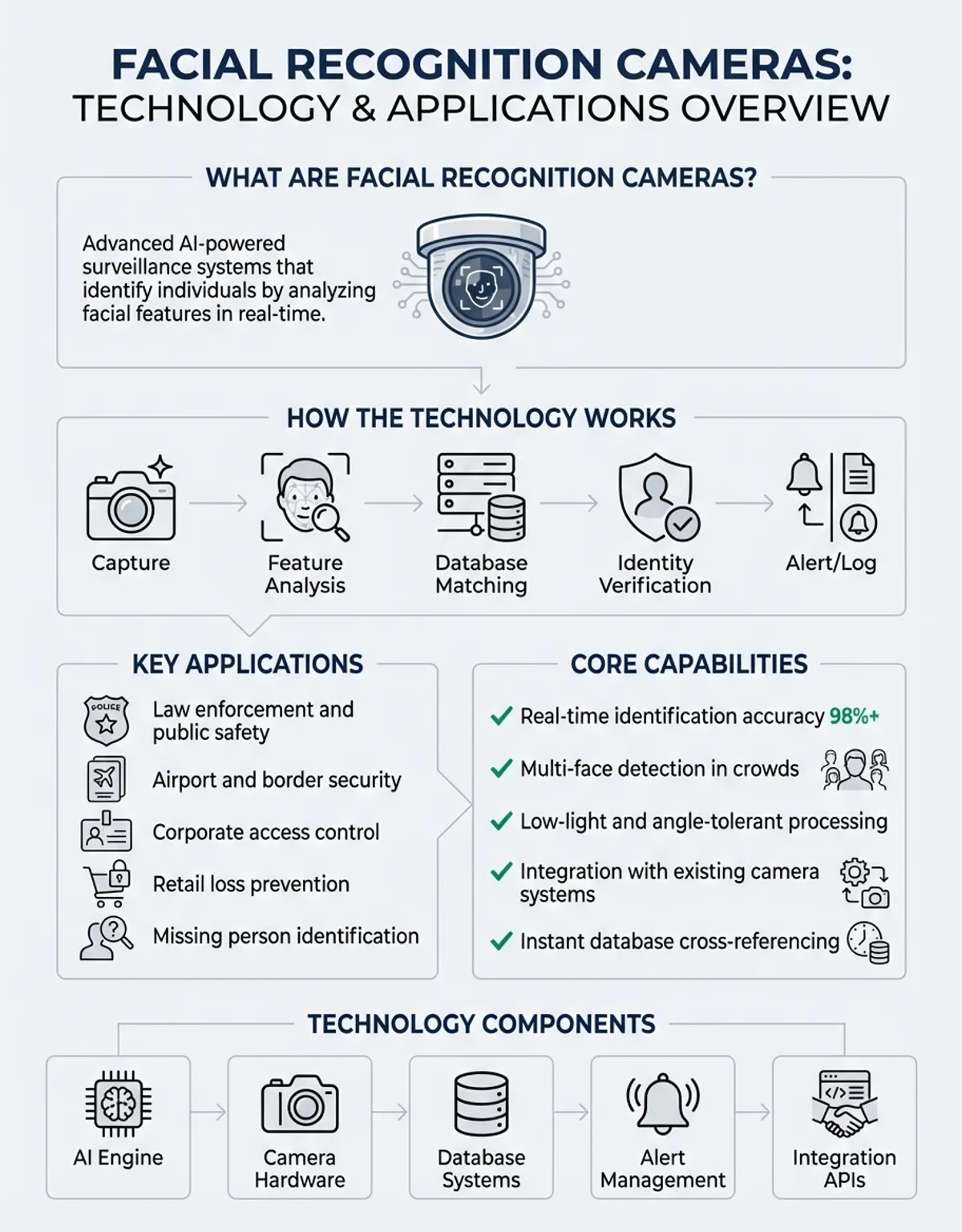
Facial recognition cameras represent a significant advancement in modern security technology, combining artificial intelligence with traditional surveillance systems to identify and verify individuals in real-time. These advanced security cameras have transformed how businesses, law enforcement, and homeowners approach security monitoring and access control. As facial recognition systems continues to evolve, understanding how these solutions work, their applications, and their implications becomes increasingly important for anyone considering implementing this security solution. For a comprehensive overview of facial recognition, explore our facial recognition technology guide.
Understanding Security in Facial Recognition Cameras
Security represents the primary purpose of facial recognition cameras, making these systems essential components of comprehensive security infrastructure. Modern facial recognition security solutions provide real-time identification capabilities that traditional security cameras cannot match. When integrated into existing security networks, these cameras create multiple layers of protection by identifying authorized personnel, detecting intruders, and maintaining detailed security logs of all facial recognition events.
The security advantages of facial cameras extend beyond simple monitoring. These systems actively analyze each face captured by the camera, comparing facial features against stored templates in milliseconds. High-quality security cameras with facial recognition capabilities can identify individuals even in challenging lighting conditions, at various angles, and from different distances. The technology processes facial data through sophisticated algorithms that map distinctive features, creating a unique biometric signature for each face.
Commercial security applications benefit significantly from facial recognition technology. Businesses implement these security systems to control building access, track employee attendance, and enhance overall facility security. The cameras integrate with existing security infrastructure, including alarm solutions, door locks, and monitoring software, creating a unified security ecosystem. Many modern security installations combine facial cameras with additional sensors and security measures to provide comprehensive protection.
Data storage and security management play crucial roles in facial recognition security systems. These solutions require robust storage solutions to maintain facial recognition databases, security footage, and access logs. Cloud-based storage options offer scalability and remote access, while local storage provides enhanced security and faster processing speeds. Proper security protocols protect this sensitive facial data from unauthorized access and ensure compliance with privacy regulations.
Understanding Clearview AI in Facial cameras
Clearview AI has become one of the most controversial players in the facial recognition technology space, developing powerful software that law enforcement agencies utilize to identify individuals from images. Unlike traditional facial cameras that compare faces against limited internal databases, Clearview AI's solutions searches billions of images scraped from public internet sources, including social media platforms and websites. This approach has sparked intense debates about privacy, consent, and the appropriate uses of facial recognition systems. (Source: https://www.clearview.ai/)
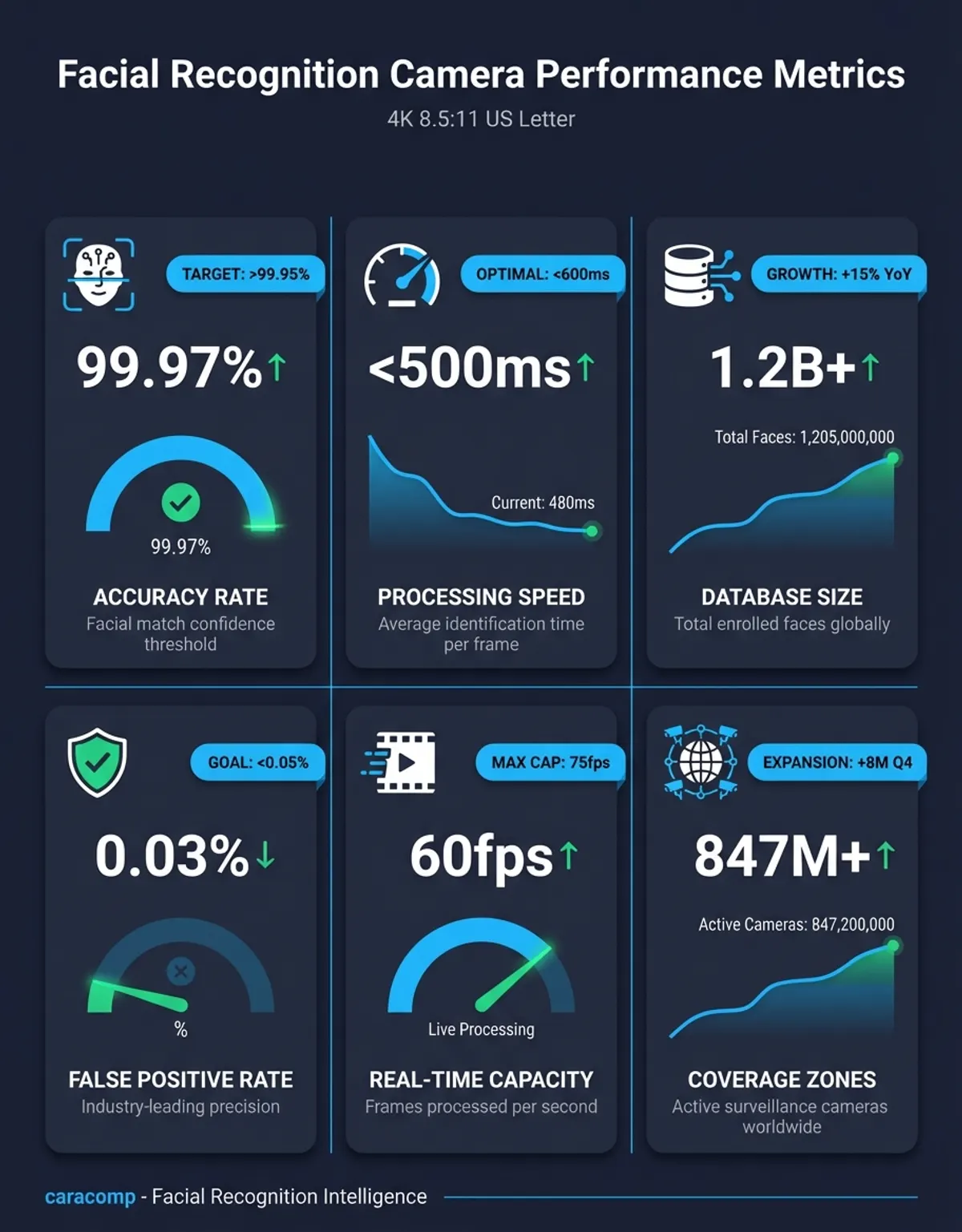
Law enforcement adoption of Clearview AI demonstrates both the potential and the concerns surrounding advanced facial recognition systems. Police departments and federal agencies have used the technology to investigate crimes, identify suspects, and locate missing persons. The system's vast database allows investigators to potentially identify individuals who might not exist in traditional law enforcement databases. However, this capability raises significant questions about surveillance, civil liberties, and the right to privacy in public spaces.
The regulatory landscape surrounding technologies like Clearview AI continues to evolve as governments and privacy advocates push for stronger controls on facial recognition deployment. Several jurisdictions have implemented restrictions on law enforcement use of facial recognition software, while others have banned the entirely from public spaces. These regulatory efforts reflect growing concerns about the balance between security benefits and individual privacy rights in an increasingly surveilled society.
Understanding Face Detection in Facial cameras
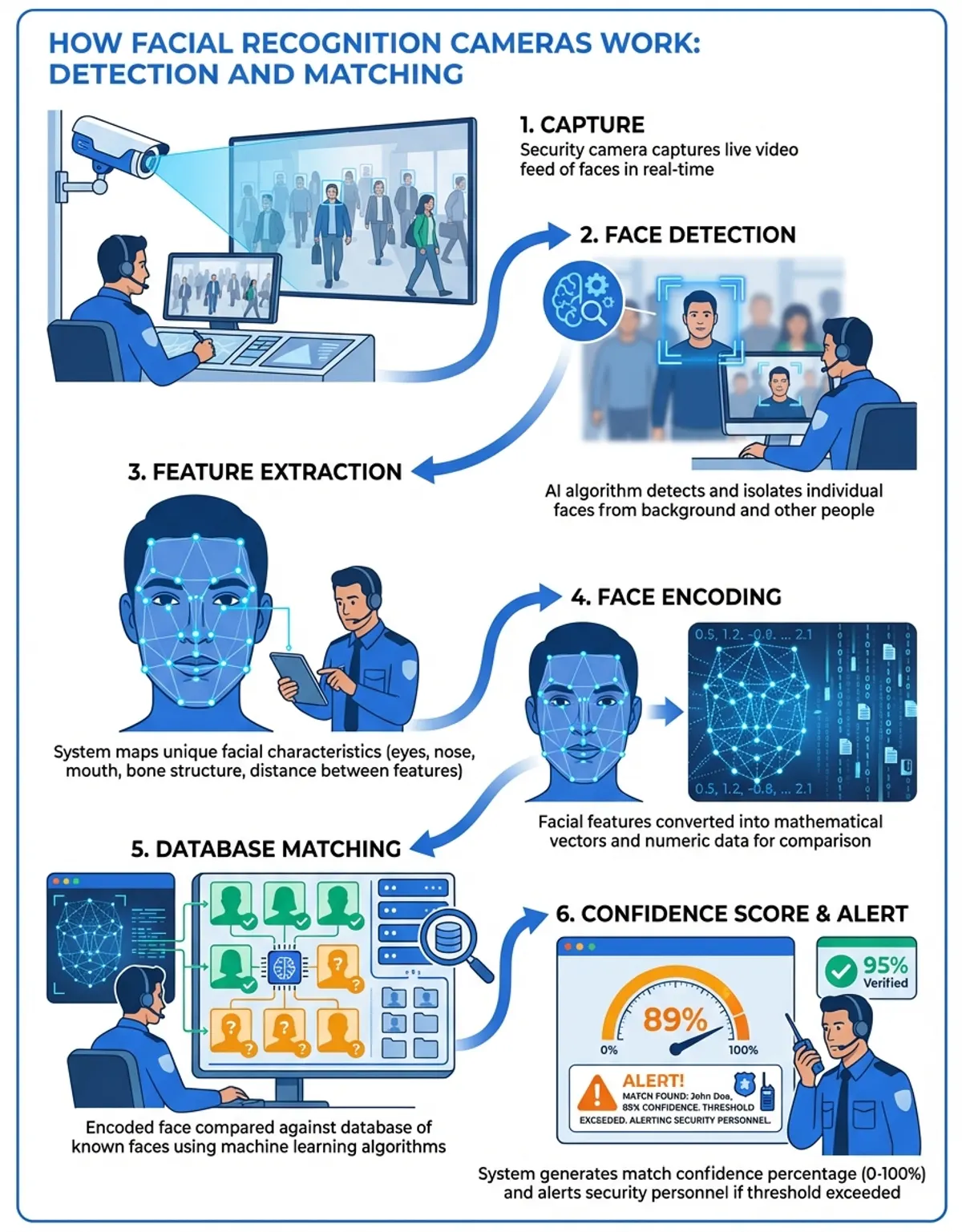
Face detection forms the foundational capability that enables facial cameras to function effectively. The system identifies the presence and location of faces within the camera's field of view, distinguishing facial features from other objects and background elements. Modern face detection algorithms can identify multiple faces simultaneously, tracking each face as individuals move through the monitored space. This detection capability operates continuously, scanning video feeds in real-time to identify when faces enter the camera's coverage area.
The technical process of face detection involves analyzing video frames to identify patterns that match human facial structures. Advanced algorithms examine features such as eye placement, nose shape, mouth position, and overall face geometry. Once a face is detected, the system isolates it from the surrounding image, normalizes the facial orientation and lighting, and prepares the facial data for the recognition phase. This preprocessing ensures accurate identification regardless of the individual's position relative to the camera.
Face recognition accuracy depends heavily on the quality of initial individual detection. High-resolution cameras capture greater facial detail, enabling more precise feature mapping and improved recognition rates. Modern security cameras designed specifically for facial recognition typically offer higher resolution sensors, specialized lenses, and optimized image processing to maximize facial detection performance. Environmental factors including lighting, camera angle, and subject distance all influence detection accuracy and subsequent recognition success.
Machine learning advancements have dramatically improved face detection capabilities in recent years. Neural networks trained on millions of facial images can now detect faces under extremely challenging conditions, including partial occlusion, unusual angles, and poor lighting. These improvements have made facial cameras practical for a wider range of security applications, from outdoor installations exposed to variable weather conditions to indoor environments with complex lighting scenarios.
The system identifies the presence and location of faces within the camera's field of view, distinguishing facial features from other objects and background elements.
Understanding Home Security with Facial cameras
Home security systems increasingly incorporate facial cameras to provide smarter, more responsive protection for residential properties. These advanced home security cameras can distinguish between family members, known visitors, and unknown individuals, sending targeted alerts based on who approaches the property. Homeowners receive notifications when unfamiliar faces appear at their doorsteps, while family members can enter without triggering security alarms. This intelligent differentiation reduces false alarms and provides more actionable security information.
Installing facial cameras as part of a home security system offers several practical advantages beyond traditional surveillance. The technology enables automated access control, allowing homeowners to grant temporary access to service providers, delivery personnel, or guests without physical keys or codes. Some home security integrate facial facial recognition with smart locks, automatically unlocking doors when authorized faces are detected. This seamless access control combines convenience with enhanced security.
Privacy considerations become particularly important when implementing facial recognition in home security contexts. Homeowners must balance their security needs with respect for neighbors' privacy and compliance with local regulations. Many jurisdictions require notification signs when surveillance cameras capture public areas, and some restrict the use of facial recognition cameras in residential settings. Responsible home security deployment includes positioning cameras to minimize recording of neighboring properties and public sidewalks.
The cost of facial recognition-enabled home security cameras has decreased significantly as the technology has matured. Consumers can now choose from various options ranging from affordable doorbell cameras with basic face recognition to comprehensive whole-home security installations with advanced facial recognition software. Cloud-based platforms offer affordable entry points with monthly subscription fees, while standalone solutions provide one-time purchase options without ongoing costs. Many home security providers now include facial recognition as a standard feature rather than a premium add-on.
For homeowners and businesses seeking a reliable facial comparison solution, CaraComp offers advanced face similarity analysis technology that delivers professional-grade results without the complexity. While facial recognition cameras handle real-time surveillance, CaraComp excels at comparing specific faces with precision - whether you're verifying identities, organizing photo collections, or analyzing facial similarities for security purposes. The platform processes images securely and provides instant, detailed comparison scores, making it an excellent complement to any security camera system.
Understanding Security Cameras with Facial Recognition
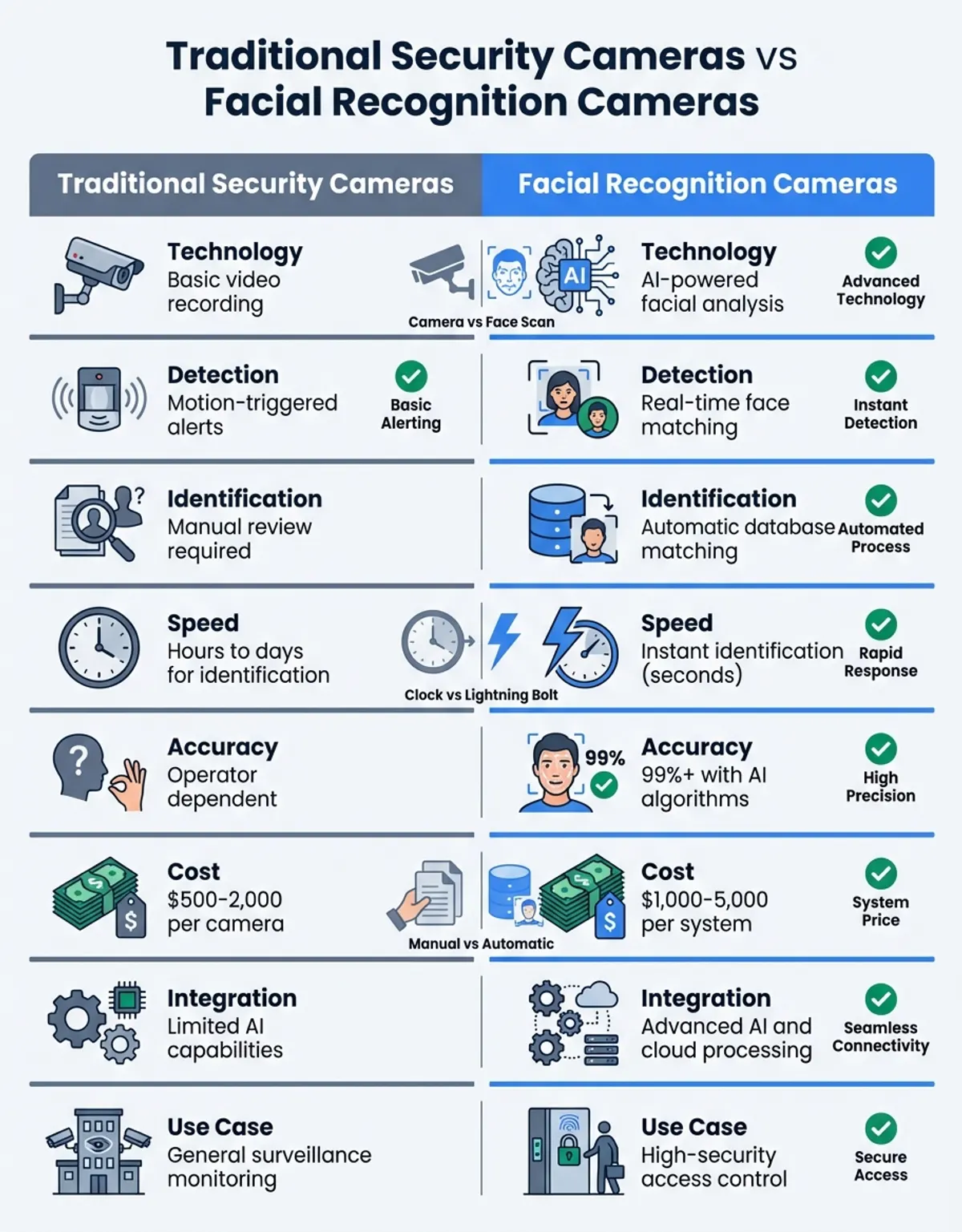
Security cameras equipped with facial recognition capabilities represent the cutting edge of surveillance technology, combining high-resolution imaging with sophisticated artificial intelligence. These specialized security cameras differ from standard surveillance cameras through their ability to analyze and identify faces automatically. The technology transforms passive recording devices into active security systems that can make intelligent decisions based on who appears in their field of view.
Hardware specifications significantly impact the performance of facial recognition security cameras. Professional-grade cameras typically feature high-resolution sensors (4K or better), wide dynamic range imaging to handle varying light conditions, and specialized processors dedicated to running facial recognition algorithms. Some security cameras perform recognition processing locally on the camera itself, while others transmit video to network video recorders or cloud servers for analysis. Local processing reduces network bandwidth requirements and enables faster recognition responses. You may also find our guide on face recognition camera systems helpful for understanding hardware requirements.
Integration capabilities determine how effectively facial recognition security cameras can function within larger security ecosystems. Modern security cameras support various communication protocols, allowing them to interface with alarm systems, access control platforms, and security management software. API connectivity enables these cameras to trigger automated responses such as locking doors, activating lighting, or alerting security personnel when specific faces are detected. This integration transforms individual security cameras into components of intelligent security networks.
Maintenance and updating requirements for facial recognition security cameras extend beyond traditional security camera needs. The software driving facial recognition capabilities requires periodic updates to improve accuracy, add features, and address security vulnerabilities. Organizations deploying these security cameras must plan for ongoing software maintenance, database management, and system optimization. Regular calibration ensures the cameras maintain optimal recognition accuracy as environmental conditions change or hardware components age.
Understanding Security Camera Installation and Configuration
Proper installation of a facial recognition security camera system requires careful planning to maximize recognition accuracy and surveillance coverage. Camera positioning significantly affects face capture quality, with optimal installations placing protection cameras at facial height whenever possible. The camera angle should minimize extreme perspectives that distort facial features and complicate recognition. Lighting considerations prove equally important, as consistent, diffused lighting produces superior results compared to harsh backlighting or deep shadows that obscure facial details.
Network infrastructure must support the bandwidth demands of facial recognition security camera . High-resolution video feeds combined with real-time processing create substantial data flows that require robust networking equipment. Power over Ethernet (PoE) installations simplify cabling by delivering both power and data through single network connections. Redundant network paths and backup power solutions ensure continuous security camera operation even during infrastructure failures.
Configuration of facial recognition parameters affects system performance and usability. Security camera systems allow administrators to adjust recognition sensitivity, determining how closely a captured face must match database templates before confirming an identity. Higher sensitivity settings reduce false positives but may miss legitimate matches, while lower thresholds increase detection rates at the cost of more false identifications. Finding the optimal balance requires testing and adjustment based on specific protection requirements and environmental conditions.
Training the facial recognition system involves populating databases with authorized user profiles. Quality enrollment images capture faces under various conditions, improving recognition accuracy across different scenarios. Many security camera systems support multiple images per individual, accounting for changes in appearance such as eyewear, facial hair, or aging. Regular database updates maintain system accuracy as authorized users' appearances evolve over time.
Camera positioning significantly affects face capture quality, with optimal installations placing protection cameras at facial height whenever possible.
Understanding Face Recognition Algorithms and
Face recognition technology relies on sophisticated algorithms that map and analyze facial features to create unique biometric signatures. Modern individual recognition systems employ deep learning neural networks trained on millions of facial images to identify distinctive characteristics that differentiate individuals. These algorithms extract hundreds of data points from each face, measuring distances between features, analyzing facial geometry, and identifying unique patterns invisible to human observers.
The evolution of face recognition technology has progressed through several generations of algorithms, each offering improved accuracy and speed. Early facial recognition systems relied on relatively simple geometric measurements and struggled with variations in lighting, angle, or facial expression. Contemporary solutions use convolutional neural networks that can recognize faces regardless of orientation, expression, or partial obstruction. This technology now achieves accuracy rates exceeding 99% under optimal conditions.
Processing speed represents a critical performance metric for face recognition systems deployed in security applications. Real-time identification requires algorithms capable of analyzing faces within milliseconds, enabling immediate surveillance responses. Modern facial recognition software optimized for protection camera deployment can process dozens of faces simultaneously, tracking multiple individuals as they move through monitored spaces. This performance enables practical deployment in high-traffic environments such as airports, stadiums, or commercial facilities.
Ongoing recognition technology advancement focuses on addressing remaining challenges including recognition across ethnic groups, handling aging effects, and identifying faces obscured by masks or accessories. Researchers continuously refine algorithms to minimize bias and ensure consistent performance across diverse populations. The technology increasingly incorporates additional biometric factors beyond facial features, combining facial facial recognition with gait analysis, iris scanning, or behavioral patterns to enhance security and accuracy.
Understanding Recognition Security and Privacy Considerations
Recognition security encompasses both the use of facial recognition for security purposes and the surveillance measures required to protect facial recognition systems themselves. Organizations deploying facial cameras must implement robust cybersecurity measures to prevent unauthorized access to facial databases, recognition software, and captured video. Encryption protects data both in transit and at storage, while access controls limit who can view or modify facial recognition databases. Regular security audits identify vulnerabilities and ensure compliance with data protection standards.
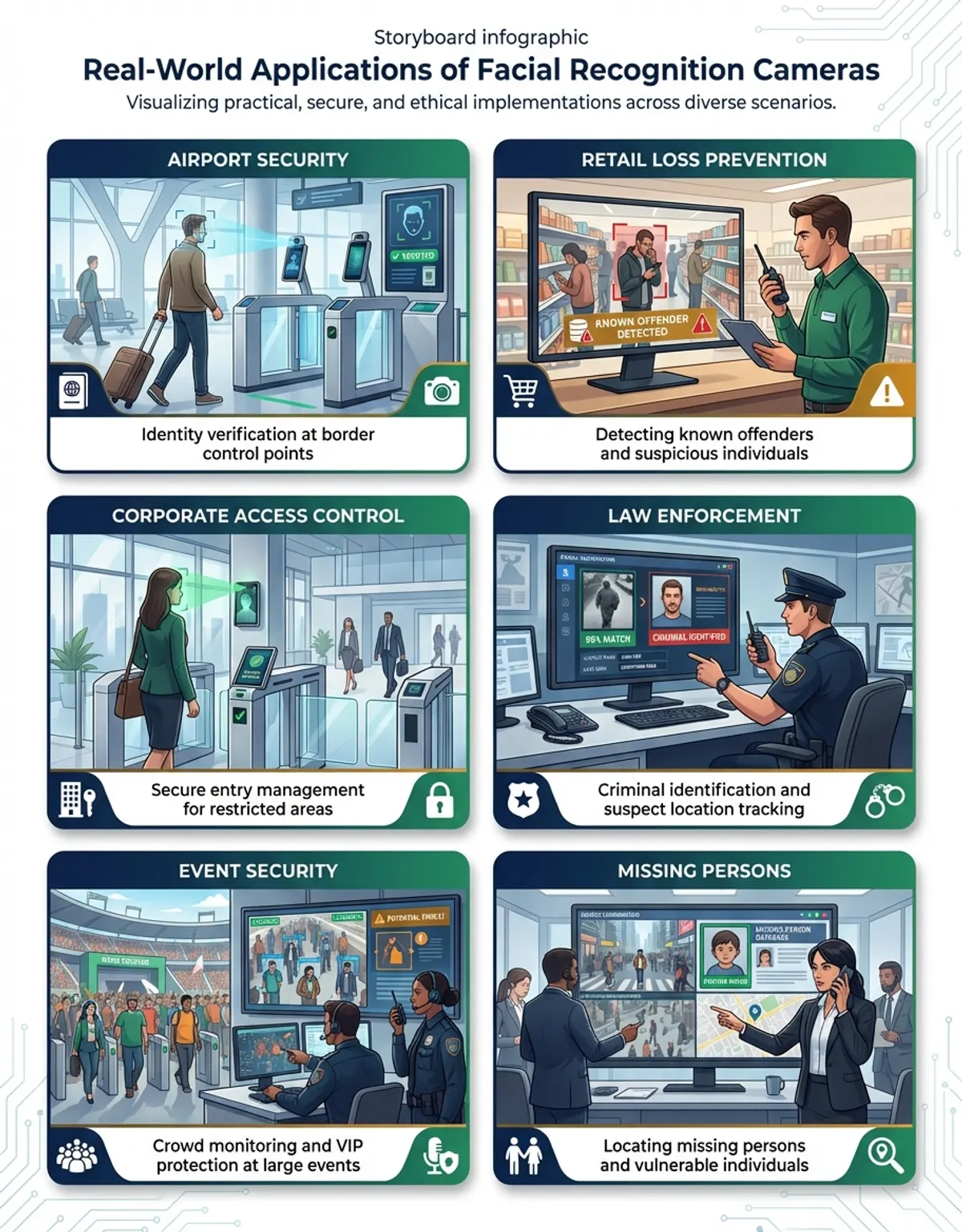
Privacy concerns surrounding facial recognition systems have prompted increased scrutiny from regulators, advocacy groups, and the public. The ability to identify and track individuals without their explicit consent raises fundamental questions about surveillance, autonomy, and civil liberties. Many jurisdictions now require organizations to provide clear notice when facial recognition cameras are in use, obtain consent when legally required, and limit retention of facial recognition data. Transparency about how facial data is collected, stored, and used helps build public trust. For deeper insights into privacy and regulation, see our guide on facial recognition ethics.
Data governance frameworks establish rules for managing facial recognition information throughout its lifecycle. These frameworks specify who can access facial databases, how long data should be retained, and under what circumstances information can be shared with third parties. Comprehensive data governance addresses both legal compliance requirements and ethical considerations, ensuring facial recognition system deployment aligns with organizational values and societal expectations. Regular reviews update policies as technology capabilities and legal requirements evolve.
Recognition systems must also protect against spoofing attempts where attackers try to fool facial recognition using photographs, videos, or masks. Modern solutions incorporate liveness detection that verifies the presence of a live person rather than a static image. These anti-spoofing measures analyze subtle characteristics such as skin texture, natural facial movements, or depth information to distinguish real faces from fraudulent presentation attacks. Multi-factor authentication combining facial recognition with other credentials provides additional protection layers.
Comparing Facial Recognition Camera
Comparing Facial Recognition Camera Systems
| Feature | Enterprise Systems | Home Security | Law Enforcement |
|---|---|---|---|
| Database Size | 10,000 - 100,000+ faces | 10 - 100 faces | Millions of faces |
| Recognition Speed | < 1 second | 1 - 3 seconds | < 0.5 seconds |
| Camera Resolution | 4K - 8K | 1080p - 4K | 4K+ |
| Storage Requirements | Local + Cloud (TB scale) | Cloud (GB scale) | Dedicated servers (PB scale) |
| Cost Range | $10,000 - $100,000+ | $200 - $2,000 | $50,000 - $500,000+ |
| Integration Options | Full enterprise integration | Smart home platforms | Criminal databases, investigation tools |
Frequently Asked Questions
How do cameras work with facial recognition technology?
Cameras equipped with facial recognition capabilities capture high-resolution images or video of faces within their field of view. The camera system first detects faces using computer vision algorithms, then extracts facial features and converts them into mathematical representations. These representations are compared against stored templates in a database to identify matches. The entire process occurs in real-time, typically completing within seconds. The accuracy has improved dramatically in recent years. Modern facial cameras use specialized image sensors, powerful processors, and optimized algorithms to achieve accurate recognition even under challenging conditions such as poor lighting or oblique angles.
How does facial recognition work with camera systems?
Facial recognition integrates with camera by adding intelligent analysis capabilities to traditional video surveillance. When a surveillance camera captures video footage, facial recognition analyzes each frame to detect faces. The system measures distinctive facial features including eye spacing, nose shape, and jawline structure, creating a unique biometric template. This template is compared against a database of known individuals to determine identity. protection cameras with facial recognition can trigger automated responses such as granting access, sending alerts, or recording specific interactions based on who is identified.
How does a facial recognition camera differ from a standard surveillance camera?
A facial recognition camera includes specialized hardware and components not found in standard cameras. While basic surveillance cameras simply record video for later review, facial cameras actively analyze images to identify individuals in real-time. These cameras typically feature higher resolution sensors to capture fine facial details, more powerful processors to run recognition algorithms, and enhanced low-light performance for consistent operation. The software component maintains databases of authorized faces, performs real-time comparisons, and can integrate with access control to automate security responses based on identification results.
What are the main applications of facial cameras?
Facial cameras serve diverse applications across multiple sectors. In commercial environments, businesses use these cameras for employee time tracking, access control, and customer analytics. Law enforcement agencies deploy facial recognition to identify suspects, locate missing persons, and investigate crimes. Home security applications include smart doorbells that recognize family members and alert homeowners to unknown visitors. Additional applications span airport security, banking and financial services, retail loss prevention, and healthcare patient management. Each application leverages the camera's ability to identify individuals quickly and accurately without requiring physical credentials or manual verification.
How can facial recognition camera systems be secured against privacy concerns?
Securing facial recognition camera against privacy concerns requires implementing comprehensive technical and policy measures. Organizations should encrypt all facial data both in storage and during transmission, restrict database access to authorized personnel only, and implement audit trails that log all system interactions. Clear signage should inform individuals when facial recognition is in use, and data retention policies should minimize how long facial information is stored. Regular security assessments identify vulnerabilities, while privacy impact assessments ensure deployment aligns with legal requirements and ethical standards. Transparency about data usage, providing opt-out mechanisms where appropriate, and appointing privacy officers to oversee facial recognition deployments demonstrate commitment to responsible system use.
What factors affect facial recognition camera accuracy?
Multiple factors influence the accuracy of facial cameras. Image quality represents the most critical factor, with higher resolution cameras capturing more facial detail for precise identification. Lighting conditions significantly impact recognition performance, as consistent, diffused illumination produces superior results compared to harsh shadows or extreme backlighting. The angle between the camera and subject affects accuracy, with frontal views providing optimal recognition compared to profile shots. Distance from the camera influences captured detail, with most performing best when subjects are within 10-20 feet. Additional factors include facial expression changes, aging, accessories like glasses or hats, and image processing algorithms used by the recognition system. Environmental conditions such as weather, camera vibration, or lens contamination can also degrade accuracy in real-world deployments.
How does integrate with facial cameras?
Security software servess as the central management platform for facial recognition camera , providing unified interfaces for configuration, operation, and analysis. The software receives video streams from multiple cameras simultaneously, coordinates facial recognition processing, and presents results through dashboards that security personnel monitor. Advanced software applications include features such as real-time alerts when specific individuals are identified, historical search capabilities to locate when particular faces appeared in footage, and analytics tools that generate reports on facility usage patterns. Integration with other tracking systems enables security programs to correlate facial recognition events with access control logs, alarm activations, and incident reports, providing comprehensive surveillance intelligence. Cloud-based surveillance software allows remote access from any location, while on-premises solutions offer enhanced protection and reduced latency for critical applications.
Frequently Asked Questions
Cameras equipped with facial recognition capabilities capture high-resolution images or video of faces within their field of view. The camera system first detects faces using computer vision algorithms, then extracts facial features and converts them into mathematical representations. These representations are compared against stored templates in a database to identify matches. The entire process occurs in real-time, typically completing within seconds. The accuracy has improved dramatically in recent years. Modern facial cameras use specialized image sensors, powerful processors, and optimized algorithms to achieve accurate recognition even under challenging conditions such as poor lighting or oblique angles.
Facial recognition integrates with camera by adding intelligent analysis capabilities to traditional video surveillance. When a surveillance camera captures video footage, facial recognition analyzes each frame to detect faces. The system measures distinctive facial features including eye spacing, nose shape, and jawline structure, creating a unique biometric template. This template is compared against a database of known individuals to determine identity. protection cameras with facial recognition can trigger automated responses such as granting access, sending alerts, or recording specific interactions based on who is identified.
A facial recognition camera includes specialized hardware and components not found in standard cameras. While basic surveillance cameras simply record video for later review, facial cameras actively analyze images to identify individuals in real-time. These cameras typically feature higher resolution sensors to capture fine facial details, more powerful processors to run recognition algorithms, and enhanced low-light performance for consistent operation. The software component maintains databases of authorized faces, performs real-time comparisons, and can integrate with access control to automate security responses based on identification results.