
Face Comparison Online: AI Recognition and Photo Verification Tools
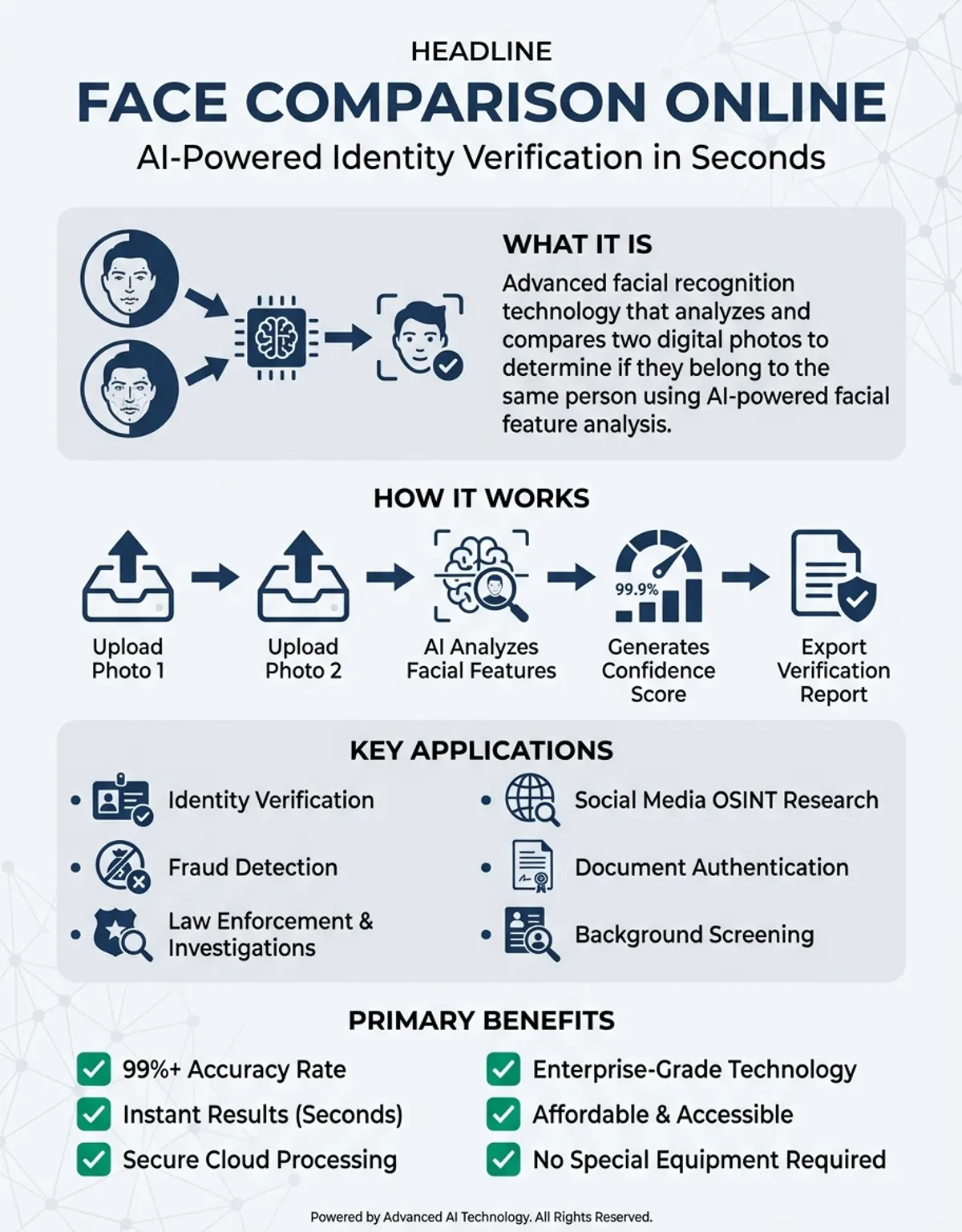
Face comparison online technology has revolutionized how we analyze and verify identity through digital photos. Modern recognition systems can instantly determine if two faces belong to the same person by analyzing facial features and data with remarkable accuracy. Whether you're exploring how similar two faces are, verifying identity for security purposes, or simply comparing your face with even your favorite celebrities, online face comparison tools make these tasks accessible to anyone with an internet connection.
The growing demand for face comparison online stems from numerous practical applications. Security verification systems rely on detection algorithms to confirm identity during authentication processes. Social applications let users compare face similarity online to discover lookalikes or analyze resemblance with historical figures and your ancestor's faces. Professional photo analysis tools help photographers and researchers match facial features across multiple images with precision that would be impossible through manual comparison alone.
Understanding Recognition in Face Comparison Online
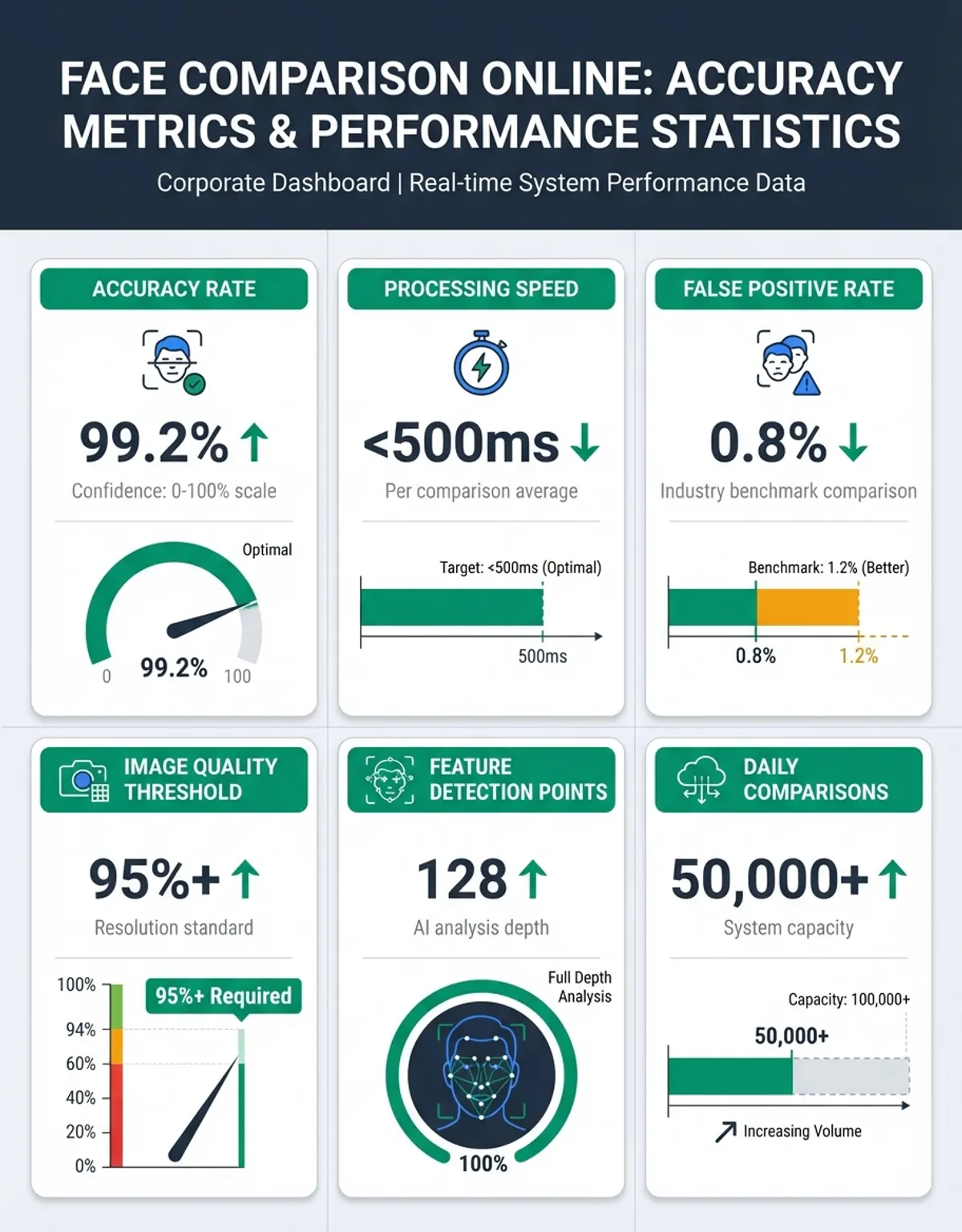
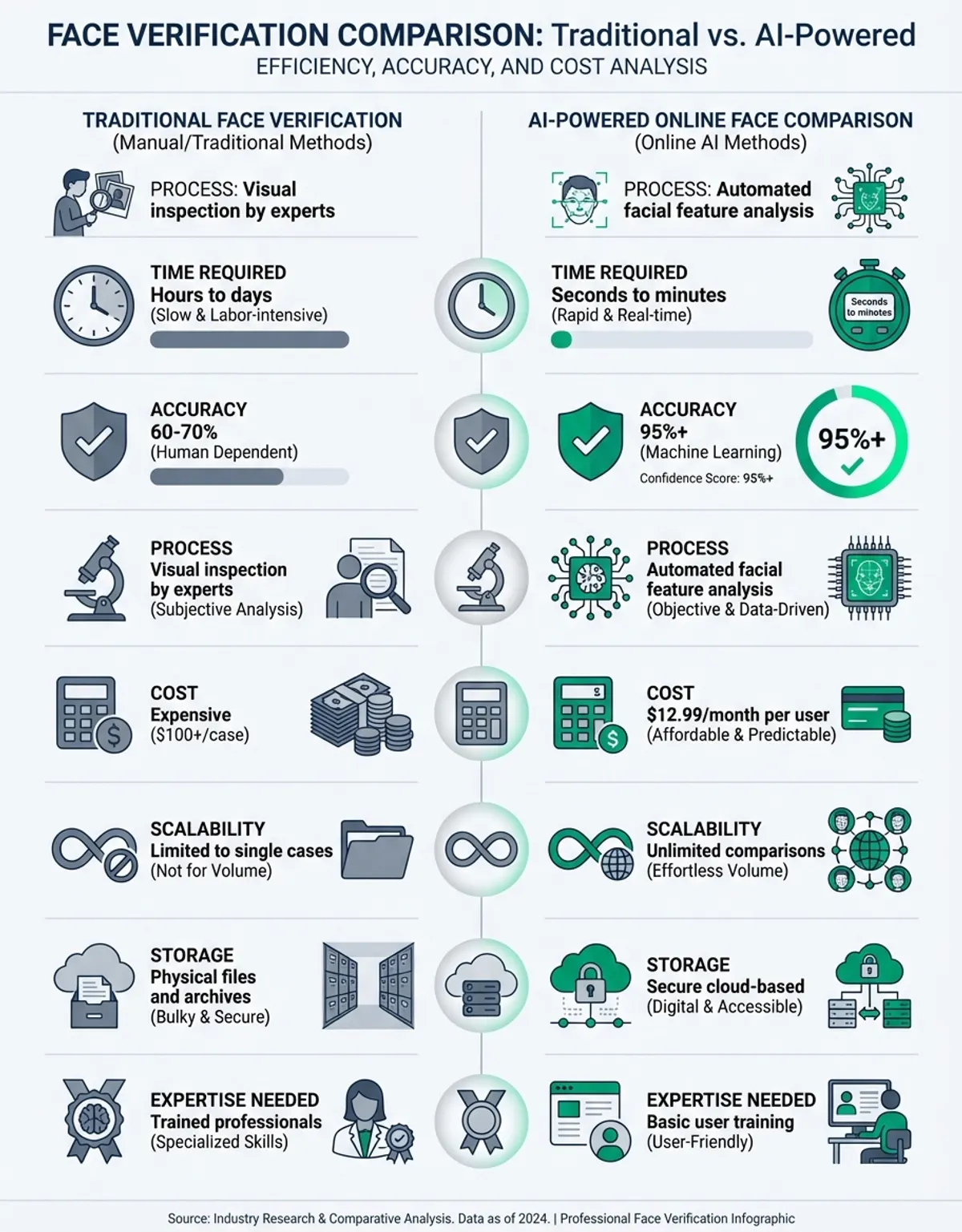
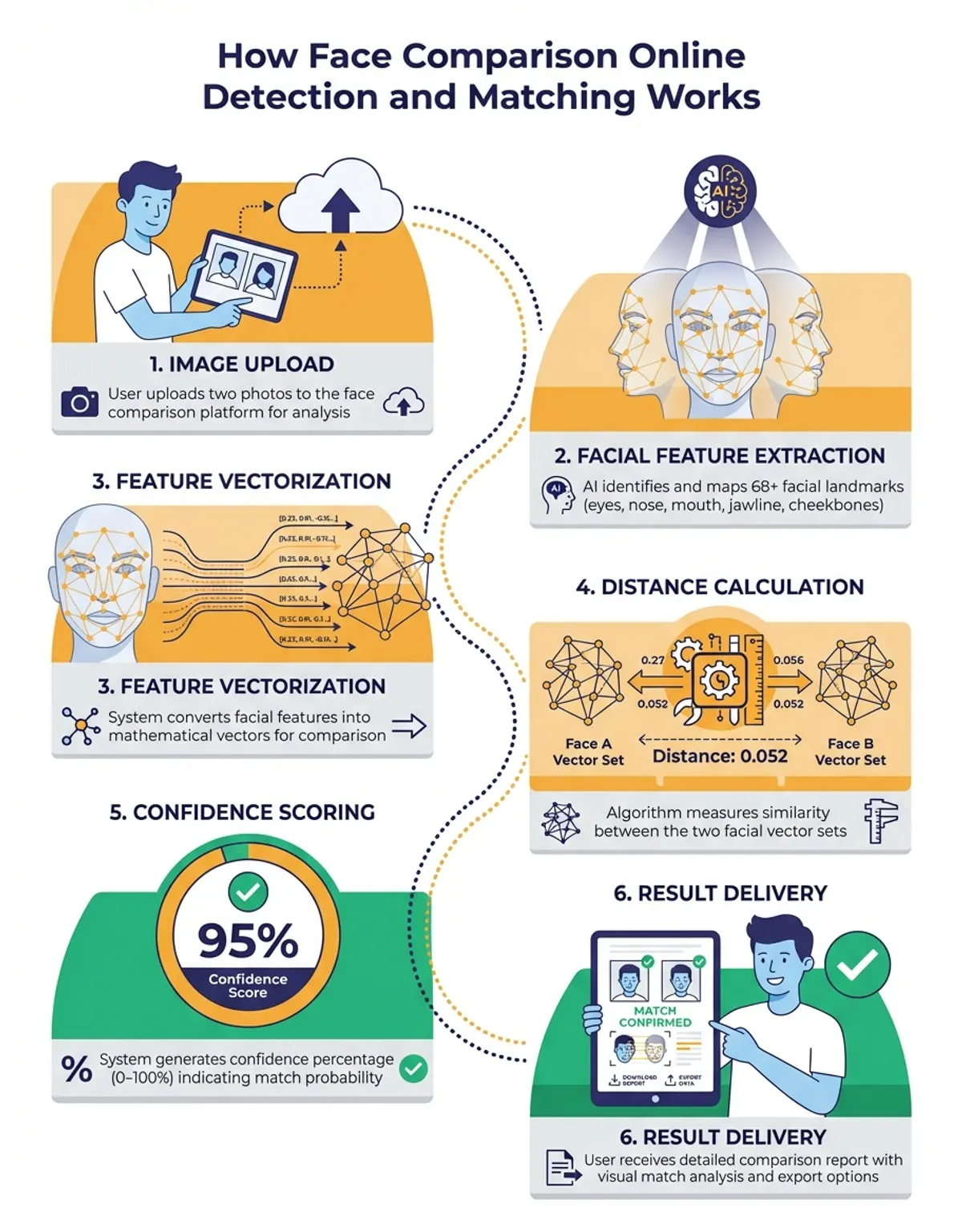
Recognition technology forms the foundation of modern face comparison online systems. Advanced algorithms analyze distinctive facial characteristics such as the distance between eyes, nose shape, jawline contour, and numerous other biometric markers. These systems process each photo through multiple layers of analysis, creating detailed facial maps that enable accurate comparison between photos taken under different lighting conditions or from various angles.
The accuracy of facial matching depends heavily on photo quality and the sophistication of the underlying algorithms. Modern systems employ deep learning models trained on millions of facial photos, allowing them to identify subtle similarities and differences that human observers might miss. When you upload photos for comparison, the software examines hundreds of facial data points, computing similarity scores that indicate the likelihood of two faces belonging to the same individual.
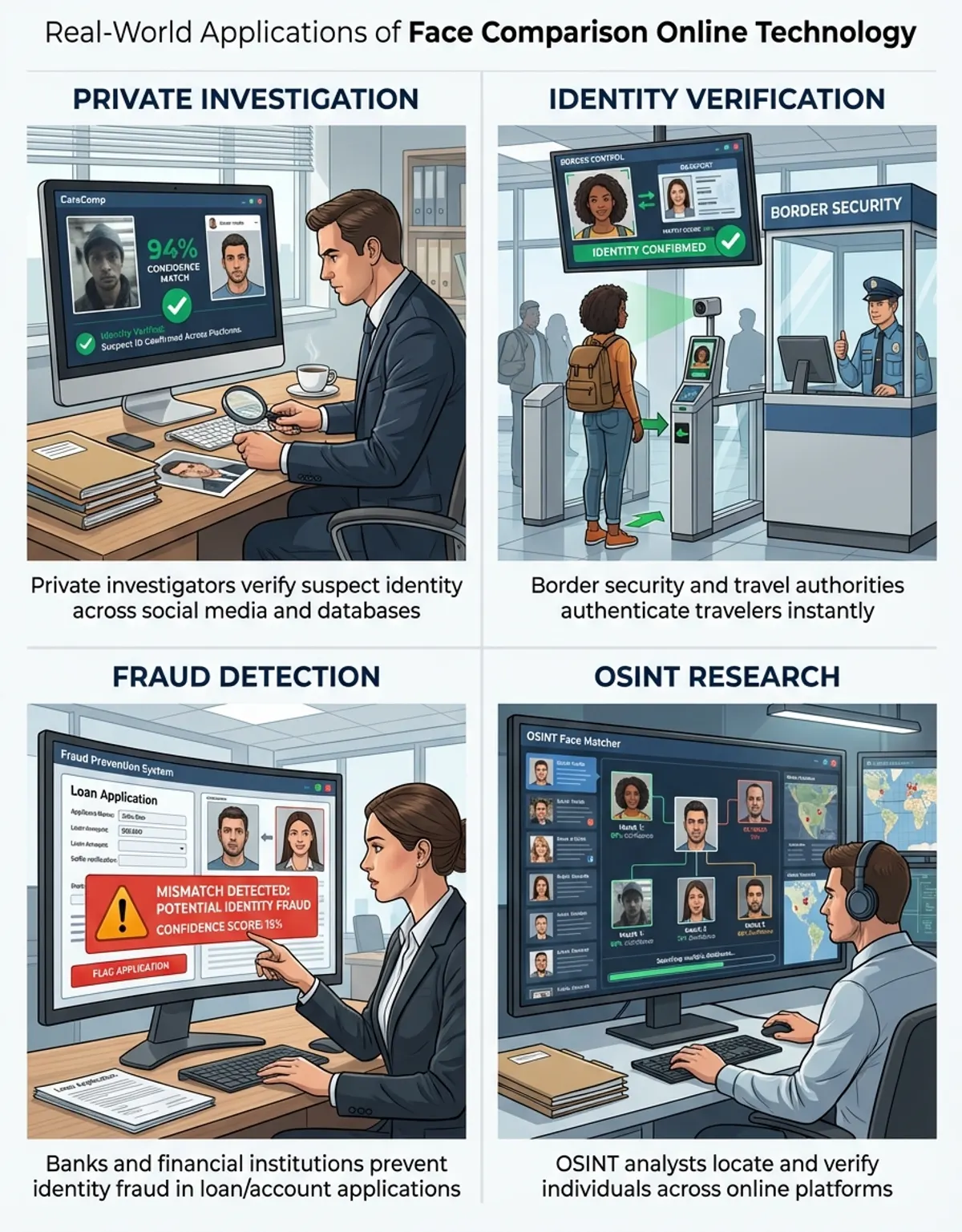
Real-time capabilities have transformed verification processes across industries. Banks use this technology to verify customer identity during online transactions, while social media platforms employ it to suggest tags and organize libraries. Law enforcement agencies leverage these systems for suspect identification, and border control operations depend on this technology for passport verification. The versatility of facial matching in face comparison online continues to expand as algorithms become more sophisticated and processing speeds increase.
Privacy considerations remain paramount when implementing this technology. Responsible face comparison online platforms ensure that uploaded photos are processed securely and that facial data is handled according to strict privacy standards. Users should verify that any service they use employs encryption, provides clear data retention policies, and offers controls over how their facial information is stored and utilized.
Understanding Image in Face Comparison Online
Photo quality directly impacts the effectiveness of face comparison online tools. High-resolution photos provide the detailed visual information necessary for accurate analysis, while low-quality uploads may produce unreliable results. Modern comparison platforms typically require clear photos that show facial features without significant obstruction from accessories, shadows, or extreme angles that could interfere with algorithms.
The preprocessing stage plays a crucial role in face comparison accuracy. Before analysis begins, sophisticated systems automatically adjust for variations in lighting, rotation, and scale. These preprocessing algorithms normalize characteristics to ensure fair comparison between photos taken under vastly different conditions. Some advanced platforms can even work with partial facial captures, reconstructing missing information through predictive modeling to facilitate comparison.
Format and file size considerations affect both upload speed and processing efficiency. Most face comparison online services accept common formats like JPEG, PNG, and sometimes RAW files. While larger files contain more detail, modern compression techniques allow for excellent comparison results even with moderately compressed uploads. The key is maintaining sufficient resolution to preserve facial feature clarity throughout the verification process.
Multiple photo comparison capabilities extend the utility of face comparison tools beyond simple two-photo analysis. Advanced platforms let users upload entire galleries, automatically detecting faces within each upload and performing batch comparisons. This functionality proves invaluable for organizing family photo collections, identifying individuals across historical archives, or conducting comprehensive identity verification across multiple documentation photos.
Understanding metadata enhances the verification process. Professional comparison tools can extract EXIF data from photos, providing context about when and how they were captured. This temporal and technical information helps users assess whether comparison results make logical sense given the circumstances under which photos were taken, adding an additional layer of verification beyond pure facial analysis.
Understanding Detection in Face Comparison Online
Detection algorithms serve as the first critical step in face comparison online workflows. Before any comparison can occur, the system must locate and isolate faces within uploaded photos. Modern technology employs sophisticated computer vision techniques that can identify faces regardless of orientation, partial obstruction, or varying distances from the camera. This capability ensures that comparison algorithms focus exclusively on relevant facial regions rather than processing entire backgrounds.
The accuracy of facial identification has improved dramatically through machine learning advancements. Contemporary systems can identify faces in challenging conditions including low light environments, crowded scenes with multiple individuals, and photos where subjects are positioned at extreme angles. These improvements have made face comparison online tools more reliable and accessible for everyday users who may not have professional photography equipment or expertise.
Multi-face detection expands the practical applications of comparison technology. When analyzing group photos, advanced algorithms can isolate each individual face, enabling users to compare specific people across different photos. This capability proves particularly useful for organizing photo libraries, identifying individuals in historical family pictures, or conducting security verification in environments where multiple people appear in surveillance footage.
Confidence scores provide transparency about algorithm certainty. Quality face comparison online platforms display confidence metrics indicating how certain the system is about identified facial regions. High confidence scores suggest clear, well-defined faces that will produce reliable comparison results, while lower scores may indicate photo quality issues or challenging scenarios that could affect verification accuracy.
Edge detection techniques contribute to more precise facial analysis. By identifying sharp contrasts and boundaries within photos, algorithms can better define facial features like eyebrows, nose contours, and lip lines. This enhanced precision translates directly to improved comparison accuracy, particularly when analyzing subtle differences between similar-looking individuals.
Real-time feedback helps users optimize their upload choices. Interactive face comparison platforms often provide immediate visual feedback showing identified facial regions, allowing users to confirm that the system has properly located the faces they intend to compare. This user-friendly approach reduces errors and ensures that comparison results reflect accurate identification of intended subjects.
Understanding Images in Face Comparison Online
Working with multiple photos simultaneously unlocks powerful comparison capabilities. Batch processing allows users to upload numerous photos at once, with the system automatically detecting faces across all uploads and performing comprehensive comparison analysis. This efficiency proves invaluable for applications ranging from family tree research to large-scale identity verification projects where hundreds or thousands of photos require analysis.
Quality consistency across multiple photos affects comparison reliability. When comparing faces from photos taken decades apart or under vastly different conditions, variations in photography technology, lighting, and resolution can introduce challenges. Advanced comparison systems account for these inconsistencies through normalization algorithms that adjust for technological and environmental differences, ensuring fair comparison across diverse sources. You may also find our guide on face comparison software helpful for comparing desktop tools.
The relationship between quantity and verification confidence is significant. While a single comparison between two photos provides useful similarity information, analyzing multiple uploads of each subject dramatically increases verification accuracy. By examining facial features across various angles, expressions, and timeframes, comparison algorithms can build more comprehensive facial models that produce more reliable match assessments.
Organization features enhance the user experience when working with extensive photo collections. Modern face comparison platforms often include gallery management tools that help users categorize, tag, and retrieve photos efficiently. These organizational capabilities make it practical to maintain large reference libraries for ongoing verification projects or research initiatives requiring repeated comparisons against established datasets.
Understanding Upload in Face Comparison Online
The upload process represents the critical first interaction between users and face comparison online systems. Modern platforms have streamlined this step through intuitive interfaces that support drag-and-drop functionality, mobile camera integration, and direct upload from cloud storage services. These user-friendly upload mechanisms remove technical barriers, making facial comparison accessible to individuals without specialized technical knowledge.
Upload speed optimization ensures smooth user experiences even when working with high-resolution photos. Efficient compression algorithms reduce file transfer times without sacrificing the image quality necessary for accurate comparison. Progressive upload features allow users to begin viewing preliminary results while additional photos continue uploading in the background, maintaining workflow momentum during large batch processing operations.
Security during the upload phase protects user privacy and data integrity. Reputable face comparison online services employ encrypted upload channels that prevent unauthorized interception of photos during transmission. This encryption ensures that sensitive facial images remain confidential from the moment they leave the user's device until they reach secure processing servers.
Upload validation processes help prevent errors before comparison begins. Quality platforms automatically check uploaded files for compatible formats, adequate resolution, and detectable faces. Immediate feedback about upload issues allows users to correct problems quickly, avoiding frustration and wasted time on analysis attempts that would fail due to unsuitable input photos. Users can upload photos of their ancestor's faces alongside modern images to explore hereditary resemblance patterns, or upload images to compare your face with historical figures and contemporary celebrities.
Understanding Photo in Face Comparison Online
Photo quality requirements vary depending on the specific comparison objectives. For casual similarity exploration between friends or family members, standard smartphone photos typically provide sufficient detail for meaningful results. However, professional verification applications often demand higher quality photos with specific requirements regarding resolution, lighting consistency, and facial positioning to ensure legally defensible accuracy standards.
The age of photos being compared introduces interesting technical challenges. Comparing historical black-and-white photo archives with contemporary color images requires algorithms sophisticated enough to work across fundamental differences in image capture technology. Modern face comparison online systems have developed color-agnostic analysis capabilities that focus on structural facial features rather than chromatic information, enabling accurate comparisons across different photographic eras.
Photo editing and its impact on comparison accuracy presents important considerations. While basic adjustments like brightness correction or red-eye removal typically don't interfere with comparison algorithms, more extensive modifications such as digital smoothing, feature reshaping, or filter applications can distort facial characteristics enough to affect results. Responsible comparison platforms often include detection mechanisms that flag heavily edited photos, alerting users to potential accuracy concerns. For an on-the-go option, see our face similarity app resource.
Posed versus candid photo dynamics affect comparison scenarios differently. Formal portrait photos often provide consistent facial angles and expressions that facilitate straightforward comparison, while candid shots captured during natural activities may show more authentic facial characteristics but with greater variability. Understanding these differences helps users interpret comparison results appropriately and select optimal photos for their specific verification needs.
Understanding Verification in Face Comparison Online
Verification represents the ultimate purpose of most face comparison online applications. Whether confirming identity for security access, validating documents for official processes, or conducting research into family lineage, verification depends on comparison algorithms producing reliable, interpretable results. Modern verification systems provide similarity scores, confidence ratings, and often visual overlays that highlight matching and divergent facial features to support informed decision-making.
The threshold for verification acceptance varies dramatically across different use cases. Social applications might employ relaxed similarity thresholds that generate entertaining results showing loose resemblance to celebrities or historical figures. In contrast, financial institutions and government agencies implementing verification for security purposes demand extremely high similarity scores and employ multi-factor checks to prevent false positive matches that could compromise security or enable fraud.
Verification audit trails provide accountability in professional applications. Enterprise-grade face comparison online platforms maintain detailed logs documenting which photos were compared, what similarity scores were generated, and what verification decisions were made based on those results. These audit capabilities support regulatory compliance, enable quality assurance reviews, and provide evidence for dispute resolution when verification results are questioned.
Continuous verification improvement through machine learning enhances system reliability over time. As comparison platforms process millions of verification requests, their algorithms learn from patterns of accurate and inaccurate matches. This ongoing learning process gradually refines verification accuracy, reduces false positive and false negative rates, and adapts to emerging challenges such as sophisticated disguise attempts or deepfake technology that seeks to deceive facial comparison systems.
Understanding Advanced Features in Face Comparison Online
Beyond basic face matching, modern comparison platforms offer sophisticated analytical capabilities. Age progression modeling helps compare photos of the same individual taken decades apart by accounting for natural facial changes over time. Expression normalization features can compare faces showing different emotions by standardizing facial configurations. Ethnicity-aware algorithms ensure consistent accuracy across diverse populations by accounting for variations in facial structure characteristic of different genetic backgrounds.
API integration options extend face comparison capabilities to custom applications. Developers can embed verification technology into proprietary software, mobile apps, or web services through well-documented programming interfaces. These integration pathways have enabled innovations in fields ranging from personalized healthcare to creative arts applications where facial analysis provides unique value.
Comparison result visualization helps users understand similarity assessments. Heat maps that highlight regions of high and low facial correspondence, side-by-side annotated comparisons showing specific feature measurements, and percentage breakdowns of partial match characteristics all contribute to transparent, interpretable verification processes. These visualization tools transform abstract similarity scores into concrete, understandable insights.
When you use our free AI-powered face comparison tool, you gain access to technology that was once available only to major corporations and government agencies. The democratization of facial analysis capabilities empowers individuals, small businesses, and researchers to leverage sophisticated verification technology for countless productive purposes, from genealogical research to security enhancement.
Comparison Table: Face Comparison Methods
| Comparison Method | Accuracy Level | Speed | Best Use Case | Technical Requirements |
|---|---|---|---|---|
| Manual Visual Comparison | Moderate | Slow | Small-scale personal projects | None - human observation only |
| Basic Automated Matching | Good | Fast | Social media applications | Standard image quality |
| Advanced AI Recognition | Excellent | Very Fast | Security and verification | High-resolution images |
| Multi-Factor Biometric | Superior | Moderate | High-security applications | Multiple image sources |
| Forensic Analysis | Exceptional | Slow | Legal and investigative work | Professional-grade imaging |
| Real-Time Video Matching | Very Good | Real-time | Live verification systems | Video capture capabilities |
Frequently Asked Questions
How does face comparison work with even your favorite celebrities?
Celebrity face comparison features leverage extensive databases containing verified photos of famous individuals. When you upload your photo, the system compares your facial characteristics against these celebrity reference images, identifying similarities in bone structure, feature proportions, and facial geometry. The technology uses the same recognition algorithms employed for serious verification tasks but applies them in an entertaining context, generating similarity percentages and highlighting which facial features you share with various celebrities. These comparisons provide amusing insights into facial resemblance while demonstrating the versatility of modern face comparison online technology.
How does the face detection algorithm identify faces in photos?
Face detection begins with sophisticated computer vision algorithms scanning uploaded images for patterns characteristic of human faces. These algorithms look for distinctive arrangements such as two eyes above a nose above a mouth, analyzing contrast, shape, and spatial relationships. Modern detection systems employ neural networks trained on millions of facial images, enabling them to recognize faces regardless of orientation, lighting conditions, or partial obstruction. Once a face is detected, the system defines a bounding region that isolates facial features from background elements, preparing the image for detailed comparison analysis. This detection process typically completes in milliseconds, providing near-instant identification even in complex images containing multiple faces.
How do I compare your face using online tools?
To compare your face using online comparison tools, simply navigate to a face comparison platform and locate the upload interface. Most services provide clearly marked buttons for selecting photos from your device or capturing new images using your camera. Upload at least two photos - one reference image and one comparison image - ensuring both clearly show facial features. The system will automatically detect faces within the uploaded photos, perform algorithmic analysis comparing facial landmarks and characteristics, and generate similarity scores indicating the level of match between the faces. Many platforms provide instant results showing percentage similarity and highlighting specific facial features that contribute to the overall match assessment.
How does comparison technology work with your ancestor's faces?
Comparing modern photos with images of your ancestor's faces presents unique challenges that advanced comparison technology addresses through specialized algorithms. Historical photographs often suffer from fading, damage, or limited resolution, yet modern systems can extract meaningful facial data even from compromised images. The technology identifies hereditary facial features such as nose shape, eye spacing, and jawline characteristics that tend to persist across generations. By comparing your facial structure with ancestral photos, these tools can highlight genetic similarities and help verify family relationships. Some platforms even offer age progression features that adjust for how facial features change over decades, improving comparison accuracy when examining relatives from different life stages.
How do you use our free AI-powered face comparison tool effectively?
Using a free AI-powered face comparison tool effectively begins with selecting high-quality, well-lit photos that clearly show facial features. Ensure both images are properly oriented with faces positioned frontally when possible, as this provides optimal data for algorithmic analysis. Upload photos through the designated interface, waiting for the system to complete automatic face detection. Review the detected facial regions to confirm the system has correctly identified the faces you intend to compare. Examine the resulting similarity scores and any visual indicators showing which facial features match closely and which differ significantly. For best results, compare multiple photos of each subject when available, as this provides more comprehensive data points and increases verification confidence.
How does the technology match facial features accurately?
Matching facial features involves measuring and comparing dozens of distinct facial landmarks. The system identifies specific points such as the corners of eyes, tip of nose, edges of mouth, and jawline contours, creating a geometric map of facial structure. Advanced algorithms calculate distances between these landmarks, analyze proportional relationships, and assess three-dimensional facial topology when depth information is available. The comparison process generates numerical values representing the similarity of each facial feature, then combines these measurements using weighted algorithms that prioritize the most distinctive and stable facial characteristics. The result is a comprehensive similarity assessment that accounts for both overall facial appearance and specific feature-by-feature correspondence, providing nuanced insights beyond simple yes-or-no match determinations.
How does the system determine if photos show the same person?
Determining whether two photos depict the same person requires the system to analyze comprehensive facial data and apply sophisticated matching algorithms. The comparison process examines invariant characteristics that remain consistent across different photos of the same individual - features like the distance between eyes, nose width, facial proportions, and bone structure that don't change significantly across different expressions, ages, or photography conditions. The system generates a similarity score by comparing hundreds of these facial measurements, with higher scores indicating greater likelihood that the photos show the same individual. Professional verification applications typically require scores above specific thresholds before confirming a positive match, while also considering factors like image quality and detection confidence to ensure reliable identity determination.
Related Pages:
face comparison • face comparison software • face similarity app